-

Cultivation Techniques for Sweet Clover and Methods for Feeding It to Rabbits
Sweet clover (scented sweet clover, pennyroyal-like melilot) is an annual or biennial herbaceous plant of the genus Melilotus in the Fabaceae family. This herb has relatively high nutritional value, a fine and tender texture, and is green and succulent, making it a good feed for livestock. 1. Site Selection and Land Preparation 1. Site selection: Choose a site with few weeds from the previous crop, preferably a plot that has been plowed year after year. 2. Land preparation: Careful land preparation is required, with 1500 kg of organic base fertilizer applied per mu and 20 kg of superphosphate as seed fertilizer. 2. Sowing and Management 1. Sowing: Use 1.5-2.5
-
How to prevent and treat common diseases in ayu (sweetfish) farming?
I. Vibriosis 1. Pathogen: mainly Vibrio anguillarum. 2. Symptoms: depending on the species of Vibrio infecting the fish, it can be roughly divided into three types: yellow-liver type, pointed-intestine type and ulcerative type. Sick fish swim weakly, have darkened body color, protruding eyeballs and skin hemorrhages that in severe cases extend deep into the muscle layer; there is congestion and then ulceration on the inner surface of the operculum, the base of the fins and the tip of the snout; the anus is red and swollen; the gills are pale; the liver of sick fish is enlarged, in some cases entirely faded to a yellowish-earth color, in others partially faded and congested; blister-like structures filled with bloody fluid appear in the liver of sick fish; the gallbladder is enlarged, and the
-
Detailed Explanation of Key Points on Off-Season Breeding Technology for Ayu Sweetfish
I. Facilities and Methods (I) Facilities 1. Nursery room. Converted from a plastic shed, 500 cubic meters of water body, black shading net to regulate light intensity, controlling light intensity below 5000 lux. 2. Broodstock rearing pond. Cement pond, rectangular (3 m x 2.65 m), pond depth 1 m, also serves as bait pond and nursery pond. 3. Water supply facilities. Groundwater is used, supplied by pumps through main and branch pipelines. 4. Aeration equipment. 2 ordinary air pumps, one air diffuser stone placed every 1-2 sq m in the nursery pond.
-
What are the ways to tell Japanese maple and sweetgum apart
Japanese maple (Acer palmatum) and sweetgum (Liquidambar styraciflua) are often confused because their leaf shapes are similar and their tree forms resemble each other. In fact, these two tree species are easy to tell apart in the following ways: 1. Tree form: although both are deciduous trees, Japanese maple reaches only 15 m, with a broad, spreading form. Sweetgum reaches up to 40 m, with a conical form. 2. Leaves: the leaves of both Japanese maple and sweetgum are 5- to 7-lobed palmate leaves, each lobe acuminate with sharp teeth, and the leaf surface is green and smooth. The former has tufts of hair in the vein axils on the underside of the leaf
-
Detailed Explanation of Prevention and Treatment Methods for Bacterial Diseases in Sweetfish
I. Vibriosis 1. Symptoms Depending on the species of Vibrio involved, vibriosis can be roughly divided into three types: yellow liver type, intestinal tip type, and ulcerative type. Diseased fish show weak swimming, darkened body color, protruding eyeballs, and epidermal hemorrhage that in severe cases penetrates into the muscle layer. The inner surface of the operculum, fin bases, and snout tip show congestion followed by ulceration, the anus becomes red and swollen, and gill color becomes pale. The liver of diseased fish becomes enlarged, with some livers completely fading to a yellowish-earth color and others showing localized fading and congestion. Blister-like structures filled with bloody fluid appear in the liver of diseased fish, the gallbladder becomes enlarged and filled with orange-yellow or brown-green bile; the kidney
-
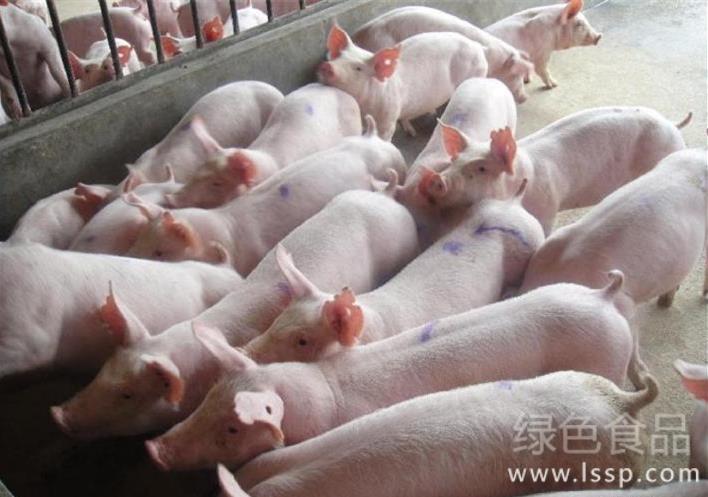
Sweet potatoes are nutritious, but they must be fed to pigs properly: four taboos to note
Though nutritious, sweet potatoes must be fed properly: four taboos when feeding sweet potatoes to pigs
-
Oriental bittersweet
Celastrus flagellaris, also known as climbing bittersweet, is a deciduous vine in the family Celastraceae, genus Celastrus. Its branches and vines can reach more than 10 m in length. The twigs have short hook-like stipular spines curved downward, and the simple leaves are alternate and elliptical. The margins have fine serrations, and the tips of the teeth are spine-like. The short racemes are axillary, the petals are spoon-shaped and oblong, and the flowers are yellow-green, blooming from June to July. The capsules are spherical and split open when mature, with white seeds wrapped in a bright red aril. Celastrus flagellaris is native to Northeast China, North China, and other places. It likes sunlight and tolerates shade, has a wide distribution, is cold-resistant and drought-tolerant, and has no strict requirements for soil. Planted on a sheltered
-
Sweet shrimp bisque is sweet, rich, delicious and warming to the stomach
Ingredients: 500 g sweet shrimp, onion, celery, carrot, tomato paste, Western spices. Seasonings: light cream, salt, pepper, baijiu, brandy. Method: 1. Stir-fry the sweet shrimp in olive oil until fragrant; 2. Once the shrimp flesh is fragrant and broken down, add the various vegetables and tomato paste and stir-fry; 3. Add brandy and let it burn off fully, then pour in baijiu, add fish stock and simmer for 2 hours; 4. Finally strain, add a roux to thicken into a bisque. Characteristics: intense shrimp flavor with a wine aroma, accompanied by light cream
-
How to Propagate Sweet Alyssum? Detailed Propagation Methods and Precautions
Sweet alyssum prefers cool, sunny conditions and also tolerates partial shade. It is highly adaptable, and artificial cultivation is not difficult. However, if rainy weather lasts too long, sweet alyssum becomes more susceptible to infection by pathogens. Friends who love sweet alyssum can propagate new plants themselves once their sweet alyssum has grown to a certain size.
-
Detailed Explanation of Key Points on Propagating Sweetgum by Seed
Sweetgum (Liquidambar formosana) is one of the most important ornamental tree species in China. Because sweetgum grows quickly and adapts widely, and because it likes light and tolerates poor soil, it is not difficult to cultivate. In addition, the resin of sweetgum also has certain medicinal value, so the economic value of sweetgum is very high. Sweetgum is commonly propagated by sowing.
条件筛选