-
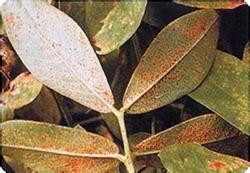
Analysis of the Causes of Peanut Rust Occurrence and Spread
What are the causes of peanut rust occurrence and spread? First, peanut rust is a fungal disease caused by Puccinia arachidis. The urediniospores are yellow, round or nearly round, with minute spines on the surface, and each urediniospore has one germination pore on each side of its middle section. Most urediniospores produce only one germ tube, and an appressorium forms at the tip of the germ tube, from which an infection hypha penetrates the peanut. Urediniospores can germinate only in the presence of water droplets or a water film. They have strong tolerance to low temperatures and poor tolerance to high temperatures. Under normal conditions, the germ tube penetrates the internal tissue after 65 hours, the hyphae continue to grow and produce haustoria, and after 7 days, pinpoint-sized white spots appear and begin to produce urediniospores; after 8 days, the white spots turn yellow-brown and form uredinia; after 10 days, the epidermis of the uredinia ruptures and releases urediniospores to continue infection. During the peanut growing period, the expansion and spread of peanut rust are mainly from local inoculum sources, but in the northern peanut regions, there is also the issue of external inoculum sources for the pathogen in early spring. The main factors affecting the occurrence and spread of peanut rust: First, the amount of overwintering inoculum. If the amount of overwintering inoculum is large, peanut rust may occur severely the following year.
条件筛选