-

Detailed Explanation of the Incision Method for the Small Flank Spay Surgery in Female Pigs
Abstract The small flank incision method for female pigs requires selecting female piglets around 35 days old and 10 kg for castration. Before surgery, they must be fasted for half a day, the surgical site must be disinfected, and then the peritoneum is directly incised. The incision only needs to be 8 mm. After ascites gushes out, the ovaries on both sides and the uterus are removed, and tincture of iodine is applied to the incision. The key to the success of the small flank method lies in accurately locating the surgical site, and the technique must be proficient. Using this method for castration can avoid wound infection and eliminate the harm of tetanus.
-
Methods for Treating Wastewater and Manure at a 500-Head Small-Scale Pig Farm in Rural Areas
Abstract: A biogas digester can be built, and professional wastewater treatment equipment can be used to automatically separate the biogas residue and biogas slurry, so that the wastewater treated by the equipment can meet the safety discharge standards set by the state. Nowadays many people want to set up a pig farm
-
How can small-scale backyard pig farmers do a good job of disinfection?
How can backyard farmers properly disinfect the farm site and pig pens? (1) After culling diseased pigs and pigs in the same group, the site must be cleaned and disinfected. (2) Before cleaning and disinfecting, protective clothing must be put on. (3) The manure in the pig pens should be completely removed, and pig manure scattered in the yard should be collected and treated by sealed pile fermentation or incineration. (4) When clearing piled poultry manure, water should be sprinkled on it, and manure dust must not be raised. (5) Thoroughly disinfect the site and poultry houses with disinfectants, and used personal protective items such as gloves, plastic bags and masks should be centrally destroyed. (6) Reusable items must be washed twice with detergent to ensure they are clean. (7) Soak the clothes worn during culling in hot water above 70°C for more than 10 minutes, then wash them with soapy water and dry them in the sun. (8) After handling contaminated materials, wash hands and take a shower. The highly pathogenic porcine reproductive and respiratory syndrome virus has poor survival ability in the external environment. As long as disinfection measures are appropriate, commonly used disinfectants in pig production practice, such as aldehydes, chlorine-containing disinfectants, phenols, oxidants, alkalis, etc., can all kill the virus in the environment. Using the following disinfectants for the farm and housing environment gives relatively good disinfection results: (1) Aldehyde disinfectants: including formaldehyde, paraformaldehyde, etc., among which fumigation disinfection with formaldehyde is the most commonly used. For enclosed pens, fumigation disinfection can be carried out by adding 7-21 grams of potassium permanganate per cubic meter and 14-42 milliliters of formalin. During fumigation disinfection, the room temperature generally should not be lower than 15°C, and the relative humidity should be 60%-80%. Potassium permanganate can first be added to the container, then formalin added. Close doors and windows for more than 7 hours to achieve the disinfection purpose, then open doors and windows for ventilation to eliminate residual odor. (2) Chlorine-containing disinfectants: including inorganic chlorine-containing disinfectants and organic chlorine-containing disinfectants. The disinfection effect depends on the content of available chlorine; the higher the content, the stronger the disinfection ability. A 5% bleaching powder solution can be used to spray animal pens, cages, feed troughs and vehicles for disinfection. (3) Alkaline preparations: mainly sodium hydroxide and quicklime, etc. Most sodium hydroxide preparations used for disinfection are crude alkali liquor containing 94% sodium hydroxide. When used, they are often heated and prepared into a 1%-2% aqueous solution, used for disinfection of poultry house floors, walls, exercise yards and contaminated materials polluted by the virus, and also used for disinfection of floors in slaughterhouses, food factories and transport vehicles and vessels. After spraying for 6-12 hours, rinse clean with clear water.
-
How can small-scale pig farmers correctly and effectively prevent diseases?
At present, the pig farming model in rural areas has undergone considerable changes. The production speed of fattening pigs has accelerated, the fattening period has been greatly shortened, and the annual slaughter rate of meat pigs has risen substantially. The overall operation is gradually transitioning from decentralized, extensive management to various degrees of intensive, large-scale management. However, due to
-
What medicine is best for piglet diarrhea? Plus feeding and management techniques
Piglets are also called zi zhu, miao zhu, zhu miao, zhu zai, newborn piglets, and pigs that have grown to about 30 kg are all called piglets. So what should be done about diarrhea and loose stools in piglets (small pigs)? What medicine is best? What are the feeding and management techniques? Piglet (small pig) diarrhea
-

Reference for Design Drawings and Construction Plans of Small Rural Pig Farms
Design Drawings of Small Rural Pig Farms
-
What are the essential conditions for small-scale pig farmers to move to large-scale farming?
Essential conditions for small-scale pig farmers to enter large-scale production
-
What are the methods for treating pig manure on small pig farms? A detailed illustrated guide
Methods for treating pig manure on small pig farms (illustrated)
-
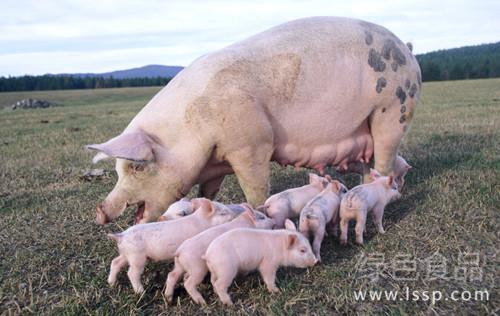
Small details in sow farrowing room management affect lactation and piglet survival rate
Sow lactation is linked to piglet survival: small details in sow farrowing room management
-
Growth and development patterns of small and medium pigs during the finishing stage
Finishing pigs - growth and development patterns of small and medium pigs
条件筛选