-

Why Should Homestead Land Not Be Put on the Market for Sale? A Policy Interpretation
At this year's two sessions, regarding exactly how homestead land should be reformed and whether it should be rolled out across the board, the committee members and representatives had a heated debate. Cai Jiming, a deputy to the National People's Congress and director of the Center for Political Economy at Tsinghua University, believes that the pace of China's land reform is currently
-
China's per capita grain possession approaches 900 jin, a record high
Vice Minister of Agriculture Yu Xinrong said on the 6th at a press conference for the third session of the 12th National People's Congress that China's food security situation is steadily improving. Not only have total grain output and per-unit grain yield reached new highs, but per capita grain possession has also reached a historic high, approaching 900 jin.
-
2015: The Seed Industry Needs a Brainstorming Session
With the development of science and technology and the continuous improvement of varieties, in recent years the upgrading of varieties in our country has helped the national average grain yield per mu to continuously achieve breakthroughs. A grain of millet planted in spring, ten thousand seeds harvested in autumn. Time surges forward through year after year of spring sowing and autumn planting, and humanity multiplies and thrives through season after season of cultivation and harvest.
-
A Detailed Explanation of the Approach to Farmland Transfer: Teaching You How to Do Rural Land Transfer Well
After the Third Plenary Session of the 18th Central Committee, in the area of agriculture, rural areas and farmers, the approach of seeking development through reform has been clearly established. Building a new type of agricultural operation system is a reform matter of equal importance to collective property rights reform and one that bears on the future fate of agriculture and rural areas. Especially in recent years, as stated at the Central Rural Work Conference held not long ago,
-
An In-Depth Analysis of the Underlying Problems Behind Farmland Transfer
After the Third Plenary Session of the 18th Central Committee of the CPC, the issue of farmland transfer was elevated to an unprecedented height. All parts of the country sprang into action one after another, and the intensity of the publicity, the prominence of the trend, and the ferocity of the push were enough to overwhelm all other rural work. It is estimated that by the end of 2014, the area of farmland transferred nationwide will approach or exceed 400 million mu, accounting for about 30% of the country's contracted arable land area. In terms of the scale of China's contracted arable land, this is a fairly large proportion; following this, a number of large farmers, large farms and other operating entities have emerged that occupy several thousand mu, more than ten thousand mu, or more than tens of thousands of mu of arable land through transfer, and in terms of China's per capita arable land, this is also a fairly "astonishing" concentration of scale. In November 2014, after the General Offices of the CPC Central Committee and the State Council issued the "Opinions on Guiding the Orderly Transfer of Rural Land Operating Rights and Developing Moderate-Scale Agricultural Operations," it will undoubtedly play a regulatory role in land transfer, and the momentum of relying on administrative means to push land transfer will cool down accordingly. But based on past experience and the complexity of China's land issues, its role cannot be overestimated. The undercurrents surging beneath China's farmland transfer deeply interrogate the author's conscience, and this serves as an opportunity to explore the related issues.
-
Organic agriculture cannot do without healthy soil
On December 12, the Fourth China (Chengdu) Organic Agriculture Forum was held in Pujiang County, Sichuan Province. With the theme "Healthy Soil - Standard Certification," the forum held keynote speeches and exchanges on topics including healthy soil cultivation, organic agriculture certification and trade, consumer trust, and international organic agriculture development trends.
-
Comprehensively Advance the Rule of Law in Agriculture and Thoroughly Implement the Spirit of the Fourth Plenary Session of the 18th Central Committee
The "Decision of the Central Committee of the Communist Party of China on Several Major Issues Concerning the Comprehensive Advancement of the Rule of Law" (hereinafter referred to as the "Decision"), deliberated and adopted at the Fourth Plenary Session of the 18th Central Committee of the Party, profoundly answered major questions such as what path of rule of law to take in today's China, what kind of country governed by law to build,
-
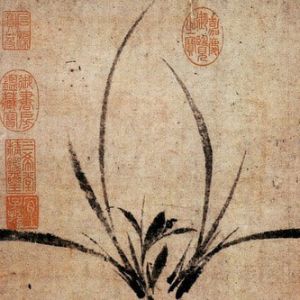
Zheng Sixiao's Inseparable Orchid Obsession
"Strange rocks and thorny thickets, keep them to accompany the Ancestor of Fragrance. How one sighs for the old man Suonan, who painted orchids but never painted the soil." This is a poem inscribed by Wu Changshuo, the famous calligrapher, painter and seal carver of the late Qing and early Republic, on an orchid scroll signed "the Daoist of Fou," expressing the author's deep feeling of longing for Zheng Sixiao, a loyalist of the Southern Song, through the painting of orchids. Zheng Sixiao (1241-1318), ...
-
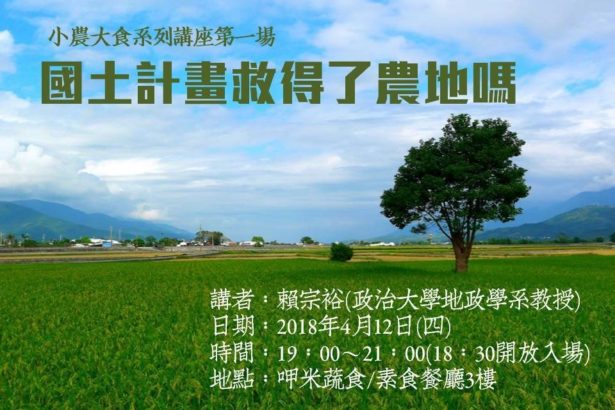
Can the National Spatial Plan Save Farmland? Small Farmers, Big Food Lecture Series Session 1
Small Farmers, Big Food Lecture Series (1) Can the National Spatial Plan Save Farmland?
-
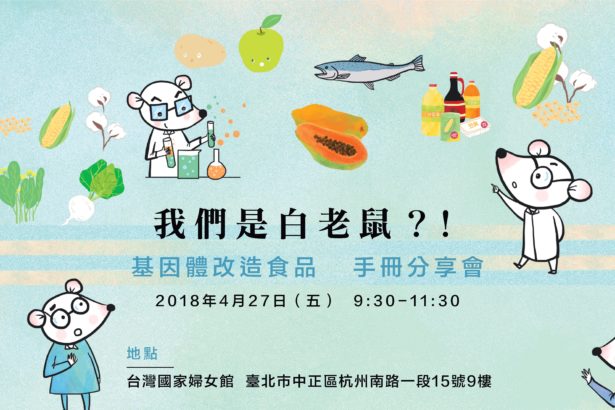
Genetically Modified Food Handbook Sharing Session: 2018 Anti-Monsanto Event Series
[2018 Anti-Monsanto Event Series]"Genetically Modified Food" Handbook Sharing Session
条件筛选