-

How to Grow Tradescantia sillamontana? A Detailed Guide to the Latest Growing Methods
Tradescantia sillamontana is a perennial succulent herbaceous plant of the genus Tradescantia in the family Commelinaceae. It originates from Guatemala, Belize, Mexico and other places in Central and South America. It has a unique form and is relatively easy to care for, making it very suitable for home cultivation and appreciation. It is often grown as a small potted plant to accent desks, writing tables
-
How to Grow Tradescantia pallida? A Detailed Guide to the Latest Cultivation Methods
Tradescantia pallida, also known as purple heart, purple leaf plant, and purple brocade grass, is a perennial herbaceous plant of the genus Tradescantia in the family Commelinaceae. It is native to Mexico and other places, and is now widely cultivated artificially. The entire plant is purplish-red year-round, with branches that are either trailing or hanging, highly distinctive and with high ornamental
-
How to grow Chinese fevervine (Paederia scandens)? Latest cultivation techniques and methods tutorial
Although Chinese fevervine (Paederia scandens) has an unpleasant name, it is a very well-known medicinal herb and was also a common traditional Chinese medicinal material in the past. Chinese fevervine has very strong growth ability. Once planted, it can be harvested continuously for almost several years. The main part used for medicine is the aboveground
-
How to grow Tradescantia zebrina and things to watch out for
To grow Tradescantia zebrina, you need to prepare suitable soil. Since it cannot tolerate direct sunlight, it needs to be kept in a semi-shaded spot. The most suitable growing temperature for Tradescantia zebrina is 18°C to 30°C, and it cannot tolerate cold or frost. Never fertilize carelessly; simply top-dress and water reasonably according to its growth.
-
How to Grow and Care for Tradescantia pallida (Purple Heart) and Key Points, Watering, and Blooming Period
Tradescantia pallida is also called purple spiderwort and purple brocade grass. It belongs to the Commelinaceae family, Angiosperms phylum, Tradescantia genus, Commelinidae subclass, and is native to Mexico. It is generally used as a potted display, and is even more common as a household plant. So what are the growing methods and key points for Tradescantia pallida? How often
-
How to Grow Tradescantia zebrina (Inch Plant) from the Spiderwort Family: Growing Methods and Winter Care Tips
Tradescantia zebrina, also called Tradescantia pendula, variegated spiderwort, inch plant, water inch plant, and variegated inch plant, is a perennial evergreen herbaceous plant in the spiderwort family (Commelinaceae) and the genus Tradescantia. The color distribution on the leaf surface resembles the surface of a watermelon, with purple-green in the middle and two silvery-white stripes on either side. Below
-
Where can I buy Miscanthus sinensis seeds? What are the seedling methods?
Miscanthus sinensis is a perennial herbaceous plant, usually growing in clumps, found along roadsides; this plant is very common, constantly growing up every year, and in autumn it produces deep pink flower spikes that look especially beautiful when the breeze blows. If
-
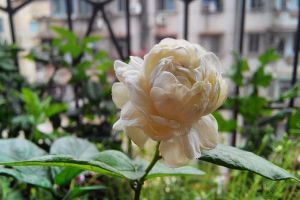
How to care for the Jasmine 'Grand Duke of Tuscany' in winter? Master these tips for a safe overwintering
You must all be fairly familiar with the plant "jasmine", right? However, you may not have heard of the "Jasmine 'Grand Duke of Tuscany'". It is a plant of the Oleaceae family, Jasminum genus, a mutated variety. Because it is not very stable, it mutates again easily. It also has ornamental value, and this value is quite high, which we can easily see from its appearance. So, if you grow it, what do you need to pay attention to in winter?
-
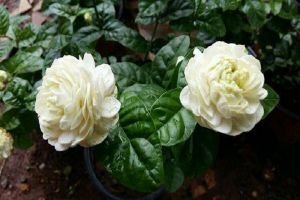
Is the Tiger Head Jasmine (Jasminum sambac 'Grand Duke of Tuscany') toxic? Toxicity analysis and care precautions
When seeing this name, we probably all wonder: what relationship does this plant have with "jasmine"? Why add the two characters "tiger head" in front? Actually, it is a variety, purely for ornamental use, and cannot be used as an economic crop. Since it can be used for ornamentation, those who want to grow it will certainly ask one question: is it toxic? Can it be placed indoors? Below we will specifically answer these questions.
-
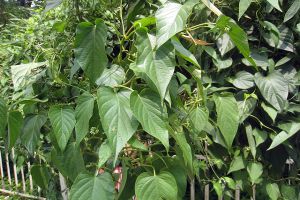
What are the care methods for Paederia scandens (skunk vine)?
Seeing this title, you may wonder why it is called this name. This is because if we crush its leaves with our hands, we will smell an odor like chicken droppings. However, after a while this smell will turn into a delicate fragrance, quite amazing, right! This plant is very widely distributed in our country, especially in the various provinces of the south. Its value is also very high, so it is worth planting and caring for. So, what issues need attention in its care?
条件筛选