-

When does the fishing ban period end in each river basin under the strictest-ever ban in 2019?
To protect the marine ecosystem, maritime nations have successively introduced a series of closed-season and fishing-ban policies, and China is no exception. 2019 has been called the strictest fishing-ban year in history, so when does the fishing ban period end in each river basin this year? 1. Why fishing-ban policies are implemented To
-
Rice field management techniques during high temperatures and technical recommendations for defending against high temperatures in the Yangtze River Basin
Currently, it is the jointing stage of rice, and when encountering high-temperature weather, rice will inevitably develop various diseases. Therefore, to achieve high rice yields, field management techniques are still needed. So how should rice in the Yangtze River Basin region be managed in the field? Currently, in the middle and lower reaches of the Yangtze River
-
When is the planting season for okra? A detailed guide to sowing times
In the Yangtze River basin and South China region, okra can be cultivated in spring, summer and autumn, but spring sowing is the main season. Sow in March-April, harvest from May-September; sow in May-June, harvest from July-October; sow in July, harvest from September-November. For early sowing, cultivation under large plastic tunnels, small arched tunnels or plastic film mulch should be used
-
-
-
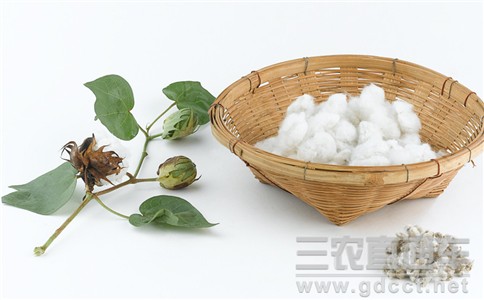
How should the cotton production model in the Yangtze River Basin be built? The Ministry of Agriculture is exploring
The Ministry of Agriculture explores a cotton production model in the Yangtze River Basin
-
The hard-fleshed peach variety Qinwang is suitable for cultivation in the Yangtze River Basin.
Originally from Shaanxi, the average single fruit weight is 210g, the maximum fruit weight is 350g, and the fruits are relatively uniform. The base color of the skin is yellow-red; at maturity, 80%-100% of the fruit surface is bright red, the appearance is showy, and there is little fuzz on the fruit surface. The fruit is round, the suture line is centered, and the fruit shape is relatively symmetrical. The flesh is red and white, with 75% red blush. The flesh is especially hard, the texture is fine, and the resistance to browning is strong. The soluble solids content is 13.7%, the taste is sweet with slight acidity, there is a slight aroma, and the quality is excellent. In the Chongqing area, buds sprout in mid-February, full bloom occurs in early March, the fruit ripens in early July, and leaves fall in early December.
-
How to control cotton aphids? Detailed control measures for the Yellow River basin
Aphids, also called greasy bugs or honey bugs, are one of the main pests on cotton in our country. The cotton aphids that damage cotton fields are divided into seedling aphids and summer aphids. Seedling aphids occur from emergence to before squaring, prefer lower temperatures, and when the temperature exceeds 27°C their reproduction is inhibited and the population drops rapidly; the aphids that commonly occur from early July to mid-August are called "summer aphids." When the 3-day average temperature is 24-28°C and the relative humidity is 55%-85%, it favors the multiplication of "summer aphids"; weather that alternates between sunny and rainy is most suitable for "summer aphids" to reproduce; continuous rainy
-
Which hard-flesh peach varieties are good? Five recommendations suitable for the Yangtze River Basin
1. Qinwang. Average single fruit weight 210 grams, maximum fruit weight 350 grams, fruit size relatively uniform. The base color of the peel is yellow-red; at maturity, 80%-100% of the fruit surface turns bright red, the appearance is colorful, and the fruit surface has little fuzz. The fruit is round, the suture line is medium, the fruit shape is relatively symmetrical, the fruit apex is concave, and the stem cavity is medium-deep. The flesh is red-white, with 75% red blush. The flesh is especially hard and does not crack, the texture is fine, and the resistance to browning is strong. Soluble solids 13.7%, tastes sweet with slight acidity, slight aroma, excellent quality. Semi-clingstone, small stone, no stone cracking, edible rate 9
-
Piqiu Tao is a firm-fleshed peach variety suitable for cultivation in the Yangtze River Basin.
Originating in Chengdu, Sichuan, the average single fruit weight is 320g, with the largest fruit reaching 700g. Round in shape with uniform fruit form, the fruit surface takes on 60% bright red coloration when ripe. The fruit surface has abundant fuzz; the flesh is white with a red blush, firm and crisp, with soluble solids at 15.6%, a rich sweet flavor, no acidity, and excellent quality; the stone is small, and the edible rate is 93%. In the Chongqing area, buds break in mid-February, full bloom occurs in mid-March, and the fruit ripens in early July. It is tolerant of storage and transport and extremely high-yielding; in a high-density orchard (222 trees/667 sq m), the third-year yield reaches
条件筛选