-

What is the relationship between diseases of eels raised in earthen ponds and the water environment?
The water environment is the decisive factor in eel farming. The water environment not only determines whether eels can be farmed, but also directly affects the level of production and ultimately the economic benefits of farming. Therefore, only by improving the water environment can eels be farmed well. The following analysis focuses on the relationship between eel diseases and the water environment from the following aspects. 1. pH level. The pH value in water is an important comprehensive water quality indicator, and it directly affects the physiological condition of eels. When the biological, chemical or physical components in the water body change, they will all be reflected in the pH value. Eels in earthen ponds require the pond water
-
What is the relationship between yellow fat in pork and feed? An analysis of the causes
Yellow fat meat, also known as yellow fat pork, refers to pork carcass fat that is brown or yellow, with internal organs normal and unchanged and no off-odor, and it is generally believed to be caused by feed. Yellow fat meat is different from jaundice meat; jaundice meat is caused by disease, resulting from blocked bile excretion. In jaundice meat, not only is the fat yellow, but the skin, mucous membranes, joint capsule fluid, tissue fluid, vascular intima, serosa, tendons and so on are all yellow, and the internal organs also show pathological changes. Yellow fat meat fades or disappears after hanging for 24 hours, while the yellow color of jaundice meat does not fade. Yellow fat meat is mostly caused by feeding pigs fishmeal, fish liver oil
-
The Relationship Between Duck Photosensitivity and Fluoroquinolone Drugs
Duck photosensitivity refers to a disease in which ducks, after ingesting substances that cause photosensitivity, develop blisters or ulcerative symptoms on the epithelium of the upper bill and webbed feet due to exposure to ultraviolet radiation from sunlight. The disease is characterized by deformation of the upper bill and webbed feet, shedding of the keratinized layer, and conjunctivitis of the eyes. I. Clinical Symptoms and Pathological Changes of This Disease. This disease can be seen in ducks of all breeds, with the age of onset tending to be younger, occurring in all age groups after 10 to 20 days of age; the incidence rate varies, and the mortality rate is generally low (if secondary bacterial or viral
-
An Analysis of the Spatial Relationship Between Tangible and Intangible Scenes in Bonsai
"Tangible scene" refers to the landscape formed by trees, stones, soil, water, grass, moss and their combinations arranged in a pot; it is the real scene within the spatial bounds of the pot. "Intangible scene" lies beyond the "tangible scene", that is, the artistic realm where "the scene is outside the pot". The space of the tangible scene is limited, while the space of the intangible scene is unlimited. The sayings "seeing the great in the small", "a thousand miles within a foot", "one peak suggests Mount Tai soaring a thousand xun, one spoonful suggests rivers spanning ten thousand li" and so on refer precisely to the two kinds of spatial relationship expressed by bonsai. "Small", "a foot"
-
What is the relationship between rose blooming and temperature? Explained clearly in one article
Many floriculture references describe open-ground roses as: fond of warmth, with a blooming period from May to October, but this is actually inaccurate. After years of observation, the author found that the blooming period of roses is longer than this: it can last from May all the way to November, or even longer. It does not fear frost, and only after snow do the flowers and leaves gradually wither; if pruning is done a little later, it is even possible to enjoy roses in the snow. Roses like sun and fertilizer, but they are also tolerant of poor soil and drought, and their adaptation to temperature fluctuates over the course of a year. Although roses like warmth, they cannot tolerate intense heat. In the blazing summer, although roses still
-
A Detailed Explanation of the Relationship Between Cotton Nutrition and Nitrogen Fertilizer
I. Nitrogen in the Cotton Plant: The average nitrogen content in plants accounts for about 1.5% of dry weight (range 0.3-5.0%). Cotton seeds contain 2.8-3.5% nitrogen, fiber contains 0.28-0.33%, and stems contain 1.2-1.8%, making cotton a crop with relatively high nitrogen content. According to experiments, with a lint yield of 62.7-94.7 kg per mu, nitrogen from emergence to squaring accounts for about 4.5% of the total accumulation over the life cycle, from squaring to flowering accounts for 27.8-30.4% of the total accumulation over the life cycle, and from flowering to boll opening accounts for 59.8-62
-
Analysis of the Relationship Between Rusty Patches on Pear Fruit Surfaces and Pesticide Use
Irregular rust-colored patches often appear on pear fruit surfaces, affecting the appearance quality of the fruit. Fruit surface rust is generally called fruit russeting, which is formed by the gradual thickening and suberization of cell walls, with epidermal cells and the cuticle rupturing and exposing the surface, forming brown rust-colored patches. Another type of rusty patch is actually "pesticide russeting," caused by improper pesticide use or excessive pressure when spraying pesticides. There is also a type called "water russeting," mainly caused by poor environmental conditions, damp and rainy weather, insufficient light, and mold parasitizing the fruit surface. The occurrence of fruit russeting is related to many factors in cultivation. Such as variety, strain differences
-
What is the relationship between the density of a dog's coat and body temperature?
While wandering through several dog forums, I noticed a common misunderstanding: many people believe that although some dogs have thick coats, the fur acts as "insulation" in hot weather, so it should not be clipped. 1. Although a dog's body has no sweat glands, it is still constantly releasing heat to the outside; the lower the outside temperature is compared with body temperature, the easier it is for heat to be released. A dog's body temperature is higher than room temperature in most cases, and summer temperatures are already high to begin with, so if a dog's coat is too thick, it is definitely not good for the body's heat dissipation. There are more than
-
Orchid Watering Methods: Handling Five Key Relationships Well
1. Watering and orchid species. Because each orchid species has different growth habits, its water requirements also vary. Cymbidium ensifolium likes moisture, but waterlogging in the growing medium must be avoided. Cymbidium sinense prefers dry over wet; too much moisture easily causes root rot and plant collapse. Cymbidium kanran has a well-developed root system and strong drought tolerance, so the potting soil should be kept on the dry side. Suxin orchids and leaf-variegated orchids require seven parts dry and three parts wet; too much moisture easily causes degeneration. 2. Watering and orchid pots. Clay pots have a rough texture and strong air permeability, and moisture evaporates easily, so water frequently, water generously, and water thoroughly. Plastic pots have low density and poor air permeability, and moisture is consumed slowly; in summer,
-
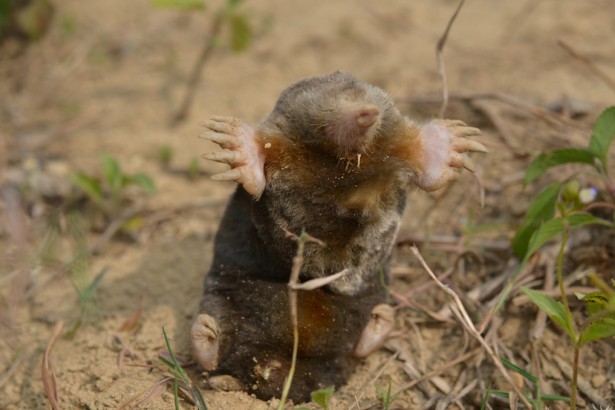
Are gophers hamsters? The differences and relationships between gophers, hamsters, mice and rats
Your own gopher, you deal with it yourself!
条件筛选