-
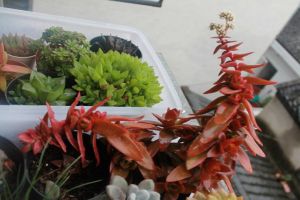
What is the difference between Hongyueji and Huoji? A quick guide to tell them apart
Take a look at these pictures. Do they look like the same plant to you? Actually, they are not the same plant. The first two pictures are "Hongyueji" (red-leaf festival), while the last two pictures are "Huoji" (fire festival). Both belong to the succulent plants, and they look somewhat similar, so they are not easy to tell apart. However, they still differ in many ways. So, where exactly do their differences show up?
-
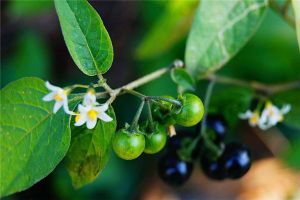
What is the difference between black nightshade and black goji berry? A quick guide to telling them apart
When these two plants are mentioned, many people may have a vague impression of them, yet still feel a bit confused and cannot remember what kind of plant they are. Does black nightshade remind you of Chinese Paladin 3? How is black goji berry different from goji berry? Do a whole bunch of questions pop up? Many people think these two plants look very similar and find them hard to tell apart, so today I will teach you how to identify them.
-

What are the other names for orchids? A quick guide to common aliases
I. Aliases for orchids based on their fragrant characteristics: 1. Guoxiang (national fragrance): This is the highest honor for an orchid. Huang Tingjian, in "Shu Youfang Ting": "When a scholar's talent and virtue surpass the whole country, he is called a national scholar; when a woman's beauty surpasses the whole country, she is called a national beauty; when an orchid's fragrance surpasses the whole country, it is called national fragrance." 2. Guxiang (ancient fragrance): Using "ancient" to describe fragrance means not only that the scent lingers long, but also that its quality is pure and its character simple and elegant. In the seven-character ancient-style poem "Langui Qu" by Sadula of the Yuan Dynasty: "The secluded orchid blows ancient fragrance day after day; the beauty does not come, and the stream flows long." The orchid waits for the beauty, and only the beauty is worthy of enjoying these waves of secluded orchid ancient fragrance.
-
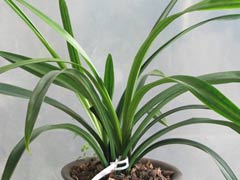
What is the difference between Cymbidium sinense and Cymbidium kanran? A quick guide to telling the two orchids apart
Many orchid growers cannot tell the difference between Cymbidium sinense and Cymbidium kanran, especially when they are not in flower. Generally speaking, Cymbidium sinense and Cymbidium kanran are very easy to tell apart by appearance, but once you come across a Cymbidium sinense with relatively narrow, long leaves and a Cymbidium kanran, it becomes harder to distinguish them...
-
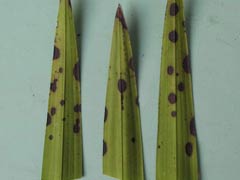
Orchid Disease Pictures: A Complete Guide to Quickly Identify Common Disease Symptoms
Orchids are one of the favorite plants for flower enthusiasts to grow, and also one of the most disease-prone. Sometimes enthusiasts cannot judge what disease their orchid has. Below are ten orchid disease pictures to help enthusiasts confirm the problem, along with control methods (at the end of the pictures)....
-
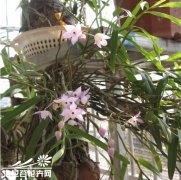
What are aerial orchids? A quick guide to cultivation basics
Aerial orchids is a general term for those orchids that can freely cling to trees and rocks, obtaining water and nutrients from the air through aerial roots, so they are also called epiphytic orchids, such as Phalaenopsis, Dendrobium, Cattleya, Oncidium and Bulbophyllum, all of which can be called aerial orchids or epiphytic orchids. The wide variety of aerial orchids mostly grow in tropical rainforests, attached...
-
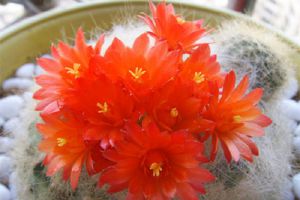
What is the difference between Mammillaria hahniana and Mammillaria bocasana? A quick guide to telling these two cactus species apart
Both plants belong to the Cactaceae family, so they do look somewhat alike. However, there are quite a few differences between them too. Some can be seen in the pictures, and some cannot, so what exactly are these differences?
-
Money Tree and Clivia Yellow Leaves and Spots: Treat Them Quickly or They Will Be Hard to Keep Alive
Some plant lovers say that, for no apparent reason, their plants just mysteriously develop yellow leaves and wither away. In fact, when a plant is sick, it will definitely show some symptoms. Only by observing carefully and treating early can you keep your plants healthy. Here are some common problems with plants. Take a look and see if your plant has any of them!
-
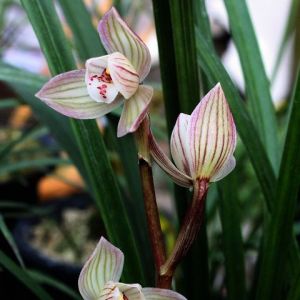
A concise explanation of the detailed appreciation criteria for Cymbidium kanran, to quickly master the key points of evaluation
Chunjian Dianhe won the gold award at the 19th China (Wenjiang) Orchid Expo. It is the only Cymbidium kanran lotus-petal variety from Sichuan that is not mixed with flaws like other Chunjian lotus-petal varieties, making it a rare and excellent cultivar. This plant has very obvious dragon-head features on the leaf surface. When the flower scape is tall, it can grow to over 50 cm high. The flower color is also very brilliant and gorgeous, with petals shaped like lotus petals....
-
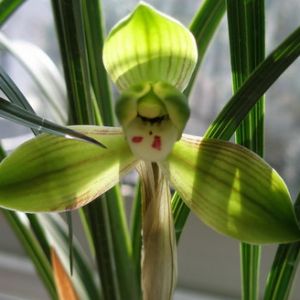
What is the difference between Cymbidium goeringii and Cymbidium tortisepalum? A quick guide to tell them apart
Tongle Mei: The leaves are slanted and upright, the bud sheaths are mercury red with green variegation, the three outer petals are broad and large, with a narrow base, tightly edged, the lip is a large round tongue, the two lateral sepals form a straight-line shoulder, the flower color is emerald green, and the flower form is well-proportioned. It is a large-flowered Cymbidium goeringii treasure combining the lotus, plum, and narcissus petal types.
条件筛选