-
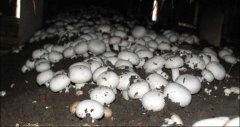
Where are mushroom processing plants located? What products can mushrooms be processed into?
Mushrooms, as a commercial vegetable, can not only be sold on their own, but can also be processed into what products for sale? Which processing plants are relatively well known? Let's take a look together! Domestic companies related to mushrooms: Gushen Lingzhi: China's number one lingzhi brand, the country's largest edible and medicinal fungi deep-processing enterprise.
-
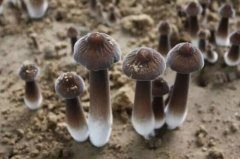
A Detailed Guide to Black-Skin Chicken-Foot Mushroom Cultivation Techniques, Price per Jin, and Investment per Mu
Large-scale artificial cultivation of the black-skin chicken-foot mushroom has low production costs, a short cycle, and high yields, and can meet people's market demand for the black-skin chicken-foot mushroom. So how do you grow the black-skin chicken-foot mushroom? The price of the black-skin chicken-foot mushroom is 35 yuan per jin, and prices vary somewhat from region to region.
-
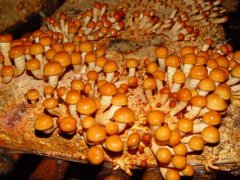
Does Pholiota nameko have to be blanched? Detailed explanation of cultivation techniques and sales prices
Does Pholiota nameko have to be blanched? It is best to do so, as this will make the Pholiota nameko fully cooked through, so there is no food safety risk from eating it undercooked. The sales price of cultivated Pholiota nameko is generally between 6 yuan and 7 yuan. So how is Pholiota nameko cultivated? Would you like to know?
-
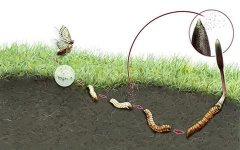
Is cordyceps a mushroom or a fungal plant, and how is it formed?
We all know that cordyceps is a very precious Chinese herbal medicine, so is cordyceps a mushroom? Is cordyceps a fungal plant? Or is it an animal? The claim that it is an animal is incorrect; it is a plant, and as for whether it is a fungal plant, just look at the introduction below.
-
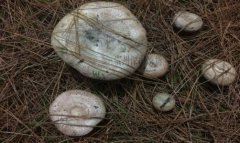
Can Lactarius deliciosus be cultivated artificially? Detailed explanation of cultivation techniques and growing conditions
Can Lactarius deliciosus be cultivated artificially? Yes, it is possible, but this mushroom is very difficult to cultivate because its spawn is relatively hard to collect. It also has many different names, such as pine mushroom, Chongyang mushroom, etc. So how do you go about artificial cultivation? Let's take a look together at artificial
-
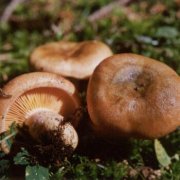
Chongyang mushroom planting methods, price per jin, and detailed explanation of its benefits and nutritional value
Chongyang mushroom is a fungus that currently cannot be cultivated artificially and is a purely natural fungus species. It is very particular about its growing environment, so artificial cultivation is very difficult to achieve, and it may be impossible to grow, which would result in significant losses. How much is Chongyang mushroom per jin? This depends on
-
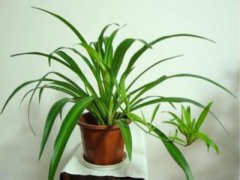
How do you grow spider plants so they fill out the pot and thrive even more? Choosing the right fertilizer matters
Do you know how to grow spider plants? Actually there are two ways to grow spider plants: one is water culture, and the other is soil culture. For water culture, the best water is rainwater, which is very good for growing spider plants. Below we focus on how to grow them in soil, and what
-
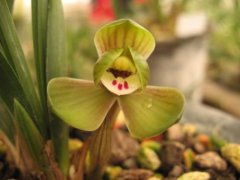
Introduction to Chunlan 'Huanqiu Heding' with Pictures, How Much Does It Cost per Plant
The petals of Huanqiu Heding are lotus petals, and it is a very precious lotus-petal flower among Chunlan (Cymbidium goeringii). It was discovered in 1922 on Dashanbu Mountain in Shangyu. It has been nearly 100 years since its discovery, and the price of this flower is about 280 yuan to 300 yuan per plant. So what kind of
-
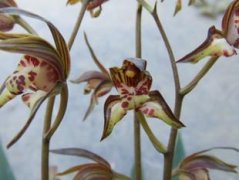
How much does a single plant of the traditional Cymbidium sinense variety Huaguang Die cost, and what are its characteristics?
The Cymbidium sinense Huaguang Die was formerly a flowering orchid, and it is still evolving, constantly evolving, becoming an orchid that excels in both flowers and foliage. If judged by the criteria of foliage artistry, Huaguang Die's variations and inherent qualities may not match those of other similar varieties, but it is still quite remarkable that it has been passed down continuously. Information
-
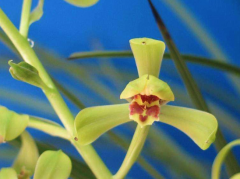
How much is one seedling of the Cymbidium faberi 'Liu Mei'? Detailed explanation of leaf shape characteristics
Liu Mei, as soon as you hear this name, friends who don't like orchids definitely won't know it's the name of an orchid. Why is this orchid called Liu Mei? Because it was selected by Liu Hengfeng of Shaoxing in the early years of the Republic of China, and its petal type is a plum petal of the green-shelled type of Cymbidium faberi. So it is called
条件筛选