-

What to Do About Retained Placenta in Sheep? Key Points of Prevention and Treatment Explained
I. Prevention The main preventive method is to strengthen the feeding and management of pregnant sheep: feed formulation should follow the principle of not making pregnant sheep overweight; a proper amount of exercise must be ensured every day. II. Treatment Within 14 hours after birth, one may wait for it to shed on its own. If more than 14 hours have passed, appropriate measures must be taken, because by then the placenta has begun to rot, and if it remains in the uterus it can cause severe inflammation of the uterine mucosa, leading to temporary or permanent infertility, and sometimes even septicemia. Therefore, when more than 14 hours have passed, the following methods should be adopted as early as possible
-
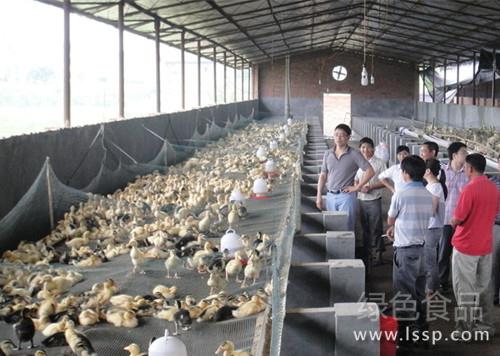
Raising Ducks in Confinement Can Save Labor: Key Management Techniques Explained
Raising Ducks in Confinement Can Save Labor: Key Management Techniques for Confined Ducks
-
What are the common varieties of wild reishi mushrooms? One article explains it clearly
Wild reishi mushrooms, because of their different varieties, have both similarities and individual characteristics in their pharmacological effects. The individual characteristics of the different common varieties of wild reishi mushrooms are introduced below: Flat-cap reishi. Documented names: tree tongue, tree tongue flat reishi, flat reishi, flat wood reishi, soap fungus ear, etc. Morphological characteristics: fruiting body perennial, sessile, woody, cap semicircular, nearly kidney-shaped or irregular. Functions: slightly bitter, neutral. Anti-cancer, mainly treats acute and chronic hepatitis, early-stage cirrhosis, esophageal cancer, lung cancer, liver cancer, nasopharyngeal cancer, pancreatic cancer, stomach cancer, breast
-
How to Prevent Bud Drop in Phalaenopsis Orchids? Practical Methods Explained
To prevent bud drop in Phalaenopsis orchids, pay attention to the following points: The indoor temperature must be suitable. From autumn and winter, when Phalaenopsis orchids go from bud formation to blooming, the temperature generally needs to be above 5°C. If the temperature is too low, it easily causes yellowing leaves or bud drop. Reasonable pot soil moisture. When Phalaenopsis orchids are forming buds and growing flower buds, only keep the soil slightly moist; avoid watering too much or too frequently, as overly wet pot soil easily causes bud drop. The ambient air humidity can be higher; when the temperature is high at noon, sprinkle some water on the ground. Fertilization must be sufficient. Every time a Phalaenopsis orchid blooms, it needs a large amount of fertilizer
-
What does the anestrus period in dogs mean? Explained in one article
The anestrus period is also called the anestrous phase. This period is counted from the time the female dog is weaned; if she is not pregnant, it is counted from the 60-day metestrus period. The anestrus period lasts 90-140 days, with an average of 130 days. The clinical signs are the same as usual; behavior, posture, and body appearance are all normal. The egg cells in the body develop slowly, the endometrium begins to proliferate slightly, estrogen increases slightly, there are foam cells and various white blood cells in the vagina, and the vaginal epithelium is thin, with only 2-8 layers.
-
How to care for a dog with an internal medicine condition? Explaining with gastritis as an example
The usual signs are not eating, vomiting, and diarrhea, leading to severe dehydration and reduced resistance. Intravenous fluids generally work best. Next, giving stomach-strengthening and appetite-stimulating drugs is fine, but giving only these drugs is not enough. Owners should administer medication according to the veterinarian's advice and prescription, but because the education level and clinical experience of veterinarians vary across different animal hospitals and clinics, you should find an experienced veterinarian to prescribe. Generally, households should always keep drugs such as berberine and furazolidone on hand, but these
-
How does plain tea gradually become scented tea?
The practice of adding spices or fragrant flowers to tea has a very long history. In the Northern Song dynasty, Cai Xiang's "Record of Tea" mentioned spiced tea: "Tea has its true fragrance, but those who offered it as tribute would slightly blend in borneol and paste to enhance its aroma." By the Southern Song dynasty, there were already records of jasmine-scented tea; in the annotation to Shi Yue's ci poem "Stepping in the Moonlight: Jasmine," it says: "Jasmine is produced in the Lingnan region... the ancients used this flower to scent tea." By the Ming dynasty, the technique of scenting tea with flowers became increasingly refined, and a great many flowers could be used to make tea. According to the "Tea Manual," there were as many as nine kinds: osmanthus, jasmine, rose, wild rose, orchid, orange blossom, gardenia, costus, and plum blossom.
-
Key Points and Operation Methods of Goji Berry Pruning Techniques Explained
I. Pruning during the young stage 1. Trunk-establishing pruning: Before the seedlings sprout, cut off the sprouts below 40 cm (branching zone) on the main trunk base stem, and cut the top at a plant height of 60 cm to 70 cm. 2. Summer pruning: From late April to late July, at intervals of 15 days, cut off the sprouting shoots within the branching zone of the main trunk, and cut back the lateral branches retained on the branching zone at 20 cm to 25 cm to promote the sprouting of secondary fruiting branches; among the vigorous branches growing upward from the lateral branches, select and retain 2 to 3 branches growing in different directions from the main branch, and cut them at 30 cm
-
How to Mix Fish Feed? Nine Practical Formulas Explained
1. Suitable for grass carp or silver carp and bighead carp: rice straw powder 70%, soybean cake 15%, cottonseed cake 10%, cornmeal 5%, plus bone meal 1%, salt 0.5%, and an appropriate amount of vitamins. 2. Suitable for cage-cultured grass carp: soybean straw or peanut vine 60%, soybean cake 15%, rapeseed cake (or cottonseed cake) 10%, cornmeal 10%, fish meal 5%, plus clam shell powder (or bone meal) 1%, salt 0.5%. 3. Suitable for grass carp: green grass powder (or peanut vine, sweet potato vine) 45%, soybean cake 15
-
How to Mix Fish Feed? Nine Practical Formulas Explained
1. Suitable for grass carp or silver carp and bighead carp: rice straw powder 70%, soybean cake 15%, cottonseed cake 10%, cornmeal 5%, plus bone meal 1%, salt 0.5%, and an appropriate amount of vitamins. 2. Suitable for cage-cultured grass carp: soybean stalks or peanut vines 60%, soybean cake 15%, rapeseed cake (or cottonseed cake) 10%, cornmeal 10%, fish meal 5%, plus clam shell powder (or bone meal) 1%, salt 0.5%. 3. Suitable for grass carp: dried green grass powder (or peanut vines, sweet potato vines) 45%, soybean cake 15%, rice bran 15%, wheat bran 10%
条件筛选