-
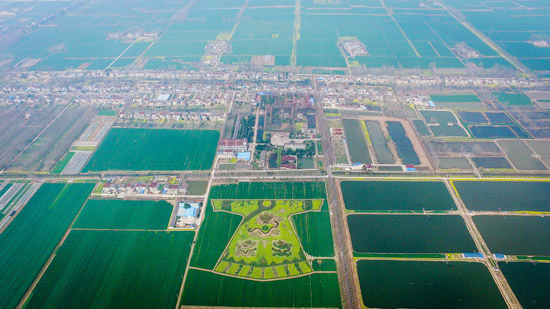
Nanjing rapeseed field grows a dragon robe pattern as a landscape
A rapeseed field in Nanjing grows a "dragon robe" to stage a grand show
-

How to prevent and control cotton root rot in northern Xinjiang? Understanding the patterns of occurrence is key
In 2007, northern Xinjiang suffered varying degrees of cooling and rainfall in April, May and August respectively, and cotton root rot occurred rather severely, with the disease incidence in cotton fields reaching 20%-50%, causing a certain impact on cotton yield in northern Xinjiang. 1. Disease symptoms The pathogen overwinters as chlamydospores on plant residues in the soil and germinates to infect the following year. After cotton is infected, the leaves shrink or wilt, and soon afterward the plant lodges and dies. The stem base and roots of diseased seedlings are purplish brown and gradually rot, with the cortex drying and rotting; when pulled from the soil, the roots are decayed brown.
-
Detailed Explanation of Nutrient Uptake Patterns of Rice at Different Growth Stages
The nutrient uptake of rice at various growth stages differs considerably depending on the type. Double-season rice has a short growth period, especially the shortened vegetative growth period in the field, so vegetative growth and reproductive growth overlap shortly after transplanting. That is, tillering in the field begins at the same time as panicle differentiation, and the peak tillering stage occurs during panicle differentiation, thus forming a prominent nutrient uptake peak 2 to 3 weeks after transplanting; single-season rice forms two nutrient uptake peaks 2 to 3 weeks and 7 to 9 weeks after transplanting. The uptake rates of various nutrients by rice all reach
-
Detailed Explanation of the Main Symptoms and Onset Patterns of Eel Hyperactivity Disease
Caused by Eel Coronavirus-like Virus. Main symptoms: 1) Diseased eels dart erratically up and down in the water at the pond edge, or roll and spin, or swim backwards, with occasional paroxysmal spasmodic trembling or twisting of the head, mouth open, followed by death shortly after. There are no obvious external lesions, though slight congestion or ulceration may sometimes be seen in the oral cavity, anal fin, and pectoral fin areas; necropsy may reveal swelling of the liver or kidney. 2) In the early stage of onset, a small number of eels swim irregularly at the pond edge, swimming weakly, with intermittent head twitching, spinning and rolling, or backward movement. After a few days, a large number of eels show similar symptoms, with paroxysmal trembling of the head, and after frantic swimming at the water surface they die quickly; newly dead eels are rigid with the mouth open. The body surface of diseased fish is intact, but the lower jaw shows varying degrees of ulceration or congestion. Some diseased fish have congestion or ulceration in the oral cavity, anal fin, and tail. Most diseased fish have bright red gill filaments and pale red liver, and some have swollen kidneys. In diseased eels, red blood cells, hemoglobin, and serum chloride ions are significantly elevated, while blood urea nitrogen content is significantly decreased, and serum cholinesterase is reduced. At present, because understanding of this disease is still lacking, diagnosis can only be based on the above main symptoms. It mainly occurs in European eels and African eels, with the high-temperature summer period as the peak epidemic season, hence it is also called European eel summer hyperactivity disease. From the start of onset to the peak period is about 7 days, and mass mortality occurs about 15 days after onset; the speed of spread and transmission is very fast, and it readily forms outbreaks and epidemics.
-
Occurrence Patterns and Control Methods of Cherry Brown Spot Shot Hole Disease
Symptoms: Small brown, grayish-brown, or purplish-brown spots initially appear on the leaves, gradually forming circular lesions that are non-water-soaked and opaque, with no yellow-green halo around the lesions, 2-4 in diameter, with clear boundaries and a purplish-brown outer margin. In the later stage, the center turns white or brown, slightly zonate, and the lesions die and fall off, forming irregular shot holes. 2. Occurrence patterns: The pathogen overwinters on fallen leaves and spreads by wind and rain in the following spring. The disease begins in June, with the peak period from August to September. Heavy rainfall promotes disease occurrence and epidemic, and weakened tree vigor leads to severe disease. 3. Control methods:
-
Occurrence Patterns and Control Methods of the White-Spotted Flower Chafer
The white-spotted flower chafer belongs to the order Coleoptera, family Cetoniidae, and is also known as the white-striped copper flower chafer, white-spotted flower chafer, white-spotted golden chafer, and copper chafer. It is distributed in Northeast China, North China, and the Huang-Huai-Hai region. When the white-spotted flower chafer damages crops, the market quality is greatly reduced in mild cases, and completely lost in severe cases, bringing relatively serious economic losses to growers. Hosts Currently, the hosts of the white-spotted flower chafer include corn, sunflower, tomato, watermelon, peach, grape, plum, strawberry, hop, the large composite weed bull thistle, willow, and elm. Damage characteristics The
-
Occurrence Patterns and Control Methods of Cherry Blossom Pests and Diseases
Cherry blossom belongs to the genus Prunus in the rose family (Rosaceae). It has both the subtle fragrance of plum and the gorgeous beauty of peach, with as many as several hundred cultivars. In recent years, with the demand for landscape gardening, cherry blossoms have been widely used in gardens, adding much beautiful scenery to urban landscapes. However, cherry blossoms suffer from many pests and diseases, mainly the following: 1. Cherry blossom witches' broom disease. The symptom is that many short, thin branches emerge from the affected parts, resembling a bird's nest. On these branches, either no flowers or only a few flowers are produced, and the leaves on the branches are numerous and small. Each year, deformed branches increase at the affected parts.
-
Occurrence Patterns and Control Methods of the Potato Tuber Moth
The potato tuber moth, also known as the potato borer and the tobacco leafminer, is commonly called the "string-skin worm," "embroidery worm," and "potato maggot" by farmers. 1. Damage symptoms: The larvae cause damage mainly by boring and feeding, usually entering through the buds and broken skin of the tubers. Larvae hatched on the plant spin silk and spread with the wind, boring from the leaf surface into the leaf interior to feed and cause damage. After the damaged leaves wither and die, the larvae move to other leaves to cause damage. 2. Occurrence patterns: The potato tuber moth produces several generations a year, overwintering in various stages on mother tubers in the field and on the residual plants and fallen leaves of various hosts. Adult
-
How to prevent and control soybean anthracnose? Detailed explanation of occurrence patterns and control techniques
1 Disease symptoms A considerable portion of infected seeds die in the soil before emergence. The disease can occur from the seedling stage to the maturity stage. The pathogen can invade young stems from the cotyledons, damaging stems and pods, and also damaging leaves or petioles. 1.1 Cotyledon disease symptoms The disease can occur from the seedling stage to the maturity stage. On the emerged cotyledons there are dark brown lesions with slightly lighter edges. After the lesions expand, cracking or sunken areas often appear. When the climate is humid, the cotyledons become water-soaked and quickly wilt and fall off. 1.2 Leaf disease symptoms When leaves are infected, the lesions are irregular in shape, with dark
-
How to prevent and control soybean phytophthora root rot? Detailed explanation of occurrence patterns and control methods
After soybean phytophthora root rot was introduced into our prefecture with the transfer of soybean seeds in July 2005, our station immediately established a soybean phytophthora root rot monitoring leading group and dispatched professional and technical personnel to carry out field monitoring work in Gongliu County. 1. Disease investigation In 2005, the affected area was 2239 hectares, and in 2006 the affected area was 2858 hectares. 1. Disease situation in Xinyuan County The soybean planting area was 0.67 million hectares, the investigated area was 0.3 million hectares, and the affected area was 0.23 million hectares, of which the sporadic occurrence area was 0.2
条件筛选