-
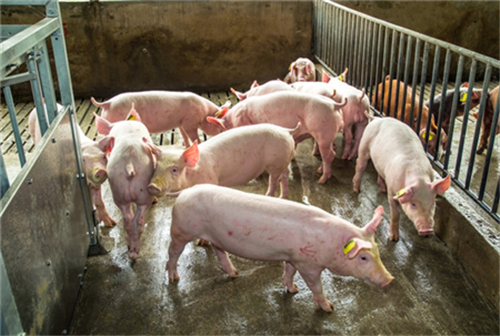
Decay Patterns of Maternal Antibodies in Piglets and Reference Immunization Ages
Decay Patterns of Maternal Antibodies in Piglets and Reference Immunization Ages
-

Detailed Explanation of the Main Symptoms and Onset Patterns of Eel Hyperactivity Disease
Caused by Eel Coronavirus-like Virus. Main symptoms: 1) Diseased eels dart erratically up and down in the water at the pond edge, or roll and spin, or swim backwards, with occasional paroxysmal spasmodic trembling or twisting of the head, mouth open, followed by death shortly after. There are no obvious external lesions, though slight congestion or ulceration may sometimes be seen in the oral cavity, anal fin, and pectoral fin areas; necropsy may reveal swelling of the liver or kidney. 2) In the early stage of onset, a small number of eels swim irregularly at the pond edge, swimming weakly, with intermittent head twitching, spinning and rolling, or backward movement. After a few days, a large number of eels show similar symptoms, with paroxysmal trembling of the head, and after frantic swimming at the water surface they die quickly; newly dead eels are rigid with the mouth open. The body surface of diseased fish is intact, but the lower jaw shows varying degrees of ulceration or congestion. Some diseased fish have congestion or ulceration in the oral cavity, anal fin, and tail. Most diseased fish have bright red gill filaments and pale red liver, and some have swollen kidneys. In diseased eels, red blood cells, hemoglobin, and serum chloride ions are significantly elevated, while blood urea nitrogen content is significantly decreased, and serum cholinesterase is reduced. At present, because understanding of this disease is still lacking, diagnosis can only be based on the above main symptoms. It mainly occurs in European eels and African eels, with the high-temperature summer period as the peak epidemic season, hence it is also called European eel summer hyperactivity disease. From the start of onset to the peak period is about 7 days, and mass mortality occurs about 15 days after onset; the speed of spread and transmission is very fast, and it readily forms outbreaks and epidemics.
-
Occurrence Patterns and Control Methods of the White-Spotted Flower Chafer
The white-spotted flower chafer belongs to the order Coleoptera, family Cetoniidae, and is also known as the white-striped copper flower chafer, white-spotted flower chafer, white-spotted golden chafer, and copper chafer. It is distributed in Northeast China, North China, and the Huang-Huai-Hai region. When the white-spotted flower chafer damages crops, the market quality is greatly reduced in mild cases, and completely lost in severe cases, bringing relatively serious economic losses to growers. Hosts Currently, the hosts of the white-spotted flower chafer include corn, sunflower, tomato, watermelon, peach, grape, plum, strawberry, hop, the large composite weed bull thistle, willow, and elm. Damage characteristics The
-
Disease Occurrence Patterns and Prevention Methods for Pigs at Different Rearing Stages
Disease Occurrence in Pigs at Different Rearing Stages Incidence Rates of the Three Major Infectious Diseases of Pigs Hog cholera, swine erysipelas, and swine pasteurellosis are collectively known as the three major infectious diseases of pigs. In China, the overall mortality rate of affected pigs accounts for about 8% of the total reared population, and even in areas with relatively good prevention and control, pig mortality stands at 5%. Therefore, the level of pig disease prevention and treatment should be improved. If the overall pig mortality rate could be reduced by one percentage point each year, that would be equivalent to an additional 5 million pigs sent to market - what a tremendous amount of wealth that represents. According to relevant statistics, among the causes of pig deaths, those caused by
-
How to control the cupreous chafer? Master its occurrence patterns and key control points
The cupreous chafer beetle belongs to the order Coleoptera, family Scarabaeidae. It occurs in many apple orchards in our region, and its hosts include apple, hawthorn, crabapple, pear, apricot, peach, plum, Japanese apricot, persimmon, walnut, strawberry, and so on. I. Damage symptoms: Apple trees suffer the most severe damage from the cupreous chafer beetle; the adults feed on leaves, often causing large areas of young fruit trees to have incomplete leaves, and even entire trees stripped of all leaves. II. Occurrence patterns: (I) The cupreous chafer beetle has 1 generation per year, overwintering as mature
-
What are the activity patterns of snakes? A detailed explanation
1. What are the activity patterns of non-venomous snakes? Snakes' activities follow certain patterns. Since the distribution of snake species differs, the activity patterns of snakes also differ markedly. Taking Shandong Province as an example, the activity patterns of non-venomous snakes are roughly as follows: around mid-April (Gregorian calendar) each year, when the outside temperature slowly rises to 15-18°C, all kinds of snakes wake from hibernation and crawl one after another from their hibernation dens to the entrance of the den or to sunny spots to bask. After May, once the temperature has basically stabilized, the snakes leave their dens to move about, drink water, and seek mates to copulate. However, they are not very interested in the food provided
-
Fox Molting Patterns and Methods for Assessing Pelt Maturity
Foxes begin shedding and replacing their underfur every spring, and the guard hairs then quickly fall out and new guard hairs grow in. Molting in foxes starts first at the head, neck, and forelimbs, then moves to the flanks, back, and abdomen, and only last do the rump and tail hairs shed and regrow. The completion of hair replacement on the body surface does not mean that the fox's fur and skin are fully mature. The assessment of pelt maturity is mainly based on indicators such as the color, fineness, density, length, softness and flexibility of the fur, as well as the color, thickness, and strength of the skin.
-
What Are the Patterns of Estrus in Female Foxes? A Detailed Explanation
During the resting period, the vulva of a female fox is covered by pubic hair, making it hard to detect; during estrus, the pubic hair parts only because the vulva becomes swollen. The estrus period of female foxes is short, mating is relatively difficult, and the optimal timing for mating is also hard to determine; in particular, silver-black foxes have a relatively high rate of failed conception. To improve the reproduction rate, it is necessary to understand the estrus patterns of female foxes and mate or perform artificial insemination at the right time. The estrus period of female foxes can be divided into three stages: Stage one: the vulva begins to swell, the clitoris enlarges, and the female begins to show signs of attraction to males and sexual excitement; this generally lasts
-
Occurrence Patterns and Control Methods of Silkworm Muscardine
Silkworm muscardine, also known as hardening disease, is a silkworm disease caused by fungal parasitism. The bodies of diseased silkworms dry out and harden, with mycelium and conidia growing on the body surface. Because the bodies of diseased silkworms produce spores of different colors on the outside, the disease can be divided into white muscardine, green muscardine, yellow muscardine, gray muscardine and brown muscardine, among which white muscardine is the most common. There are two routes of infection: contact infection and wound infection. In both cases, pathogen spores attach to the surface of the silkworm body through media such as air and mulberry leaves, then penetrate into the silkworm body and parasitize it. If not controlled in time, it spreads very quickly and the mortality rate is relatively high.
-
Occurrence Patterns and Control Methods of Rabbit Necrobacillosis
I. Symptoms The sick rabbit loses its appetite, salivates, and develops hard nodules on the lips, oral mucosa, and gums, which then become necrotic and foul-smelling. The swellings sometimes occur on the neck, chest, face, or front of the chest, forming abscesses or ulcers. After the lesions rupture, a foul-smelling discharge flows out, and the course of the disease lasts as long as several weeks or months. The rabbit dies from elevated body temperature, emaciation, and exhaustion. II. Prevention and Control 1. Prevention: Rabbit cages should be free of sharp foreign objects to prevent biting and fighting and to prevent skin injuries. Rabbits should be bred and raised on the farm itself. Breeding rabbits introduced from other places must be isolated and quarantined for 1 month and may only be mixed into the group if they have no other diseases.
条件筛选