-

Shandong Issues Notice on Strengthening Quality and Safety Risk Monitoring of Garlic Sprouts
To all municipal agricultural bureaus (agricultural committees) and relevant units under the department: Our province is a major producer and cold-storage keeper of garlic sprouts. Every May, more than 3 million mu of garlic sprouts across the province enter the harvest period intensively. Apart from a small amount sold and consumed in season, more than 90% of the garlic sprout output needs cold storage.
-
Is Aconitum (Ranunculaceae) Poisonous, Why It Easily Causes Poisoning, and How It Differs from Lindera and Fuzi
Aconitum, a plant of the Ranunculaceae family, its mother root is called Aconitum (Wutou), used as an anticonvulsant, to treat wind-induced paralysis and rheumatic neuralgia. So, is Aconitum poisonous? How does it easily cause poisoning? How does it differ from Lindera (Wuyao) and Fuzi? 1. Is Aconitum poisonous? Aconitum is poisonous; it is an essential herb for dispelling cold and relieving pain
-
Is the traditional Chinese medicine aconite (Fuzi) actually toxic? A full analysis of its effects and functions
From late June to early August each year, aconite (Fuzi) in Sichuan, Shaanxi, Guizhou, Hunan and other places enters its harvest season, which is also the busiest and happiest time for growers. So, as one of the plants used as medicine, is aconite actually toxic? What are its effects and functions?
-
How to Grow Aconitum kusnezoffii? Cultivation Methods for a Precious Chinese Medicinal Herb
Aconitum kusnezoffii is a perennial herbaceous plant of the Ranunculaceae family and a relatively precious Chinese medicinal herb. Its main medicinal part is the tuber. It has a very wide planting area in our country, and the cultivation benefits of Aconitum kusnezoffii are very good. Below is an introduction to the precious Chinese medicinal herb
-
Detailed Explanation of Aconitum kusnezoffii Planting Techniques and Management Methods
Aconitum kusnezoffii is a plant whose tuberous root can be used as medicine and can be used to treat rheumatic diseases. Today let us briefly learn about the planting techniques of Aconitum kusnezoffii. Planting techniques of Aconitum kusnezoffii. 1. Site selection and land preparation. Aconitum kusnezoffii is a tuberous root crop, so choose sandy soil with deep soil layers, loose and fertile texture, convenient water sources, and good drainage and irrigation. Semi-sunny shaded hillsides or semi-shady wet plots are both acceptable. Potatoes and rapeseed can be used as previous crops. After the previous crops are harvested, plowing and soil heating should be carried out in time to fully mature the soil, increase fertility, and reduce diseases and insect pests; before sowing or planting, plow and harrow twice more, and apply sufficient base fertilizer at one time in combination with plowing, remove weeds, and after several days of sun exposure, break up large clods of soil so that the soil is fully fine and loose. Make beds 1.2-1.5 m wide and 12-20 cm high. Usually, beds perpendicular to the slope direction with a north-south orientation are best. Open a 30-40 cm ditch between two beds to facilitate management and drainage and irrigation needs.
-
Strengthening Monitoring During the Whelping Period in Fox Breeding Can Increase the Survival Rate of Fox Cubs
The traditional management approach during the fox breeding and whelping period is to keep things as quiet as possible, strictly forbidding keepers from disturbing mother foxes that are giving birth. However, the Jinshatan Special Animal Breeding Farm in Luozhuang District, Linyi City, Shandong Province, adopted a completely opposite approach, having keepers actively monitor
-
Keeping and Care Guide for the Earless Monitor Lizard: Breeding Methods and Husbandry Management Key Points
Summary Build a rearing environment: set up a living environment of a relatively large size with good ventilation. Ensure the required temperature: the temperature must be kept above 35°C. Provide sufficient light: install ultraviolet lamps in the living environment. Feed the food: feed small earless monitor lizards crickets
-
What Is the Difference Between Wutou (Aconite Root) and Fuzi (Aconite Lateral Root)? A Detailed Explanation of Their Relationship
Wutou and fuzi both come from the same plant: wutou is the main root, and fuzi is the lateral root. They are mainly produced in Sichuan, Hubei, Hunan and other places in China. I. The Main Value of Wutou. Wutou is an important herb for dispelling cold and relieving pain; it can both dispel cold from the meridians and disperse cold from the zang-fu organs.
-
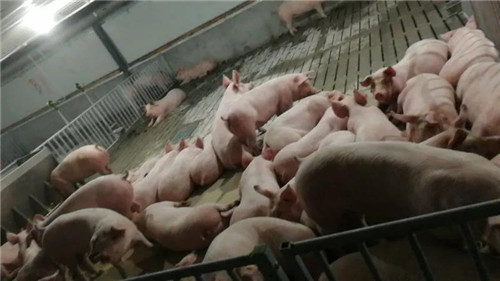
What are the monitoring operating procedures for the sow farrowing process?
What are the monitoring operating procedures for the sow farrowing process?
-
Mein Mein (vermicelli) thick soup at Jiang Hu in the dusk by the river, with pork ribs, bonito and onion soup, radish, hot tea, listening to enka
At dusk, a bowl of wheat vermicelli thick soup at Jiang Hu by the river | pork ribs and bonito-onion broth, served with a plate of radish and hot tea while listening to enka
条件筛选