-

How do rural reform pilot areas boldly serve as pathfinding pioneers?
Since 2011, under the leadership of the Central Rural Work Leading Group, the joint conference on rural reform pilot area work has designated 58 rural reform pilot areas in two batches, carrying out pilot exploration around the major rural reform tasks deployed by the central government. Over the past 4 years, all localities have focused on the themes of reform experimentation, been brave in innovation, and made bold explorations, achieving a number of good results and good experiences.
-
Agriculture says goodbye to the old traditional path, transforms toward modern agriculture
In recent years, China's agricultural and rural development has achieved tremendous accomplishments, but it must also be recognized that the various risks and challenges facing agricultural development are accumulating and converging. Especially after "eleven consecutive years of growth" in grain production, the situation for transforming the agricultural development model has become even more urgent. If the traditional agricultural
-
How can Chinese agriculture escape the smallholder predicament?
China's smallholder agriculture since the Sui and Tang dynasties. A smallholder refers to an individual farming household that relies entirely or mainly on its own labor to carry out agricultural operations smaller than the scale its labor capacity could handle. Smallholder agriculture refers to the small-scale farming operated by smallholders. According to "A History of China's Land System" by economists Zhao Gang and Chen Zhongyi, during the period from the Qin and Han dynasties to the Northern and Southern dynasties, land relations were not yet strained, and farming households operated 50-60 mu; limited by agricultural technology at the time, households could not cultivate more land, so the scale of agricultural operation matched the farming capacity of the household and was at a reasonable level. By the author's definition, farming households at that time did not yet count as smallholders. After the Sui and Tang dynasties, China's population growth outpaced the increase in cultivated land area, and with improvements in farm tools, fertilization and other agricultural techniques, the human-land relationship began to tighten, and the trend of more people and less land became increasingly obvious. The Tang dynasty implemented the equal-field system, with 65 mu per household as the upper limit, regardless of whether land was left fallow, and farming households often could not reach this upper limit. In the early Northern Song dynasty, the average cultivated land per household was 40 mu. During the Southern Song period, as the population increased, per capita cultivated land fell rapidly, and the vast majority of farming households cultivated less than 25 mu. During the Ming and Qing dynasties, average cultivated land per household gradually decreased even further. By 1936, average cultivated land per household was only 18.4 mu, and per capita cultivated land for farmers was 3.6 mu. It can be said that only after the Sui and Tang dynasties did China's farming households come to be called smallholders, and smallholder agriculture began to take shape.</p> <p> After the founding of New China, with population growth and advances in agricultural technology, the human-land relationship became even more strained, and the scale of smallholder operations became even smaller. At present, the average cultivated land per household in China is only 7.5 mu, equivalent to 1/40 of the European Union and 1/400 of the United States, and less than 1/2 of Japan and South Korea. Therefore, Chinese agriculture is a typical smallholder agriculture below the reasonable level of the human-land relationship. In addition, land plots are fragmented, with 7-8 plots per household on average, each plot averaging only about 1 mu; many farming households in Guangxi and elsewhere have a dozen or twenty-plus plots, most of them only a few tenths of a mu, so land management is especially highly small-scale and dispersed.</p> <p> Accordingly, the author's view is that from the Tang, Song, Yuan, Ming and Qing dynasties to the present, over a thousand years, the scale of farming household operations has gradually fallen to an economically increasingly unreasonable low level; households are capable of cultivating far more than they actually cultivate, the surplus agricultural labor force has gradually increased, farming households have become typical smallholders, and agriculture has become typical smallholder agriculture.</p> <p> <strong> The "smallholder predicament"</strong></p> <p> Relying on intensive smallholder agriculture, China has always fed the world's largest population. But it cannot be denied that China has many people and little land, the human-land contradiction is prominent, and the scale of agricultural operation is too small, making it economically unreasonable. Smallholder agriculture with less than 10 mu per household is below a reasonable scale of agricultural operation, resulting in a large surplus of labor, low agricultural production efficiency, and increased agricultural production costs per unit area for cultivation, harvesting, fertilizing and spraying. Smallholder agriculture is also not conducive to the use of advanced agricultural machinery and equipment, restricts improvements in agricultural production efficiency, and narrows the space for agricultural production returns. Taking grain-growing households as an example, the single-season return from one mu of land is about 200 yuan; calculated at an average of 7.5 mu per household, the return is less than 2,000 yuan. If labor costs are priced at market rates, then working in agriculture amounts to self-employment, and agricultural returns amount to wage income. The author believes that China's smallholder agriculture has fallen into a "smallholder low-level development predicament", or "smallholder predicament" for short, meaning that smallholder agriculture is "low-profit agriculture" (even "no-profit agriculture"): not only is the return per unit area low, but because the operating scale is small, total returns are also low; low returns in turn limit the capacity for agricultural investment and reduce enthusiasm for investment, leading to slow application of agricultural technology and extensive cultivation or even abandonment of land. Smallholder agriculture has low output, low efficiency, low returns and low input, a low-level cycle that is difficult to move toward modernization.</p> <p> In modern society, the commodity attributes of agricultural products have become increasingly obvious; besides meeting their own needs, the agricultural products produced by smallholders must also be sold on the market, and smallholder agriculture is inevitably affected by domestic and international agricultural product markets. Especially in the wave of agricultural globalization, smallholders find it difficult to "keep to themselves" as in traditional agriculture; their production, demand, prices and returns are all deeply affected by world agriculture. In recent years, domestic grain prices have continued to be higher than international market prices, and the own predicament of smallholders and smallholder agriculture has been intensified by pressure from the international market. The "smallholder predicament" is like a huge boulder holding back the pace of China's modern agriculture.</p> <p> <strong> From smallholders to family farms: the path out of the "smallholder predicament"</strong></p> <p> The important difference between smallholders and family farms lies in the difference in operating scale. If a farming household's operating scale is smaller than its labor and management capacity, it is a smallholder; if larger than its labor and management capacity, it is a family farm. A small operating scale is the main characteristic of smallholders and also the main cause of the "smallholder predicament". Once the operating scale of a farming household reaches a reasonable level matching its labor force and management capacity, the smallholder moves toward a family farm, the agricultural operating situation improves, and agricultural income increases and becomes comparable to non-agricultural employment income. Taking grain production as an example, survey and calculation data from the Ministry of Agriculture show that under current production conditions, a sown area of 100-120 mu is the scale standard distinguishing smallholders from family farms. According to research by the UN Food and Agriculture Organization, only an agricultural operating scale of no less than 170 mu for cash crops and no less than 300 mu for grain crops is internationally competitive. For a period in the future, both family farms and smallholders will be the main actors in China's agricultural operations, but family farms operated by professional farmers above the moderate scale are the vehicle for Chinese agriculture to escape the "smallholder predicament" and the direction for smallholder agriculture to be thoroughly transformed.</p> <p> At present, China has gradually acquired the economic and social conditions for moderate-scale operation, and moderate-scale land operation will become inevitable. The prerequisite for scale land operation is the transfer of surplus agricultural labor to the secondary and tertiary industries and the achievement of full employment in non-agricultural industries. Countries around the world generally take the stable transfer of 60%-70% of the agricultural labor force into non-agricultural industries as the starting condition for agricultural scale operation. Most developed countries have relied on gradually concentrating land to achieve agricultural scale operation and thereby achieve agricultural modernization. With the acceleration of urbanization and industrialization, the declining share of the rural labor force engaged in agriculture will become increasingly obvious. In 2012, China's total number of migrant workers exceeded 260 million, of whom more than 160 million worked away from home. There are about 150 million new-generation migrant workers, who basically do not know how to farm and will not make a living from farming in the future. In the long run, they have the possibility of breaking away from agriculture and from the land. In the developed coastal areas of eastern China, the inner suburbs of some large and medium-sized cities, and some areas of the central and western regions where large numbers of agricultural laborers go out to work, the conditions for moderate-scale land operation already exist. By the end of 2013, the area of contracted cultivated land transferred in China had reached 340 million mu, accounting for 26% of the national contracted cultivated land area. According to Ministry of Agriculture statistics, by the end of 2012, the country's 30 provinces, autonomous regions and municipalities (excluding Xizang) had a total of 877,000 family farms, accounting for less than 1% of the total number of farming households, with an operated cultivated land area of 176 million mu, an average operating scale of 200 mu, and 13.4% of the national contracted cultivated land area.</p> <p> Formulating a family farm development strategy and cultivating family farms is an important path to promoting the development of modern agriculture. In recent years, Jiangxi province, Jiangsu province, Hunan province, Suzhou city and some other areas have issued special fiscal subsidy policies to promote moderate-scale operation. At the central level, on the basis of drawing on local experience, special guiding documents to promote moderate-scale operation can be drafted, encouraging localities to support moderate-scale agricultural operation and family farm development on the premise of adhering to the basic rural operating system and protecting farmers' land rights and interests. Subsidy and support policies for family farms and smallholders (ordinary farming households) should mainly treat them equally, but there should be preferential policies for smallholders growing into family farms. It is suggested that national agricultural subsidies and agricultural development projects establish special programs to support agricultural scale operation entities. The central finance, agriculture, comprehensive agricultural development and other departments can, on the basis of existing policies, formulate and issue subsidies and projects specifically guiding and supporting agricultural scale operation and family farms. Through policy support, break the "smallholder low-level development predicament", guide moderate-scale agricultural operation, and create the basic conditions for realizing agricultural modernization. It must be emphasized that the move from smallholders to family farms is a gradual process; farmers must not be forced or induced to transfer land simply in pursuit of agricultural operating scale, and family farms must not be pieced together simply by lumping together and building up large households.</p> <p> </p>
-
Can Golden Cicada Flower Be Cultivated? Detailed Guide to Artificial Cultivation Methods
Golden cicada flower is a pathological phenomenon, produced by mutation after an organism becomes diseased. The golden cicada flower has very high economic and medicinal value, so many people want to make money by cultivating golden cicada flower. So can golden cicada flower be cultivated? 1. Golden cicada flower can
-
Where Golden Cicada Flower, an entomopathogenic fungus, grows, how to eat it effectively, and who should avoid it
Golden cicada flower (Isaria cicadae), commonly known as large cordyceps, is an entomopathogenic fungus; among the 504 species of cordyceps discovered worldwide, golden cicada flower and Cordyceps sinensis are just two of them. So, where does golden cicada flower grow? How should it be eaten for the best effect? Who should not eat it? 1.
-
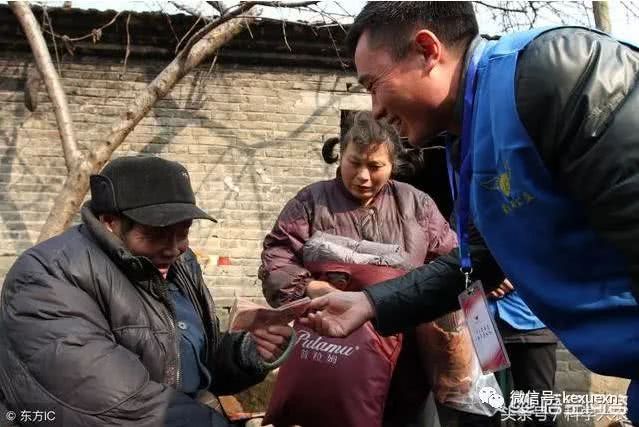
If you're a poor household wanting to change your family's financial situation, there's always a path to prosperity that suits you
It is understood that the poverty standards over in Baoding are mostly set at an annual income line of 3000 yuan, which means a monthly income of less than three hundred. By this standard, as long as you're not the type of poor household that just sits around waiting to die, escaping poverty isn't really that har...
-
How can cold-water fish farming effectively prevent and control pathogens?
1. Establish a strict quarantine system. When introducing and exporting fish eggs and fry, all farming areas must strictly carry out quarantine to prevent and control the occurrence of diseases. Farms should set up quarantine ponds to isolate introduced fish species; only after the introduced fish are confirmed free of important diseases may they be temporarily reared. Quarantine ponds are generally located at the end of the drainage ditch. The length of quarantine time should be determined by the transport season, water temperature, and the characteristics of the disease. When the average temperature is not lower than 12°C, 20 days are required; when the water temperature is higher, it can be shortened, which is determined on the basis that the lower the temperature, the longer the incubation period. If
-
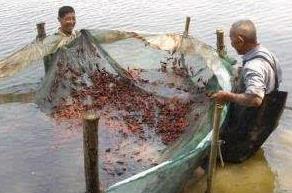
Changfeng Veteran Youth Raises Crayfish, Leading Poor Households onto the Path to Prosperity
Changfeng Veteran Youth Raises Crayfish to Lead Poor Households to Prosperity
-
Smallholder Farmers Can Also Develop Modern Agriculture: A Full Analysis of Feasible Paths
Smallholder Farmers Can Also Develop Modern Agriculture
-
Eco-friendly Native Chickens Sold Online Open Up a New Path to Prosperity
"Eco-friendly Native Chickens" Sold Online Open Up a New Path to Prosperity
条件筛选