-

What should be noted in mechanized potato harvesting
When harvesting potatoes mechanically, in order to save time, labor and effort, improve the economic benefits of machine use and the marketable rate of potatoes, the following issues should be noted. (1) About 10 days before the determined harvest date, the vines should first be rolled or cut (the method of rolling vines is to thread old tires onto an axle in a string and pull them with a tractor to roll the vines), so that the potato skins age and are prevented from being damaged during harvest, which would affect the quality of marketable potatoes. (2) The number of potato pickers matched to each machine unit should be reasonable. Small harvesters are generally matched with
-
What are the key points to note in the styling of lingzhi (Ganoderma) bonsai?
1. Proceed step by step, and treat every bonsai as a masterpiece. In addition to the quick wit and clever ideas needed when cultivating and shaping lingzhi, the later assembly stage demands even more patience and care: the first step is to dry and tidy the shaped lingzhi, and to select the rocks, coarse sand grains, tree stumps, and sun-dried companion materials such as moss, branched ground cover and Selaginella (spikemoss), the raw gypsum powder used for fixing, and small accessories such as pavilions and towers; the second step is the actual shaping work, starting with the imagery of a single lingzhi such as "a single branch standing out in beauty", "auspicious herb bringing good fortune" and "good luck and happiness", then
-
Five points to note when introducing spring potatoes
At present, it is exactly the season for planting potatoes. When transferring and purchasing seed potatoes, be sure to understand in detail the latitude, altitude, climatic conditions and other circumstances of the production area of the potato seed tubers, and correctly choose the production area and variety according to the rules of potato introduction. Specifically, pay attention to the following five aspects: 1. Latitude and altitude. Trials show that introduction from high altitude to low altitude and from high latitude to low latitude is likely to succeed. The reason is that during the growth period of potatoes at high altitude and high latitude, the temperature is relatively low, the seed tubers are less infected by viruses and degenerate slowly, and when introduced to low altitude and low latitude for planting, they generally perform well
-
Pig farmers, take note: never spray cold water on pigs in the height of summer
In the height of summer, when temperatures are high, pigs often pant heavily from the heat. Some farmers, worried that the pigs will get sick from the heat, spray cold water on them, hoping to cool them down and make them feel more comfortable, not realizing that this does more harm than good. Pigs pant from the heat because they do not sweat effectively, so the heat in their bodies cannot be released for the time being. If cold water is sprayed on the pigs at this point, the strong cold stimulus makes the sweat pores all over their bodies contract sharply, the release of body heat is blocked, and their body temperature instead rises abruptly. In mild cases this causes high fever and lung inflammation; in severe cases it leads to death. Therefore
-
What technical points should be noted for indoor cultivation of oyster mushrooms?
Oyster mushrooms are welcomed by people for their delicious taste, short production cycle and ease of cultivation. Especially in Northeast China, where the climate is cold in winter and spring and fresh vegetables are scarce, growing oyster mushrooms indoors to supply the market is truly a good way to make money. However, a prominent problem in indoor cultivation of oyster mushrooms is that the air temperature is not easy to control and the surface layer of the substrate dries out easily, affecting oyster mushroom production. After repeated trials, the author believes that casing soil cultivation gives good results. 1. Mushroom house selection. Abandoned or temporarily unused houses can be chosen as the mushroom house (they must be repainted with limewater), and heating and ventilation facilities are required.
-
What are the key points to note when storing jujubes?
1. Thoroughly disinfect the storage room with CT storage room disinfectant. 2. Lower the storage temperature to 0°C within 2 days before putting the jujubes in. 3. Jujubes should be harvested at the white-ripe stage, that is, when the jujubes turn from green to white and the fruit surface is slightly flushed with red. 4. Harvest with the fruit stalk attached; jujubes that have been beaten with sticks must never be put into storage. 5. Jujubes sprayed with hormones such as color-promoting agents before harvest are not suitable for storage. 6. After the harvested jujubes are selected, dip them in CT special liquid preservative for jujubes, and at 0°C
-
What key points should be noted for late-planted rice when transplanting into fields prepared with stored water?
The general requirement for transplanting late-planted rice into fields prepared with stored water is to seize the water, prepare the field, and transplant the seedlings, increasing the number of hills, seedlings, and panicles. For rice fields transplanted with stored water, as soon as rainfall occurs or another water source becomes available, measures such as blocking, diverting, and pumping water should be taken immediately to seize the water, prepare the field, and transplant the seedlings. For late-planted fields, planting density should be increased. For seedlings aged 60-70 days, transplant more than 13,000 hills per mu (8 x 6 cun), with two seedlings per hill (2 grains of rice); for seedlings aged over 70 days, transplant more than 15,000 hills per mu (8 x 5 cun), with about 10 seedlings per hill, so that the number of seedlings planted per mu reaches 150,000
-
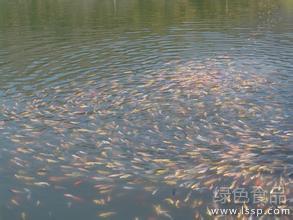
What should be noted when cultivating fish fingerlings in summer? Good-quality fingerlings are the foundation of successful fish farming
Good-quality fingerlings are the foundation of successful fish farming: precautions for cultivating fish fingerlings in summer
-
What technical points should be noted when introducing tea plants?
Tea plant introduction is simple and easy to achieve results. Since the 1950s, the area planted with improved varieties has been expanded. For example, the Yunnan large-leaf variety was introduced to Guangdong, Guangxi, Sichuan, Guizhou and other provinces and autonomous regions, and the area has reached more than 1 million mu. Fujian, Zhejiang and other provinces used introduced and acclimatized Yunnan large-leaf varieties as original material to breed a group of excellent high-yield new varieties. New progress has been made in introducing tea from the south to the north. The northernmost boundary of tea plant distribution in China has shifted from about 34°40'N to near 37°49'N, advancing northward by more than 350 km. Tea varieties have also been introduced successively from the former Soviet Union, Ja
-
What are the points to note when raising young dogs?
The young period is the main stage of growth and development, and the body grows rapidly, so sufficient nutrition must be supplied. Generally, in the first three months after birth, the main growth is of the body and weight; from 4-6 months, the main increase is in body length; after 7 months, the main growth is in height. Therefore, different nutrients should be supplemented according to different developmental stages. Puppies under 3 months old should be fed at least 4 times a day. Feeding small amounts frequently can keep the dog always feeling a little hungry, so it will not become bored or picky. For puppies aged 4-6 months, the appetite increases and weight rises quickly, and the amount of feed needed each day also increases accordingly.
条件筛选