-

What are the precautions for planting Pinus sylvestris var. mongolica?
In the long winter, there is a kind of tree in the botanical garden that is like Pinus tabuliformis var. mukdensis. It can bring greenery to the whole park
-

Are Pinus sylvestris var. mongolica seedlings expensive? Detailed explanation of overwintering management key points
Pinus sylvestris var. mongolica is a tree originating from the Greater Khingan Mountains region. Because it is highly adaptable and has excellent wood quality, it is very suitable for planting in courtyards or as a landscaping tree species. The seedlings of Pinus sylvestris var. mongolica are very drought-tolerant and tolerant of poor soil, and compared with other tree species they have very few pests and diseases,
-
How much does a Pinus sylvestris var. mongolica sapling cost in Ant Forest, and how tall can it grow in a year?
In the past two years, the function of Ant Forest that lets people plant real trees has gotten many consumers excited, and among them, Pinus sylvestris var. mongolica (Mongolian Scots pine) is especially popular. But do you know how much its saplings cost each, and how tall they can grow in a year? Below, the editor of Tuliu.com will introduce it to you one by one.
-
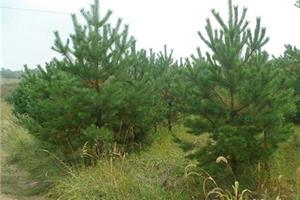
How to cultivate Pinus sylvestris var. mongolica and the conditions for its seeds to germinate
How to cultivate Pinus sylvestris var. mongolica and the conditions for its seeds to germinate
-
Grafting Propagation Technique for Pinus sylvestris var. mongolica Grafted with Korean Pine (Pinus koraiensis)
Pinus sylvestris var. mongolica has strong adaptability, is cold-resistant, drought-tolerant, and tolerant of poor soil. Using Pinus sylvestris var. mongolica as rootstock to graft Korean pine (Pinus koraiensis) brings earlier flowering and fruiting, rapid orchard establishment, and good results. 1 Preparation of scions 1.1 Selection of mother trees Select superior mother trees as scion sources. Within the chosen area, measure the tree height, diameter at breast height, crown width, fruiting layer thickness, number of young cones, number of cones, and male and female flower quantities of each clone individual. At the same time, conduct individual tree seed collection, and test cone number, cone weight, seed yield, seed extraction rate, kernel rate, empty shell rate, pest damage rate, 1000-seed weight, as well as cone length and width.
-
Technical key points for converting young Scots pine (Pinus sylvestris var. mongolica) stands into Korean pine (Pinus koraiensis) nut orchards
In recent years, the establishment of Korean pine dual-purpose nut and timber forests and Korean pine nut orchards has developed rapidly in Heilongjiang and Jilin provinces of China. In some places, developing Korean pine nut orchards has become a path to prosperity, and relatively large-scale Korean pine nut orchards have been established one after another. However, due to deviations in people's understanding, the selection of superior scions for grafting to establish orchards has been neglected, and the scions selected are rarely improved varieties that have undergone identification. Establishing Korean pine nut orchards without such selection cannot guarantee the yield and quality of seeds and nuts, let alone early fruiting, high yield, and stable yield. Practice has proven that using young Scots pine
条件筛选