-
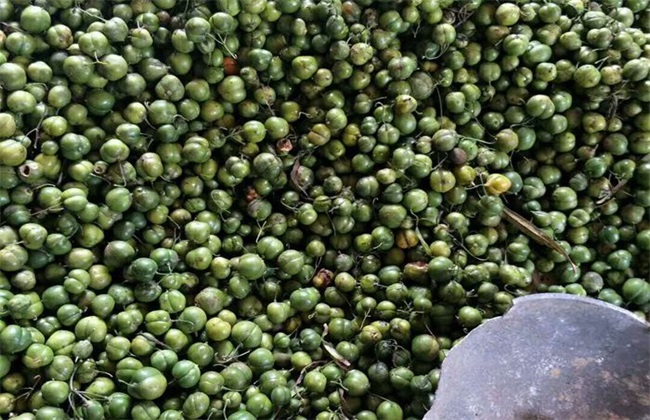
Detailed Explanation of Polygonatum Planting Methods and Timing
Polygonatum Planting Methods and Timing
-

What does Common Selfheal look like? Planting methods and timing, is the fresh plant toxic?
How should Common Selfheal be planted?
-
How to bake and shape Gastrodia elata after steaming and boiling
Place the Gastrodia elata taken out after steaming and boiling on a pre-prepared kang (heated brick bed). The temperature on the kang should initially be 50-60°C. After baking for 2-3 hours, raise it to 70-80°C. When it is 60-70% dry, take it out and flatten it with a wooden board. Finally, bake it over charcoal fire with sulfur until completely dry, and it becomes commercial Gastrodia elata. Sun-drying can also be used for processing, but the time required is too long, so it is rarely used. Generally, drying over a high fire is better. Practice has proved that Gastrodia elata steamed in a basket is the best, while the quality of that boiled in water is poorer.
-
What is the difference between ordinary Gastrodia elata and "Mingtianma"? Are they two different varieties?
After harvesting Gastrodia elata, select those that are large, uniform, and have a red "parrot's beak," wash them in water, peel them, boil them (adding alum water), shape them, dry them, and then fumigate them with sulfur; in this way the color is good, and through this fine processing "Mingtianma" is made. Most of those supplied for export are called Mingtianma. Gastrodia elata and Mingtianma are the same variety; the only difference is that the processing is coarse or fine.
-
Honeysuckle can prevent and treat poultry and livestock diseases, making it a valuable medicine for farming
Honeysuckle, also known as silver flower or Japanese honeysuckle flower, is the flower bud of Japanese honeysuckle (Lonicera japonica), a perennial semi-evergreen climbing vine of the Caprifoliaceae family. Honeysuckle is distributed throughout China, especially common in the south, and is now also cultivated artificially, with significant economic benefits, making it a path to wealth. It is mainly produced in Guangxi, Guangdong and Henan provinces and autonomous regions. From March to July each year, flower buds that are about to open are picked in the early morning and dried in the sun for later use. Every part of the honeysuckle is a treasure; it is a rare traditional Chinese medicine. At the same time, it is also a good medicine for preventing and treating poultry and livestock diseases. 1. Chicken diseases
-
Cultivation Timing and Management Key Points for Licorice
I. Seed Germination Habits (I) Water Absorption and Germination of Licorice Seeds Licorice seeds have a low emergence rate, generally around 10%, so they must be treated before sowing. Untreated seeds absorb water very slowly, and most seeds do not imbibe; seeds treated with concentrated sulfuric acid absorb water very rapidly, reaching over 100% within 4 hours. Generally, once water absorption exceeds 100%, the seeds have a very uniform germination capacity. If water absorption differs, the germination rate differs accordingly. At 20°C, after absorbing water for more than 1.5 hours, the germination rate reaches over 80%, at which point the moisture content is about 95
-
Winter pruning of goji berry is timely now; growers should not miss the farming season
After a year of growth, the goji berry tree has numerous branches and a messy canopy, and while new fruiting branches form, some fruiting branches have already begun to age. Therefore, goji berry must be pruned in winter, otherwise the yield and quality of the following year will be affected. Through pruning, out with the old and in with the new, selecting and retaining the old-eye branches and seven-inch branches with strong fruiting capacity, and cutting off non-productive branches, can lay a good foundation for the old-eye branches to bear fruit and grow new fruiting branches the following year. Top cutting: for ease of management, the tree height needs to be controlled by top cutting. Generally, tree height should
-

How to Grow Flemingia philippinensis? Planting Methods and Key Technical Points
How to Grow Flemingia philippinensis
-

How to Grow Edible Lilies? Detailed Planting Methods and Timing
Edible Lily Planting Methods and Timing
条件筛选