-

Rural Elderly Become the Main Force in Farming, as Large Numbers of Young and Middle-Aged People Move to Cities
Large Numbers of Rural Young and Middle-Aged People Move to Cities, Elderly Become the Main Force in Farming
-
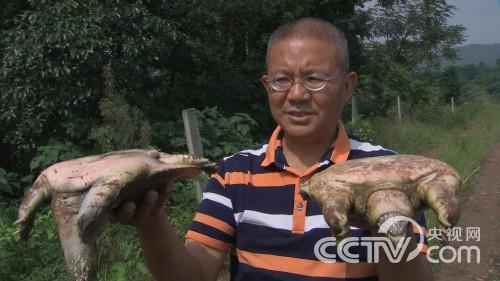
Seizing the opportunity by farming softshell turtles, a down-and-out middle-aged man leads over a hundred farming households to prosperity together
A down-and-out middle-aged man seizes the opportunity with one move and leads over a hundred farming households to raise softshell turtles and get rich together
-
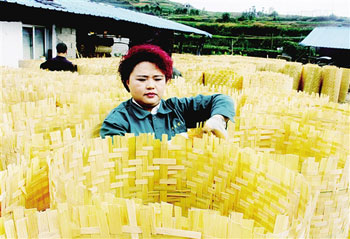
Middle school girl weaves bamboo mats that sell as far as Europe and Japan
Middle school girl weaves bamboo mats, bamboo mats sold to Europe and Japan
-
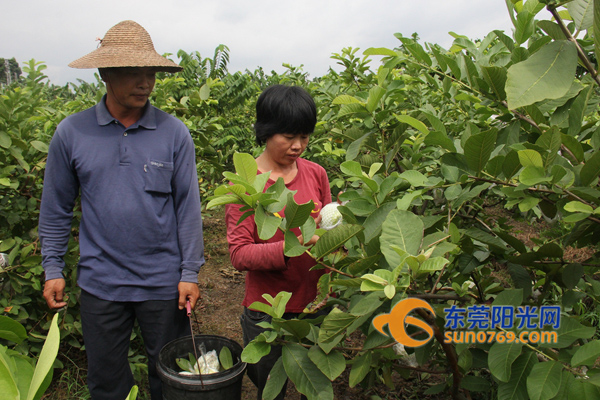
A small guava orchard carries the dream of prosperity: a middle-aged couple quit their jobs and returned to their village to start a business
A middle-aged couple quit their jobs and returned to their village to start a business; a small orchard carries their dream of prosperity
-
Nearly two years after the South-to-North Water Diversion Middle Route began carrying water, what has 5 billion cubic meters of southern water brought?
Nearly two years after the South-to-North Water Diversion Middle Route began carrying water: what has 5 billion cubic meters of southern water brought?
-
Middle-aged man in Chongqing grows button mushrooms, leading fellow villagers out of poverty toward prosperity
Middle-aged man from Chongqing grows button mushrooms, driving fellow villagers to shake off poverty and become rich
-
Technical Guidance for Rice Management in the Early and Middle Stages of This Year
I. Characteristics of Rice Production This Year 1. Large mechanical transplanting area and high transplanting quality. According to reports from all towns, the city's mechanical transplanting area is 173,500 mu, accounting for 81% of the rice area, with high transplanting density, few missing hills or gaps, and suitable basic seedlings. Seedling condition monitoring data: the city's average number of hills per mu is 17,300, an increase of 1,200 hills or 7.5% over last year's 16,100; the average number of basic seedlings is 70,700, an increase of 19,200 or 33.2% over last year's 57,700. 2. Suitable transplanting period and rapid seedling establishment and growth.
-
What are the key management points for the middle and late stages of shrimp farming?
In the middle and late stages of shrimp ponds after the body length reaches 7-8 cm, due to increased feed input, shrimp excrement gradually accumulates, and together with dead algae, residual feed, and the oxidative decomposition of organic matter at the pond bottom, the pond water quality, substrate, microorganisms, and so on have undergone great changes. The specific changes in the water environment and shrimp in the middle and late stages of shrimp farming are: pH gradually rises, the water color changes from clear green and yellow-green to brown and tea-green, transparency decreases, and turbidity increases; the pond bottom turns black and has a foul odor, and the number and types of harmful microorganisms increase.
-
Why do young bolls on the middle and upper parts of the cotton plant crack open prematurely?
Recently, some farmers called to report a strange phenomenon in cotton production: the large bolls and early-developing bolls on the lower part of the plant were growing normally and had not yet opened, while the tender bolls on the middle and upper parts cracked open prematurely, and some of the cracked bolls then rotted. The Wuqiao County Agriculture Bureau immediately organized technical personnel to go into the fields to find the cause. 1. Field symptoms: In early-sown cotton fields where the top 1-3 fruiting branches had no buds or bolls, or very few buds and bolls, due to rain or pest and disease damage, the number of cracked bolls on the middle and upper parts was relatively high, that is, the outer bolls on the 7th-8th fruiting branches counting from the bottom and the inner bolls on the 9th-10th
-
Poor cotton growth, management must keep up in the middle and late stages this year
Since the beginning of this year, our province has experienced prolonged overcast and rainy weather with scant sunshine, severe occurrence of seedling diseases, and cotton growth generally poorer than in previous years. At present, cotton has entered a critical period of growth, so we must make full use of the current characteristics of higher temperatures and rapid cotton growth to do a good job in cotton field management. Management in the middle and late stages of cotton should focus on the following aspects: 1. Early stubble clearing, early management. Stubble clearing and intertillage can not only provide a good environment for cotton seedling growth and development, but also eliminate cotton bollworm pupae. Once cotton seedlings enter the field, the word "management" must be put first, and all localities should suit measures to the seedlings and carry out classified management. Category 1 cotton seedlings grow
条件筛选