-

How to care for a Radermachera sinica (China doll)? Solutions for leaf drop
The China doll has an elegant form, with small, emerald-green leaves and dancing shadows. It is a very precious indoor ornamental plant. You can write your happy wishes on a card and hang it on the tree. Other names: chili tree, jiegouliangsan, mountain bean tree, qilin ziwei, peace tree (a commercial name). The China doll is the representative tree of Hawaii
-

How to keep the beautiful leaf color of the ripple peperomia
Ripple peperomia is also known as wrinkled-leaf peperomia. The leaves grow in clusters, with fairly long tea-brown petioles; the leaf blades are heart-shaped and dark green, with an uneven, wrinkled surface, and the entire leaf is wavy and glossy. In summer and autumn it sends up creamy-yellow spike inflorescences. It likes a warm, humid environment
-
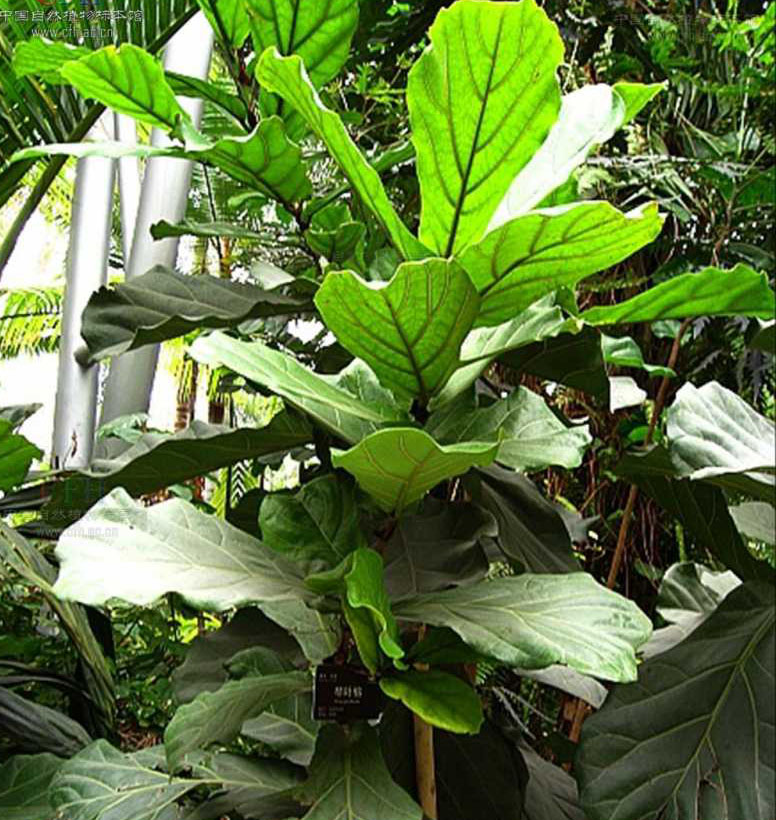
What are the growing environment requirements of the fiddle-leaf fig?
The fiddle-leaf fig (Ficus lyrata) is a plant of the genus Ficus in the mulberry family (Moraceae), native to tropical Africa. In recent years, together with its relative the big-leaf fig, it has been introduced into China for use in garden landscaping. The fiddle-leaf fig prefers a hot and humid climate, and can tolerate anything from partial sun to full sun. It is highly resistant to air pollution and dust, but has poor cold tolerance.
-
Why do spider plant leaf tips wither and turn black
Why do the leaf tips of potted spider plants (Chlorophytum comosum) turn black, dry up and shrivel? How can this be prevented? Looking at the blackening and withering of potted spider plant leaves from a cultivation perspective, there may be several reasons. First, dry air, overly intense sunlight and excessively high temperatures. This situation mainly occurs in summer and autumn, because spider plants like to grow in humid, semi-shaded environments; once the air is too dry and the sunlight is completely unobstructed, and if the temperature rises above 30°C, it is very easy to cause the leaf
-
What to Do When Spider Plant Leaf Tips Turn Brown and Dry? A Complete Guide to Prevention and Treatment
Spider plant (Chlorophytum comosum) has fresh green leaves shaped like orchid leaves, fresh and elegant, and is a common and beloved household foliage plant. It also has the unique effect of purifying indoor air, bringing people even greater benefits, which is one of the important reasons people like to grow it indoors. Spider plant is called the "air plant," and it truly lives up to the name: those stolons extending from the leaf axils, both firm and soft, hang down and outward from the rim of the pot, reaching several feet in length, with each stolon tip bearing new plantlets of various sizes, fresh green as if washed, gently swaying in the wind. If
-
Detailed Guide to the Prevention and Control of Leaf Spot Disease in Dendrobium Orchids
Symptoms: The disease occurs on the leaves. Small brown spots first appear, then enlarge, with the center becoming necrotic and grayish-brown, measuring 5-10 mm in diameter. Small black dots appear on the surface of old lesions. Affected leaves turn yellow and drop, though there are differences among varieties; the nobile dendrobium group tends to shed leaves more heavily, and its growth and development are significantly stunted. Pathogen: Selenophoma dendrobii Abiko. It belongs to the fungi imperfecti (Deuteromycetes). Conidia are colorless, single-celled, crescent-shaped, measuring 5-8 * 1-2 micrometers.
-
What are the symptoms of gray leaf spot on Japanese euonymus?
Symptoms of gray leaf spot on Japanese euonymus: it occurs on the leaves of Japanese euonymus. In the early stage, small chlorotic yellow spots appear on infected leaves, then gradually expand into irregular large spots that are gray, grayish white or light loess yellow. The boundary between diseased and healthy tissue is often brown or dark brown, and the edge is often raised. In the later stage, several spots often merge into one, occupying one-half to one-third of the total leaf area. When the damage is severe, diseased leaves may drop in the same year or even cause twig dieback.
-
What are the control methods for the Euonymus looper (large-leaf Euonymus inchworm)?
Occurrence pattern: The large-leaf Euonymus looper damages plants by the larvae feeding on leaves. It has three generations in Hunan. The overwintering generation adults emerge and lay eggs in mid-April, damage begins in late April, they successively enter the soil to pupate in late May, emerge in mid-June, the second generation causes damage in late June, enters the soil to pupate in early August, emerges in mid-August, and the third generation causes damage in late August. The most severe damage is caused by the first and second generations. Damage is most severe in seasons with mild climate and abundant rainfall. During the peak damage period, 2 to 3 days can strip all the leaves from the whole plant, leaving the plant bare. In
-
Occurrence Patterns and Control Methods of the Euonymus Leafroller Moth
The Euonymus leafroller moth belongs to the order Lepidoptera, family Zygaenidae. Its larvae damage the tender leaves and shoots of host plants, feeding on the foliage; in severe cases they strip the branches bare, or even cause entire stands to wither and die. In the Jining region, the Euonymus leafroller moth has one generation per year and overwinters as eggs on the host's branches and shoot tips. The overwintering eggs mostly hatch in mid-to-late March; in sheltered, sunny spots they can hatch 5-7 days earlier, and the hatching peak generally occurs around March 20. A single egg mass can finish hatching in 2-3 days, which coincides with the emergence of new leaves on the Euonymus. From late April to early May, the mature lar
-
Are large-leaf boxwood, Zhengmu, and Fufangshu the same plant?
Aliases: Zhengmu, Fufangshu, Dongqing Weimao. Family: Celastraceae. Category: Shrub. Latin name: Euonymus japonicus. Morphological features: Evergreen shrub or small tree. Height 5-6 m. Branchlets green, slightly 4-angled. Leaves simple, opposite, elliptical or obovate, with blunt teeth on the margins, dark green and glossy on the surface, leathery. Flowers in May, greenish-white, 5-12 in cymes, axillary at the tips of branches. Fruit ripens in October; capsule flattened-spherical, powdery green, splitting into 4 valves when mature, aril orange-red.
条件筛选