-
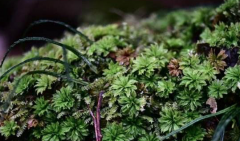
Is Warm-Climate Large-Leaf Moss Hard to Grow? A Full Guide to Planting and Propagation
Warm-climate large-leaf moss (Rhodobryum giganteum), this bryophyte is a very important medicinal moss. Its medicinal value is very high, and it has a good curative effect on treating cardiovascular diseases. So is this plant hard to grow? This plant is a bit hard to grow; to grow
-

How to treat pepper leaf curl disease? Introduction to the best treatment methods
Those who grow peppers should know that peppers often suffer from pests and diseases due to various problems. So do you know what the best treatment method for pepper leaf curl disease is? 1. The best treatment for pepper leaf curl disease. Treating pepper leaf curl disease requires strengthening field irrigation
-
How to plant redleaf plum? Detailed planting methods and techniques
Abstract Grafting method: carried out before spring bud break, rootstock can use wild peach, plum, plum, peach, apricot, etc. Layering method: select healthy branches, peel off a ring of bark 15-30cm below the top, cut a suitably sized piece of plastic film, place moist garden soil on it,
-
Planting Methods and Technical Points for Leaf-Vegetable Sweet Potato Leaves
Abstract Leaf-vegetable sweet potato leaves can be grown with a trellis; during the growing period, an appropriate amount of organic fertilizer is needed; in summer, water daily and shade with a black shade net; when the tender shoots grow to 5-6 leaves, harvest them promptly for eating; after 2-3 consecutive harvests, apply a top dressing; if
-
Can Four-Leaf Clovers Be Grown in Water? A Detailed Guide to Planting Methods
In the West, people believe that finding a four-leaf clover is lucky, and that this person will also be blessed by the gods and receive happiness and good fortune. So how do you grow a four-leaf clover with such a beautiful meaning? Today let us step into the world of plants together and take a look.
-
How to Plant Purple-Leaf Plum? Planting Methods and Precautions
Purple-leaf plum is a common woody plant. In landscape design, it is often chosen for planting because its plant is relatively large and its leaves are distinctive, so it has high ornamental value. So how exactly is it planted, and what issues do we need to pay attention to when planting it?
-
How to Grow Peperomia Polybotrya (Coin Leaf Peperomia): Detailed Planting Methods and Precautions
Coin leaf peperomia (Peperomia polybotrya) is a herbaceous plant introduced into China from abroad, and it can now be seen in many places across the country. Coin leaf peperomia is grown mainly for its foliage, which has a rather pointed tip and stays green all year round. Many people now grow coin leaf peperomia, but
-
When is the most suitable time to plant leaf lettuce?
Every vegetable has its own unique growth pattern. Take Chinese cabbage, for example: most of it is planted in autumn and winter and harvested in winter and spring, while water spinach, amaranth and the like are planted in late spring and harvested in summer and autumn. Leaf lettuce is also a kind of vegetable. So what exactly is its growth pattern? ⟦4 <p>Every vegetable has its own unique growth pattern. Take Chinese cabbage, for example: most of it is planted in autumn and winter and harvested in winter and spring, while water spinach, amaranth and the like are planted in late spring and harvested in summer and autumn. Leaf lettuce is also a kind of vegetable. So what exactly is its growth pattern?</p><p><strong></strong></p><p><strong>Planting time for leaf lettuce</strong></p><p>Leaf lettuce is generally sown in August-September, but with the development of greenhouse technology, it can now be planted all year round.</p><p></p><p><strong>Seedling-raising techniques for leaf lettuce</strong></p><p>1. Seed treatment: To raise leaf lettuce seedlings, the seeds need to be soaked to promote germination. Wrap the seeds in gauze and soak them in cool water for about 1 hour, then take them out and place them at 15-20℃ or in a household refrigerator's cold storage compartment for 2-3 days. Once the seeds show white sprouts, they can be sown.</p><p>2. Seedbed preparation: Choose a seedbed plot where the previous crop was not treated with long-residual herbicides such as imazethapyr or thifensulfuron-methyl, with high, dry terrain and strong water- and fertilizer-retention capacity. Apply plenty of organic fertilizer. For each mu of cultivation field, use 15-20 sq m of seedbed.</p><p>3. Timely sowing: At sowing time, mix an appropriate amount of fine sand with the seeds to separate them, then broadcast them to raise seedlings. Do not sow too densely, to prevent the seedlings from becoming leggy. Cover the seeds with 0.5 cm of medicinal soil mixed with phoxim, and set up a shed for sun protection and rain protection.</p><p>4. Seedling-stage management: When the leaf lettuce seedlings grow two true leaves, divide the seedlings, with a transplanting density of 6×6 cm. The leaf lettuce seedbed should be kept moist, and shade should be provided at noon. At the same time, during the seedling stage, leaf lettuce requires attention to pest and disease control.</p><p><strong></strong></p><p><strong>Field management techniques for leaf lettuce</strong></p><p>Leaf lettuce is generally cultivated in flat beds. Leaf lettuce can be planted out once it has 5-6 true leaves, with a row spacing and plant spacing of about 20 cm. Before planting out, deep-plow and apply sufficient base fertilizer. Generally, apply 3000 kg of decomposed barnyard manure per mu, 80-100 kg of ammonium bicarbonate, with 2 m including the ditch, deep ditches and high beds. Plant out at the 4-5 leaf stage, with strong seedlings, at a row spacing and plant spacing of 10-15 cm, cultivated in flat beds. For spring sowing and open-field transplanting, apply sufficient decomposed barnyard manure, and apply 80 kg of ammonium bicarbonate per mu.</p><p>After planting out, water thoroughly to settle the roots. In case of drought, promote growth with fertilizer and water, and it can be marketed in 25-30 days, with a yield of 1800-2000 kg per mu. Autumn sowing in July-September coincides with the high-temperature and dry season, and there are often rainstorms. After transplanting, water thoroughly to establish the plants, and cover with shade netting for 5-7 days. After the plants are established, if there is cloudy and rainy weather, the shade netting can be removed. Moderate fertilizer and water are conducive to the normal growth of leaf lettuce, and it can be marketed in 20-30 days, with a general yield of 1600-1800 kg per mu. For autumn-winter sowing in October-November, transplant in the open field. If a cold wave hits in December, it needs to be transplanted into a greenhouse, and it can be marketed in 25-30 days, with a yield of about 1500 kg per mu. Before planting out, apply sufficient base fertilizer. For every 667 mz, apply 5000 kg of high-quality barnyard manure, 40 kg of diammonium phosphate, 20 kg of urea, 20 kg of potassium sulfate, or 200—300 kg of plant ash, and make beds 1.5 m including the ditch.</p><p></p><p>When planting out, water well with the planting water. After 1 week, water thoroughly to help the seedlings recover. After recovery, apply a seedling-promoting fertilizer together with watering (15 kg of urea). In the later stage, apply a heavy plant-promoting fertilizer (30 kg of urea). After planting out and recovery, carry out timely intertillage and deep hoeing to help the plants stay compact and promote root development. Throughout the entire growth and development period, keep the field moist and the soil loose. The management method after planting out is basically the same as that for celtuce, and fertilizer and water management must be strengthened. It is necessary both to maintain sufficient moisture and to prevent waterlogging damage caused by excessive moisture, while also doing a good job of pest and disease control.</p><p></p><p><strong>Harvesting and storage of leaf lettuce</strong></p><p>Harvest. After planting out, depending on various conditions, it can be harvested in about 30-50 days, and in winter it takes a little longer. For harvesting, in summer it should be done in the morning, and in winter in a greenhouse it should be done in the evening. A knife can be used to cut the plant close to the ground. Remove yellow leaves and diseased leaves, then tie them into bundles or put them in baskets for sale. If long-distance transport is required, precooling is also necessary, or ice cubes can be placed in the packing boxes (frost damage is likely to occur around the ice cubes).</p><p>Storage The suitable storage temperature for leaf lettuce is 0℃, and the suitable relative humidity is above 95%. For storage or transport, the quality of the leaf lettuce must be high, the leaves should not be too tender, and the moisture content should be low. When harvesting, handle gently, harvest gently and place gently, to avoid mechanical damage.</p><p></p><p>In today's era of highly advanced technology, leaf lettuce can be planted all year round, but like all vegetables, vegetables grown in accordance with the laws of nature always taste better than those grown by breaking the rules. So, if it is for your own consumption, then do the appropriate things in the appropriate season!</p>
-
A Detailed Guide to the Planting Techniques and Care Management Methods of the Purple-Leaf Plum
The purple-leaf plum is a colorful deciduous tree commonly used in landscaping, with a plant height of 2~10 m, a graceful tree shape, and an upright posture, making it an excellent landscaping street tree. Its purple, glossy leaves, amid clusters of green foliage, look like flowers that never fade, forming a beautiful scenery amid the green mountains and waters.
-
A Detailed Guide to the Planting Methods and Technical Key Points for Dendrobium bambusifolium
There are many types of Dendrobium, such as Dendrobium bambusifolium, Dendrobium officinale, and so on. At present, over a thousand species have been recorded worldwide, but many Dendrobium species have no medicinal value. Today I will introduce the planting methods for Dendrobium bambusifolium. 1. Site selection and land preparation. Dendrobium likes to grow in an environment with even light, consistent temperature, and relatively high humidity.
条件筛选