-

Detailed Explanation of Short-Term Storage and Fresh-Keeping Methods for Ginger
If the ginger is to be processed and used, short-term storage and fresh-keeping are needed. Choose a sheltered spot indoors, first spread a layer of moist sand on the ground, then arrange the stored ginger upright and closely packed on top, covering each layer with 5-6 cm of moist sand; in this way it can be stacked 0.8-1 m high, with the topmost layer covered with 10 cm of moist sand, then cover with plastic film to retain moisture. Note that water must not enter the ground, and the film may be left off for the first half month.
-
Artificial Keeping Methods and Technical Key Points for the Chinese Cobra
The white-banded snake, also known as the many-banded krait or the small-banded krait, has high medicinal and economic value. Its keeping methods are as follows: 1. Build reasonable pools. The snake pool is built of brick and stone, 2 m square and 1.5 m high, and can hold 15-20 snakes; putting in too many snakes makes management difficult. The pool walls are smoothed with cement, and a movable glass cap is added on top of the wall in a T shape to prevent escape. The bottom of the pool is the snakes' activity area, where weeds should be planted, and then snake nests should be built with sand, wooden boards, bricks and tiles, etc. Build a flowing water ditch and a bait basin in the pool, and cover the pool with
-
Harvesting and Fresh-Keeping Methods for Outdoor Oleander Cuttings
[Other Chinese Names]Dajiezhong, Jiaochudong, Jiujiezhong, Juna, Liuyetao, Shuigancao[Family and Genus]Apocynaceae, Nerium[Place of Origin]Nepal, India, Iran and other places[Plant Characteristics]Oleander is an evergreen shrub or small tree. Plant height 5-6 m. It has milky sap. Simple leaves are whorled or opposite, linear-lanceolate, 10-25 cm long, entire, leathery.[Cutting Harvest]The harvested part is the current-year branches of oleander. Harvesting should be carried out from May to July each year. In order to obtain ideal
-
How to Raise a Chinese Box Turtle? A Detailed Guide to Keeping Methods
For raising Chinese box turtles, it is best to buy turtles between April and August each year. During this period there are more turtles, prices are lower, and they are easier to tame and keep. From January to March, turtles are hibernating or about to hibernate, so it is difficult to observe their activity, feeding, droppings, and other conditions. It is hard to judge the survival rate of the turtles. Adult Chinese box turtles are mainly obtained by purchasing wild-caught turtles. Wild-caught turtles are thin and weak, timid, with many wrinkles on the skin of the limbs, and when handled the turtle feels light. Selecting turtles can begin with two aspects: the turtle's appearance and its droppings. A healthy turtle has bright eyes, with no white spots on the cornea, no blood at the mouth or nose, and no mucus secretion. The skin, carapace, and plastron have no damage or ulceration. When crawling, the limbs can lift the body up. After being startled, it can immediately flee. The droppings of a healthy turtle are lump-shaped and wrapped in a white membrane. Droppings that are pale blue, blood-red, light green, etc. are all abnormal.
-
Harvesting and Fresh-keeping Methods for Black-eyed Susan Cut Flowers
[Other Chinese Names]Dui Xin Ju, Black-eyed Susan, Black-eyed Coneflower, Black-eyed Susan, Black-eyed Coneflower, Sunflower, Featherleaf Coneflower[Family and Genus]Asteraceae, Rudbeckia[Place of Origin]North America[Plant Characteristics]Black-eyed Susan is a perennial herbaceous plant with persistent roots. The plant height is 30-120 cm. The flower head is 3-5 cm in diameter; the ray florets are bright yellow; the disc florets are purple-black, densely arranged in a spherical shape. The natural flowering period is from June to September.[Cut Flower Harvesting]The harvested part is the flower head of Black-eyed Susan with its stem. It can be harvested after most of the ray florets have opened, and the operation
-
Harvesting and Fresh-keeping Methods for Fox Tail Asparagus Cut Foliage
[Other Chinese Names] Foxtail Asparagus, Myers Asparagus Fern, Sprenger's Asparagus Fern [Family and Genus] Liliaceae, Asparagus [Place of Origin] South Africa; this species is a horticultural variety. [Plant Characteristics] Fox Tail Asparagus is a perennial herbaceous plant. The plant height is about 60 cm. The rhizome is short, and the stem is erect. The cladodes are fine needle-shaped. [Cut Foliage Harvesting] The harvested part is the cladodes of Fox Tail Asparagus. During cultivation, cladodes that have turned dark green and are well grown can be cut at any time as needed. The operation can be carried out all day long.
-

How to Care for a Red-Eared Slider? Keeping Methods and Precautions
How to Care for a Red-Eared Slider
-
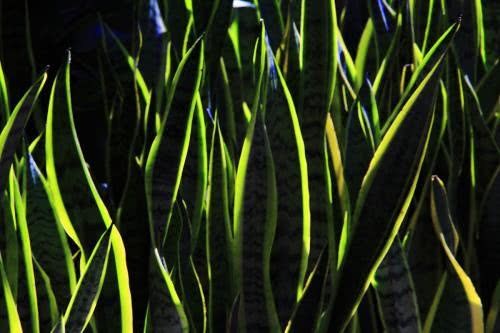
Keeping a snake plant at home is very easy; use these methods if you want it to fill its pot
I still remember that not long ago, I even went out of my way to buy a pot of snake plant and put it at home. Thinking about it now, it has been a long time since I last tended to it; I have basically been caring for other green plants and flowers. But when I looked at it today, I...
-
Lily Storage and Fresh-Keeping Methods and Key Technical Points
[Symptoms] Generally a latent infection. When co-infected with Lily symptomless virus, it produces chlorotic necrotic spot symptoms. [Pathogen] Cucumber mosaic virus (Cucumbermosaic Cucumovirus, CMV). The virus is an RNA virus belonging to the genus Cucumovirus. The virus particles are spherical, with a diameter of 30nm. The genome...
-

Ornamental turtle keeping tutorial, with a detailed explanation of raising methods and management points
Tutorial on keeping ornamental turtles
条件筛选