-

Poor cotton growth, management must keep up in the middle and late stages this year
Since the beginning of this year, our province has experienced prolonged overcast and rainy weather with scant sunshine, severe occurrence of seedling diseases, and cotton growth generally poorer than in previous years. At present, cotton has entered a critical period of growth, so we must make full use of the current characteristics of higher temperatures and rapid cotton growth to do a good job in cotton field management. Management in the middle and late stages of cotton should focus on the following aspects: 1. Early stubble clearing, early management. Stubble clearing and intertillage can not only provide a good environment for cotton seedling growth and development, but also eliminate cotton bollworm pupae. Once cotton seedlings enter the field, the word "management" must be put first, and all localities should suit measures to the seedlings and carry out classified management. Category 1 cotton seedlings grow
-

Key points for improving meat duck quality in cold winter: keep warm, prevent disease, increase light, prevent feather pecking
Keep warm, prevent disease, increase light, prevent feather pecking: key points for improving meat duck quality in cold winter
-
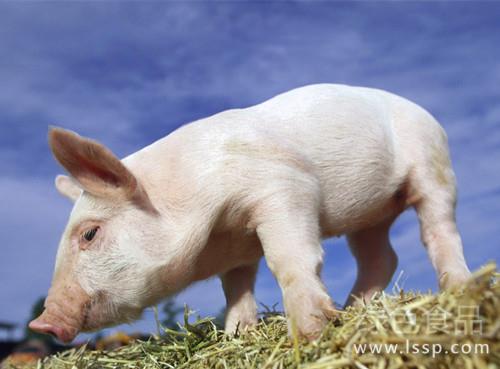
Improper management of piglets born in winter can easily lead to death; how to keep them alive
Cold winter, improper management makes piglets prone to death, how to keep winter-born piglets alive
-
Be on Guard Against Copper and Zinc Poisoning in Koi Keeping
I believe none of you will be surprised by this: copper and zinc in the water will kill koi. Of course, this is not news to me either. What I mean is, before you heard the story about a copper-connected heater releasing a large amount of copper into the water and thus killing all the koi, had you ever thought that copper and zinc could kill your koi? Perhaps many of us have not yet heard such a story. Before telling you these things, let me first review some of my own history. Of course, I have been keeping koi for quite a long time.
-
How to Keep Clown Knifefish? Breeding Methods and Precautions
Clown Knifefish: Clown Knife (Notopterus chitala), also known as: East Asian Knife, Bowfin, Bao Kong Humpback Fish, Flower Knife Fish. Native to Thailand, Myanmar, and India, size 90 cm, optimal temperature 28°C, highly adaptable, able to grow in ordinary water quality, suitable water temperature above 24°C. Grows fast, easy to keep. A nocturnal fish, mainly carnivorous, can be fed minced meat and fish chunks, most fond of live fish and shrimp, cannot be kept mixed with small fish. Male and female fish
-
How to Keep the Peruvian Caiman Lizard? A Detailed Guide to Care
Peruvian Caiman Lizard Dracaena Guianensis Introduction: It is a huge lizard with powerful jaws, rough and wrinkled skin, a flattened tail, and a back covered in large, raised scales, surrounded by granular scales, just like a caiman. Geographic distribution: South America; the Amazon region, Brazil, Guyana, Peru, Colombia and Ecuador. Adult size: about 3"4". Wild habitat: semi-aquatic; swamps and slow-moving streams. Keeping
-
A detailed guide to garlic storage methods: how to store garlic so it keeps longer
There are many ways to store garlic. Depending on the purpose and conditions of storage, you can use hanging storage, heap storage, cold storage, radiation storage, chemical treatment storage and other methods. Here are three methods in detail: 1. Hanging storage method. When harvesting garlic, strictly select the bulbs intended for hanging storage, discarding those that are too small, have rotting stems and leaves, are damaged, or have gotten wet from rain. Then spread them on the ground to dry for a few days until the leaves become soft and the outer skin of the bulbs has dried in several layers. Finally, select 50-100 bulbs of uniform size, braid them, and hang them under a cool, ventilated, rain-sheltered eaves to air-dry and store.
-
What are the taboos of growing bonsai in summer? Keep these five points firmly in mind
1. Avoid fertilizing. In the high temperatures of midsummer, the leaves lose water quickly. Fertilizing at this time will make the solute concentration of the trunk's cells lower than that of the surrounding environment, causing water in the plant cells to flow back into the soil, and the trunk will die of dehydration due to fertilizer damage. 2. Avoid drought. Watering when you remember and not watering when you forget, sometimes leaving it alone for several days in a row, and only quickly replenishing water once the leaves are found to be wilting, after which the leaves return to normal - this is a response of the trunk to adapt to the environment, but if this goes on for a long time, the excessively strong transpiration will eventually make the trunk difficult to recover from serious damage and die of dehydration. 3. Avoid water
-
Harvesting and Fresh-Keeping Methods for Outdoor Oleander Cuttings
[Other Chinese Names]Dajiezhong, Jiaochudong, Jiujiezhong, Juna, Liuyetao, Shuigancao[Family and Genus]Apocynaceae, Nerium[Place of Origin]Nepal, India, Iran and other places[Plant Characteristics]Oleander is an evergreen shrub or small tree. Plant height 5-6 m. It has milky sap. Simple leaves are whorled or opposite, linear-lanceolate, 10-25 cm long, entire, leathery.[Cutting Harvest]The harvested part is the current-year branches of oleander. Harvesting should be carried out from May to July each year. In order to obtain ideal
-
What are the key points for fresh-keeping processing of shiitake mushrooms for export?
I. Raw material selection The raw materials must be fresh and of normal color. The mushroom caps must be intact in shape, the stems must be complete and unblemished, and the mushrooms must retain their elegant form as when growing naturally. The flesh must be thick, the cap edges must be evenly inrolled, the partial veil must be unbroken or slightly open, and the caps must not have opened. The cap diameter must be no less than 38 mm. Free of pests and diseases, off-odors, and soil impurities. II. Raw material handling and cold storage 1. Precooling and moisture removal of raw materials To maintain good freshness and color of the raw materials, fresh mushrooms must be promptly placed in a cold store for precooling and temperature reduction after harvest. According to equipment performance and the moisture content of the fresh mushrooms, maintain an appropriate
条件筛选