-

How to make and care for a Chinese juniper bonsai? A detailed guide to the methods
Chinese juniper, also known as garden juniper, is an evergreen tree of the cypress family and an excellent material for leafy tree-stump bonsai. I. Making a Chinese juniper bonsai 1. Obtaining material. Chinese juniper is widely distributed in China. To make bonsai, people often dig up wild tree stumps in the mountains and fields before spring budbreak, then cultivate and process them; they can also collect seeds when ripe and store them in sand for about 1 year before sowing and raising seedlings; they can also propagate by softwood cuttings in May to June or by hardwood cuttings in September to October; layering can also be done during the plum rain season. 2. Styling. Chinese juniper usually uses the "combination of pruning and wiring
-
The creeping juniper is a suitable material for making bonsai
The creeping juniper generally has no upright main trunk, with dense branches and leaves, distinct layers, small emerald-green leaves, evergreen throughout the year, elegant posture, a long lifespan, and is easy to shape. The creeping juniper has strong adaptability and can grow well in both the south and the north, making it a good material for making bonsai. 1. Tree shape creation The branches of the creeping juniper are thin and long, and soft, suitable for making cascade style, curved trunk style, lying trunk style, and various bird, animal and other animal forms. When shaping the creeping juniper, one should do more wiring and less pruning. The wiring material can be metal wire or palm fiber. After the general outline is wired into shape, according to the needs of the shape, one should
-
How to Make a Chinese Juniper Bonsai and Its Care Techniques
Chinese juniper, also known as juniper, Taiwan juniper, and spiny pine, is an evergreen tree of the genus Juniperus in the Cupressaceae family. Its bark is brown, with longitudinal grooves, and peels off in strips. The branches are sparse and grow upward, while the twigs droop, are three-angled, initially green, and later reddish-brown. The leaves are arranged in whorls of three, needle-shaped, with sharp tips, slightly concave surfaces, and slightly raised midribs. The leaves are green, with a white stomatal band on each side, merging into one at the leaf tip. The trunk of the Chinese juniper is rugged and ancient-looking, the foliage is emerald green and evergreen all year round, and the branches are soft and easy to shape, making it a good tree species for making bonsai.
-
Detailed Explanation of the Care Methods and Techniques for Juniperus chinensis 'Kaizuca' Bonsai
Placement: Juniperus chinensis 'Kaizuca' is best placed in a spot with good air circulation and ample sunlight. It is cold-tolerant in winter and can generally be overwintered outdoors; simply place the pot in a sunny, wind-sheltered spot. During the high-temperature period of midsummer, except for small bonsai, shading is generally not needed. Watering: Juniperus chinensis 'Kaizuca' is drought-tolerant and afraid of waterlogging, so watering should not be on the wet side; the principle of "dry-wet cycle" must be followed.
-
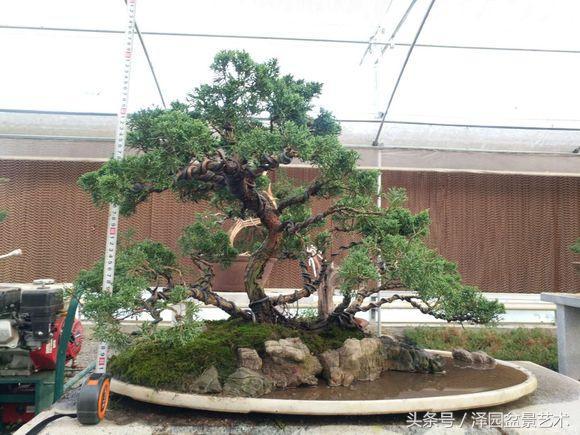
How to Create and Care for a Shimpaku Juniper Water-and-Land Penjing
Did you like this article? Share it right away so more people can see it! The content on this site is rich, substantial, and profound. Our editors select trending news every day and update it at any time. Click "Be the first to get the latest news" to browse! Please continue...
-
-
-
-
-
条件筛选