-
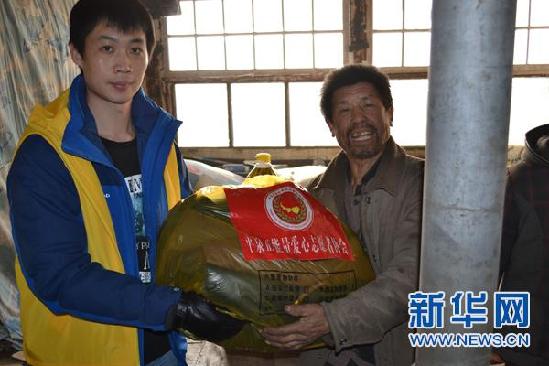
Post-80s Liu Chang spreads positive energy, joining together with others to do good deeds
"Post-80s" Liu Chang: Spreading positive energy, banding together to do good deeds
-

Huanghua Farmers Join with Cows as Shares, Fattening Their Wallets
Huanghua Farmers "Join with Cows as Shares" to Fatten Their Wallets
-
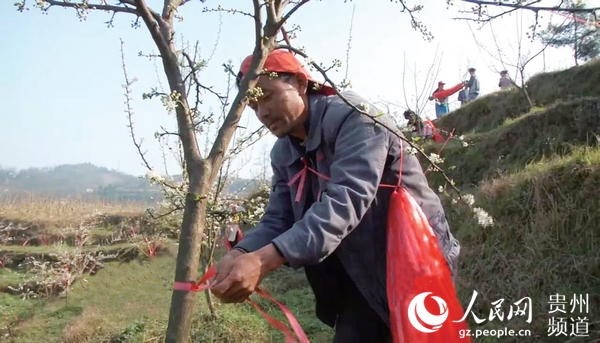
Yang Kaiwen: "Joining hands" with Brown Plum to "open the door" to prosperity
Yang Kaiwen: "Joining hands" with Brown Plum to "open the door" to prosperity
-
Rural e-commerce logistics bottleneck awaits breakthrough, e-commerce platforms and China Post join forces
Rural e-commerce logistics bottleneck awaits breakthrough as e-commerce platforms and China Post join forces
-
Guizhou and Shanghai Join Forces to Farm the Chinese Zebra Loach Artificially, Saving Guizhou's Native Fish
Jinqian Online News: A reporter learned yesterday from the Luodian Fisheries Station that at present, the fisheries departments of Guizhou and Shanghai are jointly conducting experimental research and development on the artificial domestication and breeding of the Chinese zebra loach (Botia zebra), in order to save this rare native aquatic wildlife species of Guizhou in the Pearl River system - the Chinese zebra loach. The "sesame sword" (scientific name: Chinese zebra loach) has no scales and a body shaped like a sharp sword; it gets its name from the sesame-like spots on its body, lives on the bottom of rivers, and feeds on small aquatic animals. It is mainly distributed in the Pearl River and Yuanjiang River systems, and its flesh is tender and delicious, making it an important commercial fish in its producing areas. Together with the sea bass (Japanese sea perch)
-
What are the management measures for rice during the jointing and panicle elongation stage?
Currently, rice growth across the city has successively entered the jointing and panicle elongation stage, an important period of transition from vegetative growth to reproductive growth and a critical period that determines yield. Doing a good job of field management in the middle and late stages of rice is crucial for ensuring sufficient panicles, striving for large panicles, shaping a high-yield plant type, and building a good foundation for high yield. I. Seedling growth characteristics According to a survey on July 21, the average leaf age of machine-transplanted rice was 12.31 leaves, 0.49 leaves more than the same period last year; the average leaf age of direct-seeded rice was 10.31 leaves, 0.56 leaves more than the same period last year; the total number of stems and tillers was 38.63 for machine-transplanted rice
-
Management Measures and Technical Points for Rice during the Jointing and Panicle Elongation Stage
The jointing and panicle elongation stage refers to the period from jointing and the beginning of young panicle differentiation to just before heading, generally 25-36 days for middle-season rice. 1. Growth and development characteristics and growth appearance during the jointing and panicle elongation stage (1) Growth and development characteristics During this period, on the one hand, stem elongation is the center, completing the growth of the last few leaves and root system and other vegetative organs; on the other hand, reproductive growth centered on young panicle differentiation takes place. During this period some tillers gradually die, and the total number of stems and tillers declines compared with the earlier stage, so it is an important period for preserving tillers and increasing panicles. From
-
Management Techniques for Rice at the Jointing and Booting Stage
Management at the jointing and booting stage: When 50% of the plants in the field have the main tiller elongated by 1-2 cm and the shape of the main tiller becomes rounded, it is the jointing stage. When 50% of the flag leaves have fully emerged from the leaf sheath, it is the booting stage. This period is when rice needs the most water in its entire life cycle. If the water is drained for a long time, it will affect the formation of the panicle, resulting in small panicles and many empty grains. However, deep water flooding should also be avoided; instead, irrigate frequently with shallow water and expose the field appropriately to promote root growth, achieving deep roots and lush leaves, and striving for large panicles and more grains.
-
A Brief Analysis of Treatment Methods for Hip Joint Dislocation in Cattle
Hip joint dislocation in cattle is extremely difficult to reduce, and most veterinarians classify it as an incurable disease. We now report the course of successfully reducing 1 typical case of hip joint dislocation in cattle as follows: Jie Jinbao's household in Shangfan Village, Changqiao Township, Guangchang County, 1 three-year-old yellow cattle bull. Chief complaint: On the morning of April 20, 2001, the cattle was tethered for grazing on a path embankment not far from the village. When someone went to change the grazing area in the afternoon, the cattle was found fallen beside the road and unable to stand. After learning of this, we quickly rushed to the scene. 1 Diagnosis Several people lifted the sick cattle up, and the hind limbs appeared mixed
-
Modified Shaoyao Gancao Decoction for treating joint synovitis in livestock
Formula and treatment method, Modified Shaoyao Gancao Decoction: Baishao (white peony root) 35 g-50 g, Zhigancao (honey-fried licorice root) 15 g-30 g, Danshen (red sage root) 40 g-60 g, Chuanxiong (Szechuan lovage rhizome) 30 g-40 g, Gegen (kudzu root) 40 g-60 g, Guizhi (cassia twig) 30 g-40 g, Duzhong (eucommia bark) 40 g-50 g, Niuxi (achyranthes root) 20 g-35 g, Mugua (Chinese quince fruit) 25 g-40 g (this dosage is the common dosage for large livestock). Decoct in water and administer orally, 1 dose per day, for 3-5 consecutive doses. Add water and an appropriate amount of edible vinegar to the medicinal residue, decoct, and use the liquid to fumigate and wash the affected area; when there is excessive joint effusion that is difficult to absorb
条件筛选