-
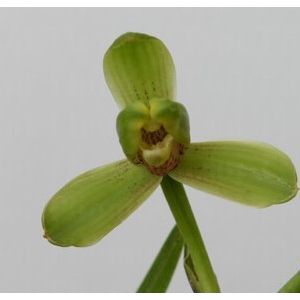
Detailed Explanation of Cold Fragrance Plum Hybridization Techniques and Methods
Origin: Taiwan, China Content: This is a hybrid orchid, a cross between Chunlan (Cymbidium goeringii) and "Vietnamese Four Seasons"; some sell it as Hanlan (Cymbidium kanran), and others sell it as Jianlan (Cymbidium ensifolium). The flowering period is quite long, and it may also bloom from October to May or June of the following year; by plum standards, the flower proportions are authentic, the central column is well held (when the bloom is good), and it has a Ruyi tongue; the color is green, the flowers are large, and very fragrant (a delicate fragrance); the leaves...
-

How to water orchids during winter vernalization
Vernalization happens in the depths of winter, so watering should strictly follow the rule of "keep dry in winter," keeping the potting soil slightly moist and on the dry side. During dormancy, orchid plants are in a low-consumption phase, but because the air is dry and there are many strong winds, the potting soil often loses water and dries out. You should check the potting soil regularly and avoid strong winds at the right times. You can water thoroughly once every 10-15 days (it is recommended to use water when the temperature is higher at noon...
-
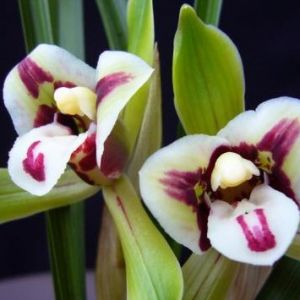
Orchid Vernalization Tips: How to Help Orchids Vernalize Better
Cymbidium goeringii, stamen-petaled butterfly type, rare flower, famous cultivar. The leaves grow to about 40 cm, forming a U shape, semi-arching, uniform in type, neat and consistent. The center of the flower is round and full, and the butterfly-transformed petals are broad and round in shape, pioneering the round and well-proportioned center in the stamen-petaled butterfly category of Cymbidium goeringii! The three outer petals open with balanced poise, with the petal tips narrowing at the base and forming corners, and the center and outer petals match perfectly...
-
A Brief Analysis of the Role and Methods of Cold Vernalization in Cymbidium goeringii
Orchids that need vernalization are those in the bud stage; orchids that have not produced flower buds do not need vernalization. A large temperature difference between day and night is a necessary condition for good bloom quality. Vernalize in sunlight, bloom in shade, tall stems and good quality (this suits natural vernalization in the Jiangsu-Zhejiang region); if vernalizing indoors as in the north, shade vernalization is recommended (temperature controlled at 1-12°C, with a temperature difference of about 10°C for about 40 to 50 days), then bloom in light (the "bloom in light" here does not mean direct sunlight either; diffuse light is best, ensuring Cymbidium goeringii temperatures of 8-20°C and Cymbidium faberi temperatures of 10-23°C, preferably not exceeding 25°C)
-
How Is Orchid Hybridization Done? Keep These Precautions in Mind
1. Before hybridizing, the pollen parent and seed parent should be chosen carefully. If the origin is unknown or the correctness of the variety is in doubt, hybridization should not be carried out, otherwise the variety system will be thrown into confusion, genetic judgment will be affected, and it will have no value in breeding academia. 2. If the orchid plant is not robust enough, do not force hybridization, because after successful hybridization, ...
-
Detailed Explanation of Wild Jianlan (Cymbidium ensifolium) Prices and Fertilization Methods
Jianlan is a subtropical terrestrial orchid, mainly produced in the provinces and cities south of the Yangtze River. It originates in forest edges along streams, bamboo groves, and hillsides overgrown with shrubs and thatch grass, at an average annual temperature of 17-21°C, annual rainfall above 1600 mm, altitude of 350-1000 m, and canopy density of 50%-60%. The characteristics of these places are: above there are tall...
-
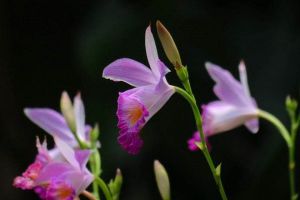
How to fertilize Arundina graminifolia? Master the correct fertilization method
Arundina graminifolia is a plant that grows in jungles or beside stream valleys at altitudes between 400 m and 2800 m. The plant height is between 40 cm and 80 cm, and some can reach about 1 m tall. It can be found in many countries. Its flowers are lively and elegant, and it can be planted in courtyards, flower beds and other places, or grown in pots indoors. But do fellow gardening friends know how to fertilize it?
-
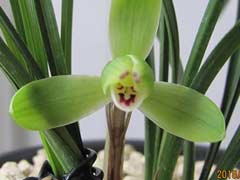
How long do Cymbidium goeringii flower buds need vernalization? | Try not to go below 70 days
I saw a fellow orchid grower ask how long Cymbidium goeringii flower buds need vernalization. The vernalization period should preferably be 70-100 days, and try not to go below 70 days. The longer the vernalization time, the better the flowering quality will relatively be, but it should not be too long, otherwise it will have all that energy and nowhere to use it...
-
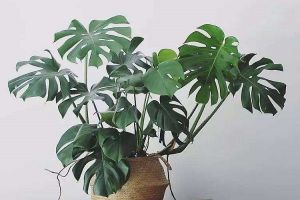
What is the best fertilizer for Monstera deliciosa? A detailed guide to scientific fertilization methods
What fertilizer to use for growing Monstera deliciosa has always been a headache for many people. In fact, the nutrients it needs most are phosphorus and potassium. Phosphorus not only helps it grow thicker and sturdier, but also keeps it healthier, while potassium is even more impressive: it not only boosts its resistance and strengthens its root system so it can absorb nutrients better, but also prevents it from lodging.
-
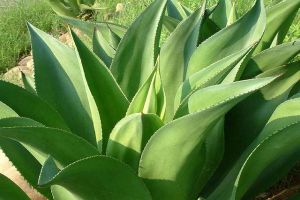
How to Fertilize Agave? A Detailed Guide to the Correct Fertilization Method
This is a very popular type of plant. Overall, it is fairly easy to care for. However, we also need to pay attention to some issues. For example, the issue of fertilization. Generally speaking, its demand for fertilizer is not very high. During the growing season, which is spring and summer, once a month is enough. In late autumn and early winter, it enters dormancy, and at this time it must not be fertilized. There are no particular requirements for the type of fertilizer; liquid fertilizer, compound fertilizer, and so on are all fine, but it must never be too concentrated.
条件筛选