-

What to do about cotton bud and boll shedding? Scientific fertilization can reduce it
The incoordination between the vegetative growth (growth of roots, stems and leaves) and reproductive growth (growth of buds, bolls and lint) of cotton causes an imbalance in the supply, transport and distribution of photosynthetic products within the cotton plant, which is an important cause of cotton bud and boll shedding. Through comprehensive measures centered on fertilization, controlling cotton growth is an important means of reducing cotton bud and boll shedding. Practice has proved that controlling stem and leaf growth in the early stage of cotton, building a good high-yield framework in the middle stage so that it grows steadily, and preventing premature senescence in the late stage are effective ways to reduce shedding of middle and lower buds and bolls. Therefore, in addition to rational close planting and strengthened water
-
Key Points of Cotton Fertilization Technology in the Huang-Huai-Hai Region
1. Main existing problems. In the Huang-Huai-Hai cotton region, nitrogen and phosphorus fertilizer application rates are generally too high, while organic fertilizer application is insufficient; basal fertilizer rates are too high, while topdressing rates are insufficient; deficiencies in the trace elements boron and zinc are relatively common. 2. Fertilization principles. (1) Increase organic fertilizer application and advocate combining organic and inorganic fertilizers. (2) According to soil fertility conditions, appropriately reduce nitrogen and phosphorus fertilizer rates, apply potassium fertilizer reasonably, and pay attention to the combined application of boron and zinc. (3) Apply nitrogen fertilizer in split applications, appropriately increasing the proportion of nitrogen fertilizer applied in the middle growth stage. (4) Fertilizer application should be combined with high-yield and high-quality cultivation techniques.
-
Shallow water warming for rice to promote tillering, fertilization with "two preventions" to grow strong seedlings
Due to the impact of unfavorable weather conditions such as low temperatures, frequent rain and insufficient sunlight, rice has been slow to turn green, with yellow leaves, few tillers and delayed growth. For this reason, rice expert Xu Yirong, after an on-site inspection in the Heilongjiang reclamation area, proposed countermeasures such as shallow water warming to promote tillering, fertilization with "two preventions" to grow strong seedlings, and fitness-based disease prevention. First, water layer management must be done well: deep water is a heat-preservation measure, shallow water is a warming measure, and not establishing a water layer is a cooling measure. For plots with deep water formed by rainfall, drainage must be carried out promptly to raise temperature, promote root growth and promote
-
Key Technical Points for Pest Control and Fertilization of Wheat in Winter and Early Spring
When temperatures are relatively low in winter and early spring, pest control and fertilization in wheat fields should pay attention to the following two points: For pest control, to control wheat aphids, red spiders and other pests, spraying omethoate is more effective than dimethoate. This is because the insecticidal efficacy of dimethoate against pests decreases significantly as the temperature drops, while the efficacy of omethoate is less affected by temperature and can exert normal insecticidal action at temperatures below 15°C. Similar to omethoate is fenvalerate; the toxic efficacy of fenvalerate at 15°C is instead stronger than at 25°C. Fertilization: For topdressing, applying ammonium bicarbonate is better than urea. Ammonium bicarbonate
-
The key "three waterings and three fertilizations" technical points for garlic cultivation
Water and fertilizer management after garlic turns green is the key to a bumper garlic harvest. As the weather warms up, water and fertilizer uptake gradually increases after greening, especially during the bolt-bearing stage and the bulb swelling stage, which are the peak periods of water and fertilizer demand for garlic. Therefore, throughout the entire growth period of garlic, timely watering and topdressing should be carried out according to soil moisture conditions and soil fertility and seedling conditions, with special emphasis on doing well the "three waterings" and "three fertilizations." 1. Water the greening water well and apply the greening fertilizer well. By the Spring Equinox, the garlic seedlings begin to turn green and grow. Because the early spring soil temperature is low, it is best to water the greening water at noon
-
Why should dog sterilization surgery be performed as early as possible?
Dogs generally reach sexual maturity at around 8 months after birth. Female dogs experience their first estrus at this time, and thereafter it occurs twice a year, which is known as the "heat period," the time when pregnancy is possible. On the other hand, after male dogs reach sexual maturity, in order to induce the arrival of the female dog's "heat period," they display a series of behaviors pursuing female dogs. For example, barking, going to places where there are female dogs, fighting with other male dogs over female dogs, and so on. In short, it is very difficult for them to settle down.
-
Detailed Explanation of the Rapid Mycelium Colonization Method for Bag-Cultivated Oyster Mushrooms
After inoculation, bag-cultivated oyster mushrooms generally need 25-30 days for the mycelium to fully colonize the bag. The longer the colonization period, the greater the chance of contamination by competing microorganisms, and the longer the production cycle. The following describes a simple, rapid colonization method that can significantly shorten the colonization time, reduce contamination by competing microorganisms, speed up fruiting, and shorten the production cycle. After the substrate (sterilized material) is bagged, inoculation is carried out at both ends. At each end of the substrate bag, a pointed stick (2-3 cm in diameter, about 30 cm long) is used to bore a hole from the center of the bag end, with a depth of more than half the bag, and then an appropriate amount of spawn is inserted into the stick hole
-
Key Technical Points for Foliar Fertilization of Cotton to Prevent Premature Senescence
In the late growth stage of cotton, root activity gradually declines and the ability to absorb water and nutrients weakens accordingly. Adopting the method of spraying fertilizer solution promotes the absorption and utilization of nutrients by cotton, extends the functional period of leaves, improves root activity, and increases boll weight. As for the concentration of the fertilizer solution, urea is best at 1%, adding 0.5 kg of urea to 50 kg of water; potassium dihydrogen phosphate and superphosphate are best at 1%-1.5%. Superphosphate should first be soaked for 24 hours; after the impurities settle, slowly pour out the clear liquid, dilute with water, and then spray. At the same time, Tianfengsu or Shuofeng 481 may be appropriately added, which can
-
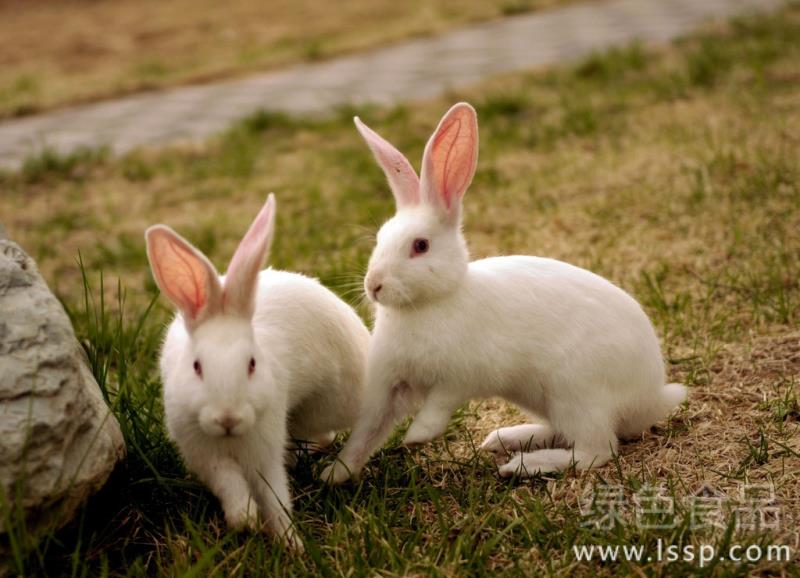
5 contraindications for immune injection in domestic rabbits; only reasonable immunization brings healthy rabbits
Reasonable immunization brings healthy rabbits: 5 contraindications for immune injection
-
What problems exist in the process of chicken immunization and medication?
With the development of the broiler farming industry, many farmers regard raising broilers as a way to get rich, but the following two major problems still exist in raising them. (1) Blindly copying outdated immunization programs: many chicken farmers immunize only once with Newcastle disease strain IV vaccine and do not immunize with any other vaccine until sale; some chicken farmers have infectious bursal disease of chickens in every flock, and the yolk fluid used for therapeutic injection contains Newcastle disease antibodies, thereby interfering with the immune effect of the Newcastle disease vaccine; in infectious bronchitis epidemic areas, absolutely
条件筛选