-

How to advance industrialized poverty alleviation through grassland animal husbandry? Experts offer advice and suggestions
On November 14, the first International Forum on "Qinglong Sheep" Industry Development and "Southwest Grassland Capital" Construction was held in Xingyi, Qianxinan Prefecture, Guizhou Province, with experts and scholars from home and abroad gathering together to offer suggestions for further advancing industrialized poverty alleviation through grassland animal husbandry in Qianxinan and even the whole of Guizhou Province
-
Industrialized operation makes agriculture strong; in the work on agriculture, rural areas and farmers, not one of the goals of strong, beautiful and prosperous can be left out
The greenhouse grapes in our village all hit the market early, and the price is far higher than that of 'cold shed' and 'open-air' grapes. A shed of less than 1 mu can bring in more than 50,000 yuan! A few days ago, villager Yu Zhiping of Shilipu Village, Shilipu Township, Changli County, Hebei Province, told reporters with a smile that now basically the whole village
-
Industrialized Seedling Rearing Technology for Whiteleg Shrimp
Abstract Whiteleg shrimp farming requires thorough knowledge of broodstock rearing, broodstock gonad maturation, induced mating and spawning, fertilized egg collection and hatching, larval rearing conditions, and seedling management techniques. To achieve fast shrimp growth, strict requirements apply to water quality, stocking density, pond water depth, and feed feeding.
-
What are the main problems faced by industrialized agricultural operations?
Generally speaking, China's agricultural industrialization has achieved considerable development in recent years, but at the same time, we must also clearly recognize that the overall level of China's agricultural industrialization is still not high, and there are still some problems that need to be solved urgently in its development. 1. Agriculture
-
What is the guiding philosophy of industrialized walnut management
1. What is industrialized walnut management? The essence of industrialized agricultural management is to use the methods of managing modern industry to organize modern agricultural production and management. It is oriented by domestic and international markets, centered on improving economic benefits, supported by scientific and technological progress, and revolves around
-
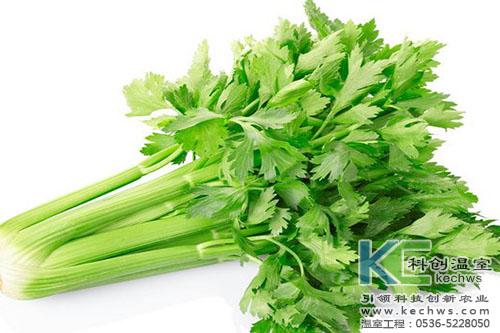
Industrialized cultivation technology for celery: growing vegetables without depending on weather or soil
How celery can be grown industrially, without depending on weather or soil
-

Detailed Explanation of Key Technologies and Development Strategies for Industrialized Fish Farming
Key Technologies and Development Strategies for Industrialized Fish Farming
-
Application of Artificially Hatched Artemia in Industrialized Cultivation of Yellow Catfish Fry
1. Wide-ridge double-row planting method: This method transplants rice seedlings in a sequence of 6 cun, 12 cun, 6 cun. Its advantages: First, the total number of hills per mu (16,000 hills) is slightly less than that of monoculture rice, but yield increases through ventilation and light penetration; Second, it provides more than 7 hours of light daily, raises water temperature, and allows plankton to reproduce and grow rapidly, creating good conditions for providing natural food organisms for yellow catfish; Third, it broadens the activity space for yellow catfish, enables large-scale pest elimination, and fish feces serve as fertilizer, increasing rice yield. 2. Rice management: Rice cultivation management strictly follows
-
Ideas and Countermeasures for Promoting the Industrialized Operation of Edible Fungi
Fan Shenhua, Director of the Agriculture Bureau of Bazhong City, Sichuan Province, led a municipal bureau research team on a special investigation of edible fungi in Tongjiang County. Over two days, the research team successively visited 5 villages and 12 she in Tiechang Township, Nuosuihe Town, and Nuojiang Town of Tongjiang County, visited 27 large planting households, 2 professional cooperatives, the processing workshops of leading enterprises, and the operating market, and held discussions with large households, members of professional cooperatives, grassroots cadres, and leading enterprises to jointly explore the industrialized operation of edible fungi. I. Development Status The edible fungi products of Tongjiang mainly consist of silver ear fungus (white fungus), wood ear fungus, and shiitake mushrooms, which are produced and cultivated in large quantities, along with small quantities of oyster mushrooms, button mushrooms, enoki mushrooms, shimeji mushrooms, straw mushrooms, Gastrodia elata, reishi mushrooms, and more than 10 types of wild fungi.
-
Detailed Explanation of Key Points in Industrialized Shiitake Mushroom Production Technology
Shiitake mushrooms consist of two parts: the mycelium and the fruiting body. The mycelium develops from germinating spores; it is white and downy, with septa and branches, 2 to 4 nanometers thick. The hyphae combine with one another, growing and multiplying continuously, gathering into a mycelium that appears cobweb-like. The mycelium is the vegetative organ of the shiitake mushroom, equivalent to the roots, stems and leaves of higher plants. Any part of the shiitake mushroom's tissue is composed of hyphae, and under suitable conditions all of it can sprout new hyphae, which grow continuously and gradually develop and differentiate into fruiting bodies (shiitake mushrooms). The shiitake fruiting body is
条件筛选