-

How to Grow String of Buttons? Complete Guide to Planting Methods and Care Tips
A detailed introduction to the planting methods and care techniques for the succulent String of Buttons (Crassula perforata), including how to grow it, soil mix, light and watering, propagation methods, summer and winter care, pest and disease control, and other practical content.
-
How to Grow String of Buttons (Crassula perforata) for Vigorous Growth: A Detailed Guide to Planting Methods
A detailed introduction to the planting methods and care techniques for String of Buttons, including how to grow it, soil mixing, light and watering, propagation methods, fertilizing and pruning, pest and disease control, and other practical content.
-
How to Grow String of Buttons (Crassula perforata) - Flower Encyclopedia, Xiaoshuai Talks About Growing: How to Grow String of Buttons
When cultivating String of Buttons, choose a slightly acidic sandy soil, water generally every 6 to 8 days, and apply a compound fertilizer once a month; usually keep String of Buttons in a spot with plenty of scattered light, and keep the temperature between 20 and 32°C. [More] String of Buttons is a type of succulent plant, and it looks especially cute. Moreover, String of Buttons has a very special meaning, representing a full string of money - after all, it is called String of Buttons. 1. Choosing the soil. Gardeners who have grown succulent plants will [More]
-

How to Grow and Care for String of Buttons (Crassula perforata) and Notes, Plus Propagation and Pruning Methods
"How to Grow and Care for String of Buttons" The String of Buttons plant gets its name because the plant resembles strings of ancient coins, and it is one of the popular small succulents...
-

How to grow String of Buttons? A detailed guide to cultivation methods
Cultivation methods for String of Buttons
-
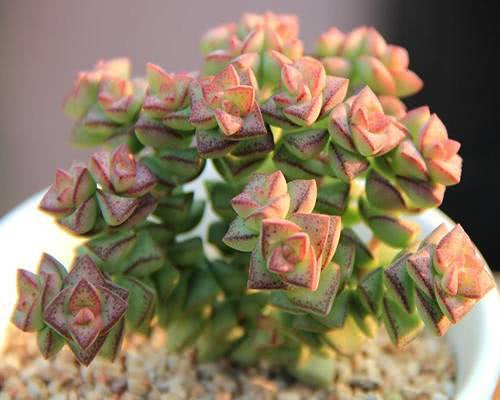
How to grow and care for the String of Buttons succulent
String of Buttons (Crassula perforata) is a perennial succulent herbaceous plant, with upright and clumping growth, many small branches, and fleshy stems; the perennial stem base gradually becomes semi-woody. The flesh is green to pale green, about 0.5 cm long and about 0.4 cm wide; the leaf edges are slightly red, in late autumn and early spring, especially at T time. The temperature difference is relatively large. Leaves are alternate, opposite, elliptical, triangular, with petioles, linked at the base; new leaves stack at the top and bottom, with the leaves slightly up and down. The flowering period lasts 4-5 months, white, star-shaped, with 5-6 petals, clustered, usually filling the branches, quite showy; it does not die after flowering. A small variety, the flowering plant is only about 12 cm tall.
条件筛选