-

How to prevent and control green mold during oyster mushroom cultivation?
How to prevent and control green mold in oyster mushrooms? What harm does green mold do to oyster mushrooms? Please provide guidance. The harm of green mold to oyster mushroom cultivation: green mold is a major disease in edible mushroom cultivation, mainly occurring on mushroom blocks that have not yet been colonized by mycelium or on culture material that has not been thoroughly sterilized. Green mold is prone to breeding in acidic environments and environments with relatively high humidity...
-
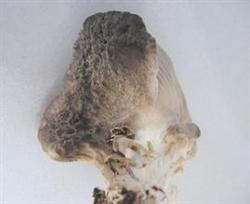
How to prevent and control green mold in oyster mushrooms? A detailed guide to integrated control techniques
1. The tall-stemmed mushroom has a small cap and poor differentiation, with a relatively long stem. The cause is that during the primordium formation and differentiation stage, the mushroom house is short of oxygen and light, while the temperature is on the high side, which affects the normal differentiation and development of the cap. Control method: increase ventilation and adjust light and temperature. 2. The tumor-capped mushroom's cap appearance is mainly at the edge...
-

How to case Golden Blessing mushroom for high yields? Practical techniques explained in detail
After the Golden Blessing mushroom spawn has fully colonized the bags, they can be buried in soil for fruiting after 3-5 days. Cut away the entire spawn bag or cut off a section about 10 cm wide across the cross-section, bury 5-8 cm deep, place the bags horizontally, facing each other in pairs, with 5 cm between bags, 4 bags per row, 40 per group, then apply casing soil, covering the bags with 3 cm of soil. The casing soil should be granular, not too fine. The day before casing, it is best to adjust the soil to semi-dry and semi-moist. Adjust the moisture of the casing soil over two days, moistening all the soil thoroughly, and carry out the watering under ventilated conditions in the mushroom house. Do not spray water with the house closed. Casing soil moisture adjustment
-
How to prevent and control green mold in edible mushrooms? A detailed introduction to practical methods
Green mold disease is a major enemy in edible mushroom cultivation. It is prone to occur in large amounts when raw materials are not fresh, raw material handling is improper, sterilization is incomplete, inoculation is not strict, and the spawning environment is not clean, especially combined with acidic, high-temperature, and high-humidity conditions. Its spores spread quickly through the air and reproduce rapidly. If prevention is inadequate or control is not timely, serious consequences will result. 1. Select fresh raw materials and auxiliary materials that have not been rained on and are not moldy. Raw material handling and fermentation sites must be clean and hygienic. 2. During cooked-material cultivation, sterilization standards must be met and sterilization must be thorough; during fermented cultivation
-
How to Prevent and Control Penicillium Mold in Oyster Mushrooms? A Detailed Guide to Practical Techniques
Penicillium Penicillium is a common contaminant mold on oyster mushroom spawn-production and cultivation beds, and occasionally has a weak parasitic effect on fruiting bodies; its asexual stage belongs to the Deuteromycotina, genus Penicillium. (1) Pathogen characteristics: Penicillium hyphae are colorless, septate; the colony is initially white, with most of it penetrating deep into the substrate and few aerial hyphae, appearing as a felt-like or cottony mass; the conidiophores branch in a broom-like pattern at the tips, and when conidia accumulate in large numbers they form a blue-green, yellow-green or blue-green powdery mold layer. (2) Damage symptoms: Penicillium occurs
-
How to Deal with White Mold on Oyster Mushrooms? A Detailed Guide to Prevention and Control
Oyster mushrooms often show vigorous mycelial growth (white and dense) during cultivation, making it difficult for fruiting bodies to form, with few or no mushrooms emerging, a phenomenon growers often call "white mold." When this happens, the following methods can be used: Adjust the temperature. For high-temperature oyster mushroom varieties, keep the daytime temperature at around 25°C; for low-temperature varieties, keep the daytime temperature at around 10°C. Within the suitable temperature range, increase the day-night temperature difference as much as possible to stimulate mycelial growth. Control humidity. Keep relative humidity at 85%-95%. When humidity is low, fruiting
-
How to prevent and control green mold contamination in mushroom cultivation?
In production, strictly avoid applying excessive formaldehyde in the inoculation box or inoculation room, so as to prevent formaldehyde from turning into formic acid and forming an acidic environment. Lime powder should be spread around the culture room, and any spawn found contaminated by green mold should be dug out promptly. After sowing, check the spawn blocks in time; if green mold contamination is found, immediately dig it out and replace it with new spawn blocks. Choose to cultivate in low-temperature and dry seasons as much as possible to reduce disease incidence. During the mycelium healing stage, cover with plastic film, ventilate moderately, and pay attention to lowering the temperature. In the later stage, the plastic film must not be lifted too early, to prevent the healing spawn blocks from being attacked. When green mold appears on the spawn blocks, promptly scrub with 40% sulfur-polycarbamate suspension concentrate or 50% carbendazim wettable powder 800-fold solution.
-
How to make sweet potato golden shreds? Detailed production process analysis
The production process of sweet potato golden shreds
条件筛选