-

Dendrobium Orchid Home Growing Tips and Daily Care Methods
Dendrobium orchids, along with Cattleya, Phalaenopsis and Vanda, are ranked as the four major tropical ornamental orchid groups, and are one of the largest genera in the Orchidaceae family, with 1500-1600 native species, of which about 60 are found in China. Dendrobiums are divided into two major categories, deciduous dendrobiums and evergreen dendrobiums, according to their biological characteristics and different ecological requirements. Deciduous dendrobiums send up flower spikes from the upper part of the pseudobulb each year, and after flowering new shoots grow from the base and develop into new pseudobulbs, with the leaves falling at the end of the growing period or in the spring of the following year. Evergreen dendrobiums
-
Tricks to Get Runty Pigs Growing Again: These Methods Are Very Practical
1. Deworming and stomach cleansing: Give trichlorfon orally at 0.017 g per kg of body weight once a day for 3 consecutive days. Two days after deworming, take 1 kg of quicklime, dissolve it in 5 kg of water, take the clear supernatant liquid and mix it into the feed to feed the pigs, once a day for 5 consecutive days, to clear worm eggs and various toxins from the gastrointestinal tract. 2. Strengthening the stomach and promoting digestion: Use 1 rhubarb soda tablet per kg of body weight (containing 0.3 g), with no more than 10 tablets per pig, grind into powder and mix into the feed, feed once a day for
-

What to Do About Golden Privet Leaf Drop During the Growing Season? Causes and Control Methods
Causes and Control Measures for Leaf Drop of Golden Privet During the Growing Season Caused by Disease According to expert research, this leaf spot disease is caused by the pathogenic fungus Alternaria (afternaria) of the order Moniliales, class Hyphomycetes, subdivision Deuteromycotina. In the early stage, small brown spots appear on the leaves, surrounded by purplish-red halos, and black mold-like growth is visible on the spots.
-
Ginger Lily, also known as Butterfly Lily: Characteristics and Growing Methods
Variety origin: Native to southern and southwestern China, India, Malaysia and Australia, and further developed into a cut flower variety through multiple generations of selection. Variety distribution: Cultivated in all counties, cities and districts on the outskirts of Guangzhou, with the highest output in Fangcun District. Variety characteristics: A perennial bulbous flower, with underground stems resembling ginger, and the above-ground part growing in clumps, with a single stem that does not branch. Plant height 1-1.5 m, with 8-10 leaves. The terminal spike-type pinecone-shaped inflorescence has green bracts containing 2-3 white flowers, extremely fragrant, with a flowering period from May to November. Variety characteristics
-
Detailed Guide to Impatiens Growing Methods and Care Techniques
Impatiens, also known as henna, is an annual flower native to southern China and the tropical plains of Asia. It has many varieties and rich flower colors, including red, pink, purple, yellow and white, as well as bicolor forms, and is very showy. It is generally divided into two major groups, single-petaled and double-petaled. Single-petaled plants are conical, tall and sturdy, and can reach up to 80 cm. The flowering order rises section by section from the lower part upward, and the flowering period can last up to 1 month. Double-petaled varieties are shorter, generally less than 40 cm, with a flat-topped form; at flowering, the area near the terminal bud is all flower buds, and the flowers open neatly all at once from the top to the lower part,
-
Lily Cultivation Techniques: Open Field, Greenhouse, Pot and Cut Flower Growing Methods
The lily is a cold-hardy bulbous flower of the Liliaceae family that loves light and fertile sandy soil. It has unusual flower shapes and many bright, beautiful colors, and works both as a potted plant and a cut flower, giving a sense of wealth and elegance, and it is very appealing; it can be planted year-round, produces a large quantity of flowers, and has high economic returns, so in recent years its cultivation has developed quickly; but beginners often see poor growth, few flowers and disease; for this reason, the author, based on cultivation practice, briefly describes the following lily open field, greenhouse, pot and cut flower cultivation techniques. 1. Planting Methods and Time Regardless of whether lilies are planted in the open field or in a greenhouse, fertile, well-aerated sand
-

Detailed Explanation of Peony Cultivation Techniques and Growing Methods
Peony Cultivation Techniques
-
Lily Cultivation Techniques: Growing Methods for a Health-Promoting Vegetable
In recent years, because flower foods have a unique flavor and special health benefits, the demand for flower foods has been growing. Fresh flowers used as food have thus become a specialty vegetable, and the lily (Lilium spp.) is a typical example. The lily is a perennial plant of the Liliaceae family, and its underground bulb contains a large amount of protein. It is a newly emerging health-promoting vegetable variety selling well on the market today, with a market price of more than 20 yuan per kilogram and considerable economic returns. The lily has strong adaptability and can reproduce and grow well in both the south and the north. Its cultivation techniques are easy to master, making it suitable for vegetable growers and parks to develop and plant.
-
How to Grow Garlic Well? A Detailed Guide to Practical Growing Methods
Garlic is an indispensable seasoning in cooking, needed by every household, and the market capacity is relatively large. Garlic bulbs are easy to store and transport, and can be pickled into many kinds of food, so they can be supplied to the market all year round. Garlic contains phytoncides, which have inhibitory and bactericidal effects. The edible parts of garlic include green garlic (green leaves and false stem), garlic scapes (flower stems) and garlic bulbs (bulbs). Growing garlic offers relatively high economic returns. Garlic should be planted in fertile, loose, well-drained sandy loam soil. The sowing period is from August to mid-September; for cultivation as green garlic, it should be earlier
-
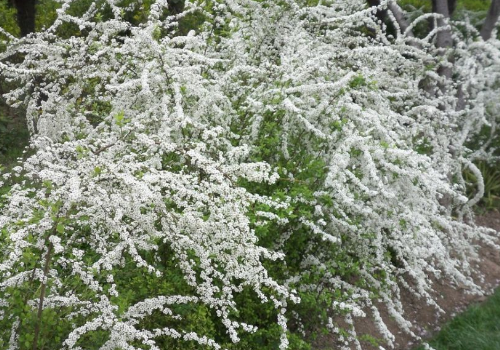
Spiraea thunbergii: Growing Methods and Pruning Tips
Spiraea thunbergii is often planted in parks to beautify the environment. Does Spiraea thunbergii need pruning? Growing methods: Does Spiraea thunbergii need pruning: Of course Spiraea thunbergii needs pruning, otherwise it will grow wildly and ruin its ornamental value. Spiraea thunbergii can be pruned after flowering; cut off the damaged, pest-infested and older branches
条件筛选