-
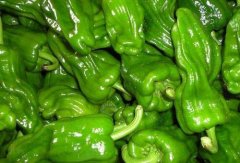
The Nutritional Value and Health Benefits of Green Peppers, and How to Tell Male and Female Bell Peppers Apart
Green peppers, also known as "bell peppers," are a vegetable people often eat in summer and autumn; they are emerald green in color, crisp and tender in texture, and fresh and fragrant in taste. Whether stir-fried or tossed in salad, they make a refreshing dish. They can be grown in pots, and the method for growing peppers in pots is relatively simple
-

Spring Greenhouse Pepper Planting Techniques and Management Methods: 4 Tips for a Bumper Pepper Harvest
Peppers are cultivated in every part of our country, and their flavor is deeply loved by consumers. With the development of protected cultivation technology, cultivation forms have diversified, and multi-crop cultivation and growth can be carried out throughout the year. When using a greenhouse to grow peppers in spring, the planting techniques and management methods include
-
How to Grow Green Bell Peppers: A Detailed Guide to Planting Methods and Management Techniques
Green bell peppers are a warm-loving vegetable that does not tolerate waterlogging. Because of their high nutritional value and wide range of culinary uses, they are increasingly favored by consumers, and in some places the price of green bell peppers keeps rising. So many people want to grow green bell peppers, and there are many
-
Detailed Explanation of the Latest Scientific Cultivation Techniques for Greenhouse Chili Peppers
1. Seedling raising. 1.1. Seedbed preparation: Seedlings can be raised using sunny beds, greenhouses, small arched tunnels, solar greenhouses, and other methods. The seedbed area should preferably be 25-30 sq m per mu (two beds 12-15 m long and 1.2 m wide). Seedbed preparation and nutrient soil mixing are the opposite of flue-cured tobacco seedling methods; sheep manure, human feces and urine, and undecomposed barnyard manure must not be used for raising seedlings. Block seedling raising is commonly used, and plastic nutrient pots are best. The specification for block seedling raising is 7-8 cm long and wide (160-200 blocks per sq m), with 2 strong seedlings retained per block, and a bed soil thickness of 10 cm. Use 50% carbendazim or 70% thiophanate-methyl 50-75 g diluted in water to irrigate the seedbed for soil disinfection. Use 50% isofenphos-methyl or 90% trichlorfon crystal 100 g diluted in water and sprinkle on the seedbed to prevent underground pest damage. Irrigate each bed with 4-5 gasoline drums of water, in two applications, with the final watering on the day of harvest.</p><p>1.2. Seed treatment: For cultivation by transplanting seedlings, 100-150 g of chili pepper seed is needed per mu. Before sowing, soak the seeds in warm water at 50-54°C (two parts boiling water and one part cold water) for 10-15 minutes, or soak in 1% copper sulfate solution for 5 minutes, then rinse clean with clear water, and place in a 25-30°C environment to germinate for 3-5 days. Sowing can only begin after 40% of the seeds have "sprouted".</p><p>1.3. Sowing: The chili pepper seedling stage generally requires 60-80 days. The best seedling raising period in our city is from the end of February to early March, and no later than March 10. Use block seedling raising with precision sowing, then cover with 1 cm of soil, and promptly cover with film to retain heat. Sown seeds must meet the seed treatment standard; it is absolutely not allowed to sow after soaking only, or after soaking without germination, or with germination below 40%. Sowing seeds is best done at noon on sunny days, avoiding rain and snow.</p><p>1.4. Seedbed management: After emergence, the temperature inside the seedbed should be 23-27°C during the day and 14-15°C at night. For block seedling raising and nutrient pot seedling raising, retain 2 strong seedlings per block (pot). When seedlings have 2-3 true leaves, spray with thiophanate-methyl 1000x solution or iprodione 800-1000x solution, or propamocarb 400-600x solution, to prevent the spread of chili pepper phytophthora blight and other diseases. After seedling recovery, control the daytime temperature at 23-27°C and nighttime temperature at 14-15°C. Reduce temperature appropriately and control water to harden seedlings 15 days before transplanting.</p><p></p><p><strong>2. Transplanting</strong></p><p>2.1. Fertilization and land preparation: For chili pepper land, continuous cropping plots should be avoided as much as possible. Deep plow the land before winter, and harrow and rake in early spring to preserve soil moisture. In combination with spring plowing, apply per mu in holes or furrows 25-50 kg of superphosphate, 5-10 kg of potassium sulfate, or 15-20 kg of diammonium phosphate, and 5000 kg of fully decomposed farmyard manure. Form ridges with a ridge width of 1.1 m, ridge height of 10-15 cm, and ridge surface width of 60 cm.</p><p>2.2. Timely transplanting: For open-field cultivation with plastic film mulching, transplanting should be carried out from late April to early May after the last frost. Transplant in double rows with wide rows 60 cm, narrow rows 50 cm, and hole spacing 30 cm, with 2 plants per hole in a “pin” shape, with about 8000 plants per mu. If drought occurs during transplanting, transplant with water to increase the survival rate. Before transplanting, spray thiophanate-methyl or propamocarb, etc., to prevent disease spread.</p><p><strong>3. Field management</strong></p><p>After transplanting, promptly remove weeds in the field and strengthen fertilizer and water management and pest and disease control. Apply less nitrogen fertilizer at the seedling stage; appropriately increase the amount of fertilizer at the bud stage, but nitrogen fertilizer should not be excessive or too rapid, to prevent lodging, flower drop, and excessive vegetative growth in the early stage; apply a small amount of topdressing during the fruiting stage. Generally, apply topdressing once after each harvest. The specific method is to mix 10 kg of urea and 20 kg of superphosphate extract per mu with 40-50 kg of water, and inject into holes 20 cm from the plants, or use 0.2 kg of potassium dihydrogen phosphate with 20-30 kg of water for foliar spraying, to promote early reflowering, early fruit setting, and early red ripening.</p><p><strong>4. Pest and disease control</strong></p><p>The main diseases of chili pepper are: viral disease, phytophthora blight, anthracnose, damping-off, and luxuriant growth disease. The main pests are: aphids, fruit borers, etc. 1. Aphids: spray with trisodium phosphate plus washing powder 500x solution; or spray with 2.5% kung fu emulsifiable concentrate 2000-4000x solution; 2. Phytophthora blight and anthracnose: spray with 65% zineb wettable powder 500x solution, 70% thiophanate-methyl 1000x solution, or irrigate with 50% carbendazim 800x solution; 3. If focal diseased plants appear in the field, irrigate the roots with 50% metalaxyl wettable powder 250x solution or 0.3% copper sulfate to block and control the disease foci.</p><p><strong>5. Harvesting chili peppers</strong></p><p>Because the ways of eating chili peppers differ, the harvesting standards also differ. Fresh-eating green peppers should be harvested when the fruit is fully expanded and set in shape; red peppers for pickling and drying should be harvested when the fruit is 70% ripe. The methods for drying chili peppers include: natural drying method. That is, bundle them into strings while harvesting, and put them on racks to air-dry naturally.</p><p>Use manual picking. The tools used during harvesting and the containers and packaging materials must be clean and hygienic, and must not cause contamination of organic chili peppers; store separately from other vegetables, and achieve separate harvesting, separate transport, and separate storage to prevent mixing; chili peppers for market must be fresh, clean, and free of insect spots and disease spots.
-
What are the cultivation techniques for pollution-free green peppers?
1. Seed treatment Use two parts boiling water to one part cold water, soak seeds in warm water at 55°C, with water being 5 times the volume of the seeds: pour in the seeds and stir constantly, keeping at a constant temperature for 10 minutes; when the water temperature drops to about 30°C, stop stirring and continue soaking for 12 hours, then skim off the shriveled seeds. Control the sprouting temperature at 20°C~
-
Symptoms, Identification and Control Methods of Damping-off in Green Peppers
Green pepper, also known as chili pepper, cayenne pepper, sea pepper, pepper eggplant, sweet pepper, is a crop of the Solanaceae family, genus Capsicum, an annual or perennial herbaceous plant, cultivated throughout the country, and is a traditional main vegetable in our country. It is rich in nutrients, containing protein, organic acids, vitamins, pigments
-
Detailed Explanation of Key Techniques for Autumn and Winter Cultivation and Management of Green Peppers
Green pepper fruit flesh is thick and crisp-tender, rich in vitamin C. The green fruit contains about 93.9% moisture and about 3.8% carbohydrates, while the red ripe fruit contains vitamin C up to 460 mg. It can be served cold, stir-fried, boiled, used as filling, pickled, processed into cans, or made into candied fruit. Green peppers are nutritious
-
What are the key points for sowing and raising seedlings of green bell peppers in summer?
The green bell pepper belongs to the plant kingdom, class Dicotyledoneae, subclass Asteridae, family Solanaceae. Together with the red chili pepper, it is collectively called pepper. The fruit is a berry. It has many aliases; big pepper, lantern pepper, and persimmon pepper are all names for it, and because it can bear sweet-tasting berries, it is also called sweet pepper and vegetable pepper. Annual or multi
-
Detailed Explanation of Key Cultivation and Management Techniques for Bell Peppers in Greenhouses
Bell pepper belongs to the plant kingdom, class Dicotyledoneae, subclass Asteridae, family Solanaceae. Together with red chili peppers, it is collectively called pepper. The fruit is a berry. It has many aliases - big pepper, lantern pepper, and persimmon pepper are all names for it; because it can bear sweet berries, it is also called sweet pepper or vegetable pepper. Annual or
-
How to Grow Green Bell Peppers: A Detailed Guide to Seedling Raising and Field Management
Green bell pepper belongs to the plant kingdom, class Dicotyledoneae, subclass Asteridae, family Solanaceae. Together with red chili peppers, it is collectively called pepper. The fruit is a berry. It has many aliases: big pepper, lantern pepper, and persimmon pepper are all names for it; because it can bear sweet berries, it is also called sweet pepper or vegetable pepper. Annual or
条件筛选