-

-
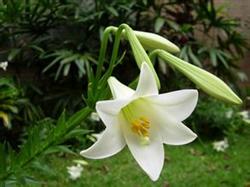
Disease Prevention and Control Methods for Fresh-Cut Lilies
I. Lily Phytophthora Blight 1. Symptoms: Stems, leaves, flowers and scales can all be affected, mainly the tender leaves of the flowers. When the leaves are affected, small water-soaked spots appear, which gradually enlarge and turn grayish-green. When the stem is affected, the water-soaked discolored part spreads upward and downward and rots, further developing into bending and drooping of the stem. In severe cases, the flower stalk and...
-
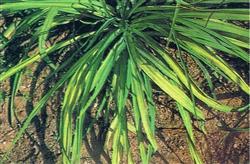
Lily Storage and Fresh-Keeping Methods and Key Technical Points
[Symptoms] Generally a latent infection. When co-infected with Lily symptomless virus, it produces chlorotic necrotic spot symptoms. [Pathogen] Cucumber mosaic virus (Cucumbermosaic Cucumovirus, CMV). The virus is an RNA virus belonging to the genus Cucumovirus. The virus particles are spherical, with a diameter of 30nm. The genome...
-

Key Points and Detailed Methods for Lily Storage and Fresh-Keeping Technology
Lilies originated in East Asia. In Europe and the United States, they are cultivated as ornamental flowers, while in China the bulbs are harvested and cultivated as a food crop. Lilies have few types of pests and diseases, but the damage is severe, with losses reaching 30%-60% in bad years. To improve pest and disease control in lilies, from 1993 to 1998 we studied the main pest and disease species in the Shaodong area...
-

Spider plants in bottles look fresher and more beautiful
Although potted spider plants are beautiful, they are not easy to care for. Growing spider plants in water-filled bottles is both attractive and charming, and also convenient to manage and easy to keep alive. First dig out a potted spider plant with a shape you like, wash off the soil, cut away the rotten leaves, remove its soil roots, and insert it into a wide-mouthed transparent glass bottle. Place it indoors and change the water once a day for seven days. After it has rooted, there is no need to change the water often; just keep the bottle full. You can also cut a new plantlet from the spider plant stem that has both leaves and roots and insert it directly into a glass bottle to grow in water. After a few days, new roots will keep growing from the plant,
-
Harvesting and Fresh-keeping Methods for Black-eyed Susan Cut Flowers
[Other Chinese Names]Dui Xin Ju, Black-eyed Susan, Black-eyed Coneflower, Black-eyed Susan, Black-eyed Coneflower, Sunflower, Featherleaf Coneflower[Family and Genus]Asteraceae, Rudbeckia[Place of Origin]North America[Plant Characteristics]Black-eyed Susan is a perennial herbaceous plant with persistent roots. The plant height is 30-120 cm. The flower head is 3-5 cm in diameter; the ray florets are bright yellow; the disc florets are purple-black, densely arranged in a spherical shape. The natural flowering period is from June to September.[Cut Flower Harvesting]The harvested part is the flower head of Black-eyed Susan with its stem. It can be harvested after most of the ray florets have opened, and the operation
-
Harvesting and Fresh-Keeping Methods for Outdoor Oleander Cuttings
[Other Chinese Names]Dajiezhong, Jiaochudong, Jiujiezhong, Juna, Liuyetao, Shuigancao[Family and Genus]Apocynaceae, Nerium[Place of Origin]Nepal, India, Iran and other places[Plant Characteristics]Oleander is an evergreen shrub or small tree. Plant height 5-6 m. It has milky sap. Simple leaves are whorled or opposite, linear-lanceolate, 10-25 cm long, entire, leathery.[Cutting Harvest]The harvested part is the current-year branches of oleander. Harvesting should be carried out from May to July each year. In order to obtain ideal
-
Harvesting and Fresh-keeping Methods for Cuttings of Amorpha fruticosa, an Open-field Flower
[Other Chinese names] Mianhuai [Family and genus] Fabaceae, Amorpha [Place of origin] North America [Plant characteristics] Amorpha fruticosa is a clumping shrub. Plant height 1-4 m. Branches grayish blue. Odd-pinnate compound leaves alternate; leaflets 11-25, oblong. [Cutting harvest] The harvested part is the first-year woody branch of Amorpha fruticosa, preferably 1-1.5 cm in diameter. To obtain the ideal propagation results, top branches with shorter internodes and full growth should be selected. Pay attention to reasonable cutting collection so as not to affect
-
Harvesting and Fresh-keeping Methods for Cut Leaves of Japanese Spindle
[Other Chinese Names] Yagi, Dongqing Weimao, Fufangshu, Haiweimao, Huangzhualongshu, Jiaweimao, Maixiang, Japanese Euonymus, Sijiqing, Zhengmu [Family and Genus] Celastraceae, Euonymus [Place of Origin] Japan, China [Plant Characteristics] Japanese spindle is an evergreen shrub or small tree. The plant height can reach 8 m. The branchlets are green. The simple leaves are opposite, obovate or narrowly oblong, 3-6 cm long, with an acute or obtuse apex, a broad wedge-shaped base, and finely blunt-toothed margins, smooth, leathery. [Cut Leaf Harvesting] Harvested part
-
Key Points and Detailed Methods for Lily Storage and Fresh-keeping Technology
Lilies prefer warmth and are afraid of cold; after being exposed to wind, the scales will turn red and shrivel. There are many storage methods, and the yellow sand burial method is especially effective. The specific method is: build a burial pit indoors with bricks or cement, or use wooden boxes, baskets, etc. as containers. First spread a layer of yellow sand about 20 mm thick on the bottom of the container, then place one layer of lilies and one layer of yellow sand, stacking to about 50 mm from the container opening. Then cover with yellow sand again so that the lilies are not exposed to the air. What should be noted with this method is: the containers used for storage should first be disinfected with 0
条件筛选