-

Can a Peace Lily (Spathiphyllum) Be Placed in the Bedroom to Absorb Formaldehyde, and Two Major Placement Taboos
Peace lily is a common foliage plant we often see, and many people also call it Spathiphyllum. This flower symbolizes a successful career and smooth sailing, so it is deeply favored by people. Can a peace lily be placed in the bedroom? What are the placement taboos? Does it absorb formaldehyde? 1. Intro
-
Snake plant looks like a tiger's tail - is it suitable for the bedroom to absorb formaldehyde?
Snake plant is also called tiger tail sansevieria, brocade sansevieria, yellow-tail sansevieria or mother-in-law's tongue. Because the leaf patterns of the snake plant are exquisite and distinctive, many people use it to decorate their homes. Then many people wonder: is the snake plant suitable for the bedroom? Can it absorb formaldehyde? 1. Snake plant
-
Snake Plant (Sansevieria) Care Guide: Methods, Precautions and the Secret to Watering for Taller Growth
Snake Plant, also known as mother-in-law's tongue or thousand-year plant, is a perennial evergreen herbaceous plant of the Asparagaceae family, genus Sansevieria. Besides its ornamental value, its greatest feature is its ability to purify the air. So what are the snake plant care methods and precautions? How often should it be watered?
-
Monstera can remove formaldehyde, but the effect is mediocre
Formaldehyde is something we deeply hate in daily life, and the main issue is that most decoration materials nowadays contain formaldehyde; inhaling formaldehyde is irritating to human skin and mucous membranes. Long-term inhalation can also harm people's health. At this time, you can place some plants at home
-
Can "air-purifying grass" really absorb formaldehyde? The latest interpretation is here
In recent years, more and more people have started growing green plants at home. One green plant called "air-purifying grass" has been heavily hyped by merchants. Legend has it that this green plant can effectively absorb formaldehyde in the home, and some say it can absorb radiation. So is this air-purifying grass really
-
Can Monstera deliciosa Absorb Formaldehyde? The Latest Answer Is Here
Monstera deliciosa, also known as split-leaf philodendron, ceriman, and thread-wire monstera, is a perennial woody climbing evergreen shrub of the genus Monstera in the Araceae family, native to Mexico, widely introduced and cultivated for ornamental purposes in tropical regions, and commonly used in Europe, the United States and Japan as potted plants to decorate living rooms and windowsills
-
Comparison of the Latest Spider Plant Varieties: Which One Is Best at Removing Formaldehyde?
Spider plant is one of the most traditional hanging houseplants, also known as grape orchid, Zhehe orchid, upside-down orchid, etc. It is a perennial evergreen herbaceous plant of the genus Chlorophytum in the family Liliaceae, with rhizomes lying flat or slanting, numerous thick fleshy roots, and flowers clustered at the ends of the drooping branches, with yellow flower centers. It is suitable for potted ornamental display. Let's take a look below at which spider plant is best at removing formaldehyde!
-
Can Cactus Absorb Formaldehyde? The Latest Answer Is Here
Cactus is the general term for plants of the Cactaceae family with a spherical shape, commonly known as grass ball, Changshengwan, and Duanmaowan. It is a plant whose stems, leaves, and flowers all have high ornamental value, has the effect of absorbing electromagnetic radiation, and is also a natural air freshener, with the ability to adsorb dust,
-
Is Snake Plant Toxic? Can It Absorb Formaldehyde When Grown at Home
A snake plant with green and yellow banded leaves placed at home creates quite a sight, but many people also worry: is the snake plant toxic? Will people have adverse reactions if they touch the sap of the snake plant or accidentally eat it? In addition, for newly renovated houses, can placing a snake plant
-
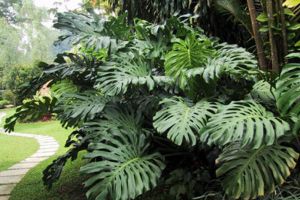
Can Monstera deliciosa Absorb Formaldehyde? An Analysis of Its Indoor Air-Purifying Effect
Monstera deliciosa (Swiss cheese plant) is a southern plant. It often appears beside garden ponds and in hotel lobbies. Its leaves are very peculiar in shape, with many splits on the leaf surface, and the splits are symmetrical in pairs. From a distance, it looks very much like a turtle's shell, which is how it got its name. The topic we are discussing today is: Can Monstera deliciosa absorb formaldehyde? The answer is, of course, yes.
条件筛选