-

How to use floating grass beds for ecological disease prevention in freshwater pond aquaculture?
In order to control the occurrence of diseases, conserve and utilize water resources, improve the comprehensive three-dimensional and efficient utilization of ponds, and advance the development of healthy aquaculture, in recent years we have in freshwater ponds...
-

What are the advantages of using extruded floating feed to farm the four major Chinese carps?
Farming grass carp (Ctenopharyngodon idella) with extruded floating complete compound feed has many advantages, such as lowering costs, protecting the aquaculture water environment, and high utilization rate. In countries with advanced aquaculture technology such as the United States and Japan, to meet the needs of the environment and fishery production, floating aquatic feed has been widely used since the 1980s. In recent years, China has also vigorously promoted the use of floating aquatic feed, developing rapidly, and many famous, special and high-quality aquatic products have already used it in large quantities, but in the use of extruded floating fish feed to farm the four major Chinese carps, there is still
-
What are floating soup fish balls? Let us introduce you to this dish
Floating soup fish balls are a dish that suits all ages and is delicious and tasty. Choose silver carp, white fish, or common carp, remove the skin and bones, and use only the fine flesh; mince it into a paste, stir it for a long time in one direction while adding a little clear water until white foam forms, then blanch it in boiling water to shape. After that, soak the fish balls in clear water for a while, then use seasonings to make a good broth, take the balls out of the water and put them into the broth, bring the broth to a boil again, and serve. The fish balls are milky white, the size of ginkgo nuts; the white fish balls float in the broth, and a little garlic sprouts and cilantro are sprinkled on top, with color, aroma
-
Detailed Explanation of the Key Points of Cotton Water-Floating Seedling Raising Technology
"Cotton water-floating seedling raising technology" is a new cotton planting technology developed by agricultural experts in Hunan Province. This technology uses porous polyethylene foam seedling trays as the carrier, with a mixed substrate as support, and places the seedling trays carrying cotton seeds into a nutrient solution water seedbed for cultivation. It has significant effects in saving seeds, saving labor, increasing yield, and improving efficiency. Compared with conventional nutrient bowl seedling transplanting cotton, it saves more than 40% of seed usage, and reduces labor by about 10 person-days per mu for seedling raising and transplanting. The cotton seedlings have well-developed root systems, a low degree of lignification, are soft and elastic, not easy to break, have strong vitality
-
Detailed Explanation of Key Points for Cotton Water Floating Seedling Technology
1. Seedbed preparation: Each seedbed (per mu) requires excavating a site 1.1-1.2 m wide, 20 cm deep, and 2.2 m long, with a flat bottom and compacted surroundings. 2. Film laying: Select a 0.06-0.1 mm thick film and lay it on the excavated seedbed, pressing it tightly against all sides of the seedbed, and check for leaks and air bubbles. 3. Substrate tray filling: Spray water on the substrate until it forms a ball when squeezed by hand, without water dripping between fingers, and it naturally breaks apart when dropped, then fill it into the seedling tray, shaking the substrate until it is 1-1.5 cm below the tray surface. 4. Prep
-
Research on cotton floating seedling technology achieves success
The cotton floating seedling technology, long regarded as a "forbidden zone," has been successfully breached. The national "Tenth Five-Year" key research project and the national "863" major special project - cotton floating seedling technology, led by Hunan Agricultural University - recently passed appraisal by an expert panel. Since cotton was first cultivated, it has always been an upland crop, vulnerable to waterlogging damage, so traditional cotton seedling cultivation regarded floating seedling cultivation as a forbidden zone. Starting in 2000, the research team led by Professor Chen Jinxiang of Hunan Agricultural University began the "forbidden-zone-breaking campaign," and after nearly 5 years of arduous
-
Detailed Explanation of the Key Points of Cotton Water-Floating Seedling Raising Technology
"Cotton water-floating seedling raising technology" is a new cotton planting technology developed by agricultural experts in Hunan Province. This technology uses a porous polyethylene foam seedling tray as the carrier, with a mixed substrate as support, and places the seedling tray carrying cotton seeds into a nutrient solution water bed for cultivation. It has notable effects in saving seeds, saving labor, increasing yield, and improving efficiency. Compared with conventional nutrient bowl seedling raising and transplanting of cotton, it saves more than 40% of seed quantity, and reduces labor by about 10 workdays per mu for seedling raising and transplanting. The cotton seedlings have well-developed root systems, a low degree of lignification, and are soft and elastic, not easily broken, with strong vitality
-
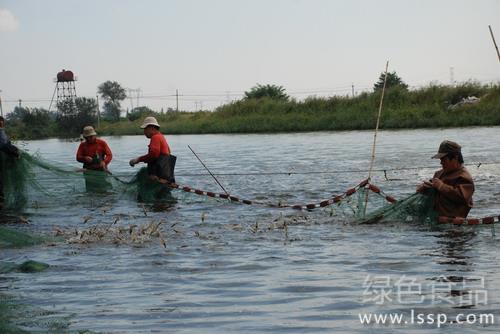
How to prevent and control hypoxia and easy floating head in South American white shrimp
How to prevent and control hypoxia and easy floating head in South American white shrimp Shrimp floating head phenomenon
-

Explaining Hydroponic Methods for Flowers: Static Container Hydroponics and Floating Landscape Hydroponics
Nowadays many people create a fish tank at home with mountains, water, flowers, grass and fish, with flowers and plants growing on the water surface as a garden landscape. This not only makes our lives more natural and cozy, but also makes the monotonous water surface richer and more lively.
-

Detailed Explanation of the Causes of Fish Floating Head and Pond Turnover and the Prevention and Control Methods
Causes of Fish Floating Head and Pond Turnover and the Prevention and Control Methods
条件筛选