-

Can quick rooting powder really promote rooting? The final chapter of the gardening freebie experiment
More than 20 days ago, in my article "One jiao per packet, quick rooting powder, decrypting the king of gardening freebies," I introduced some information about quick rooting powder and made some inferences...
-

Genetically modified rice monkey feeding experiment commissioned by the Ministry of Agriculture
Ministry of Agriculture commissions genetically modified rice monkey feeding experiment
-
Rumor has it that vendors inject water into lake crabs to increase their weight; an experiment shows they die 8 minutes after injection
Rumor has it that vendors inject water into lake crabs to increase their weight; experiment: they die 8 minutes after injection
-
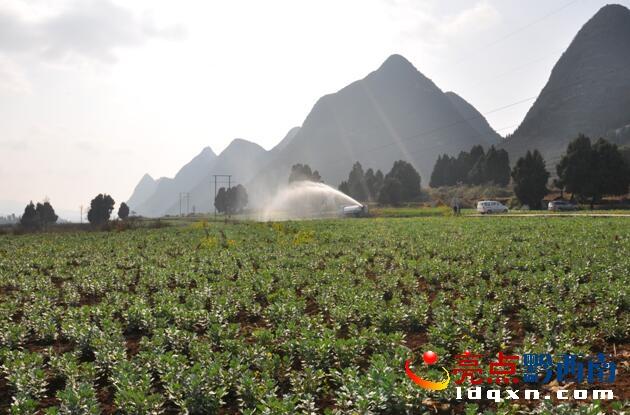
Land Transfer for Broad Bean Planting in Shizishan, Yilong Experimental Zone Helps Farmers Get Rich and Build a Moderately Prosperous Life
Shizishan, Yilong Experimental Zone: Land Transfer for Broad Bean Planting Helps Farmers Get Rich and Build a Moderately Prosperous Life
-
Experimental Methods and Results Analysis for the Control of Jujube Fruit Shrinkage Disease
In recent years, jujube fruit shrinkage disease has become increasingly severe. Jujube fruit generally becomes affected at the white fruit stage, and often a large number of fruits drop within a few days. In ordinary years the incidence rate is 5%-8%, and in severe cases the proportion of diseased fruit reaches over 30%. Diseased fruit tastes bitter and is unfit to eat, seriously affecting the quality and yield of jujube fruit. Because opinions differ from place to place on the pathogenic factor of this disease, and it was discovered in our county only just over 10 years ago, there is still no successful experience in controlling it. After consulting materials from many sources and conducting field observations, the fruit tree station formulated an experimental plan for the control of jujube fruit shrinkage disease and achieved fairly good results.
-
Experimental Study on Factory-Scale Rapid Propagation Technology of Potato Test-Tube Plantlets
For many years, farmers' own propagation, self-breeding and seed retention have caused potato yields to decline year by year during production, quality to deteriorate, and commercial appearance to worsen. Scientists have proven through research that virus infection and its accumulation in tubers are the main causes of potato "degeneration." To solve the problem of severe degeneration and reduced yield of the main potato cultivars in our city, our institute made virus-free potato production a key experimental project and conducted experimental research on the problems existing in virus-free production, thereby utilizing resources and reducing production costs.
-
Summary of Experimental Trials on Delayed Cultivation Techniques for Hongxue Peach in Plastic Greenhouses
Hongxue peach is an extremely late-maturing peach variety. When cultivated in the open field in our county, the fruit is difficult to ripen due to late-autumn rainfall and frost. Therefore, starting in 2001, we conducted delayed cultivation trials in plastic greenhouses using technical measures such as early promotion followed by later control, delayed flowering, bagging to protect against rain, and covering the greenhouse to regulate temperature, prevent frost, and protect leaves. The results showed that facility-grown Hongxue peach bore fruit in the second year after planting, entered full production in the third year, could delay fruit ripening by about 20 days, and markedly improved fruit maturity and the rate of high-quality fruit.
-
Detailed Experimental Study on Canned Oyster Mushroom Processing Technology
Oyster mushroom is one of the main varieties of edible fungi, belonging taxonomically to the order Agaricales, family Pleurotaceae, genus Pleurotus. Oyster mushroom cultivation involves a simple process with relatively low technical difficulty, and coupled with widely available cultivation substrates, it has become the artificially cultivated variety with the highest output and largest sales volume in China's edible fungi market. It is widely cultivated in China, especially in the north, and has become a pillar industry of local agriculture in some provinces and cities. Many farmers in impoverished areas have found a path to prosperity through oyster mushroom cultivation. It is not difficult to predict that with the
-
Can Gastrodia elata prevent Alzheimer's disease? Experiments provide the answer
Experiments at the China Medical Institute of Traditional Chinese Medicine in Taiwan, China found that Gastrodia elata can improve learning and memory impairment, and besides helping to maintain health, it can also prevent or treat Alzheimer's disease. Since toxicity tests have confirmed it to be non-toxic, the institute plans to develop Gastrodia elata into products similar to pickled cucumbers or health beverages. Hsieh Ming-tsun, president of the College of Traditional Chinese Medicine in Taiwan, China, and Wu Chi-jui, a PhD at the Institute of Traditional Chinese Medicine, have recently devoted themselves to research on the effect of Gastrodia elata in improving learning and memory impairment, and found that gastrodin, the main active component in Gastrodia elata, can increase adrenal hormone secretion, increase the body's utilization of blood sugar, and thereby activate brain function.
-
Experimental Demonstration and Application of Factory-Based Soilless Seedling Raising of Cotton in the Dongtai Area
Factory-based soilless seedling raising of cotton is a seedling revolution in the history of cotton cultivation. It breaks the decades-old cultivation system of raising seedlings in nutrient pots and transplanting them, making cotton seedling raising and transplanting a simple, rapid, time-saving, labor-saving and cost-saving cultivation method, and opening up a new path for cotton cultivation. In 2003, Dongtai City introduced factory-based soilless seedling raising and transplanting trials. In 2004 and 2005, this technology was introduced successively in Tangyang and Luegang for soilless seedling raising and large-area transplanting trials and demonstrations. The details are summarized as
条件筛选