-
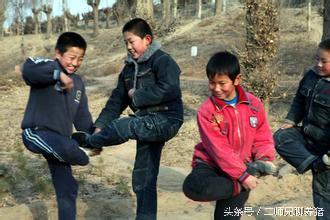
What problems exist in modern rural areas? Farmers, friends, come in and reflect on this
What problems really exist in modern rural areas? Farmers and friends, all of you come in and reflect on this properly
-

-

What relief channels exist for farmers' disaster losses?
What channels can farmers use for relief of disaster losses?
-
Analysis of the problems existing in the development of the eel industry and the countermeasures and suggestions
I. Seedlings and fingerlings The main species farmed for eel in China are the Japanese eel (Anguilla japonica) and the European eel (Anguilla anguilla). The resources of both the European eel... have already approached exhaustion, with annual production falling from 3,000 tons 30 years ago to 100-200 tons. From June 3 to 15, 2007, at the Conference of the Parties to the "Washington Convention" (CITES) held in the Netherlands, the European eel was listed in Appendix II of the Convention on Endangered Species of Wild Fauna and Flora, and this will be formally implemented starting in January 2009: China imports about 60 tons, or about 150 million individuals, of European eel seedlings and fingerlings annually, and farmed European eel accounts for more than 1/3 of eel production, while European eel accounts for about 40% of exported roasted eel. Japanese eel resources have also severely declined. In recent years, the seedling and fingerling resources of Japanese eel in Asia have remained at about 100 tons, and the annual catch in recent years has remained at 80-100 tons. In 2008, the output of European eel seedlings and fingerlings was about 90 tons, half of a normal year. The output of Japanese eel seedlings and fingerlings was about 35 tons, one third of a normal year. The severe shortage of seedling and fingerling resources has led to soaring prices. Moreover, artificial breeding of eel seedlings and fingerlings will not be able to form production capacity in the near future.
-
What problems exist in China's fox farming industry? A few suggestions for reference
Over the past 20 years, China's fox farming industry has made considerable progress, but through our 10 years of fairly systematic investigation into the current feeding conditions of fox farms and households, we have found some noteworthy problems that affect reproduction and fur quality. The specific situation is reported as follows. 1 Feeding and feed Currently, fox farms (households) across the country all use single-cage rearing in courtyards; they use complete feed supplemented with cornmeal, sea fish, freshwater fish, beef liver, various meat trimmings, and also add a small amount of other ingredients, boiled into a cooked porridge for feeding. Young foxes are fed 3 times a day, and adult foxes are fed 2 times a day.
-
What problems exist in the process of chicken immunization and medication?
With the development of the broiler farming industry, many farmers regard raising broilers as a way to get rich, but the following two major problems still exist in raising them. (1) Blindly copying outdated immunization programs: many chicken farmers immunize only once with Newcastle disease strain IV vaccine and do not immunize with any other vaccine until sale; some chicken farmers have infectious bursal disease of chickens in every flock, and the yolk fluid used for therapeutic injection contains Newcastle disease antibodies, thereby interfering with the immune effect of the Newcastle disease vaccine; in infectious bronchitis epidemic areas, absolutely
-
What problems exist in deer disease prevention and control in our country?
For half a century, with the development of the deer farming industry, the number of farmed deer has grown increasingly large, deer have come into broader contact with the external environment, and the variety of deer diseases has continued to increase. At some deer farms, the mortality rate has reached over 10% (including deer that should have been culled but were not). Deer diseases have become one of the important risks in deer farming production. 1 Historical review. Understanding of deer diseases has advanced and improved along with the development of deer farming production. Our country has a history of deer farming spanning several thousand years, but it truly flourished after the founding of New China. In the early days after the founding of the People's Republic, few deer were farmed and deer diseases were also few
-
What problems exist in disease prevention for urban dog keeping?
Abstract: Currently, pets are developing rapidly in both urban and rural areas of China, especially the keeping of pet dogs in cities. In order to avoid and reduce the spread of canine diseases and zoonoses, this paper proposes standardizing the pet market, improving medical standards, and raising awareness and adopting countermeasures for rabies, canine distemper, and dog-human shared parasitic diseases. Urban residents mostly treat dogs as pets, and even when a dog dies, they cannot bear to eat it or send it to a restaurant; this is the custom of people's love for pet dogs over thousands of years. According to historical records, as early as 10,000 years ago, Persians and
-
Current Status, Existing Problems and Future Development Directions of Sericulture in Guizhou
1 Current Status of Development As a traditional export industry of China, the cocoon and silk industry, since entering the "10th Five-Year Plan" period, has adhered to a market-oriented approach, taken development as its theme, and relied on reform, opening up and scientific and technological progress as its driving forces. By comprehensively applying the state's reform and development policies, strengthening macro-control, and intensifying structural adjustment, it has effectively overcome the phenomenon of "drastic fluctuations," enabling the entire industry to emerge from the trough and basically maintain sustained and steady development. The quality of economic operation has improved markedly, with production capacity, efficiency and export earnings surpassing the best historical years. "Chinese silk
-
Analysis of the Current Status and Existing Problems of Upland Rice Production
Upland rice, also known as dryland rice, is a type of cultivated rice with strong drought resistance, tolerance to poor soil, and suitability for dryland direct seeding and dryland management. It can be planted in any soil suitable for growing major dryland grain crops such as wheat and corn. It does not require water layer management throughout the entire growth period, and its irrigation volume is only 1/4 to 1/10 that of paddy rice. Upland rice is more drought-tolerant and barren-tolerant than paddy rice, and has the water-saving characteristics of low input and high output. I. Overview of World Upland Rice Production Currently, the world's upland rice planting area is 0.18 billion hectares. In West Africa, upland rice accounts for more than 75% of the rice growing area, and in
条件筛选