What subsidy policies for rural veterans existed in 2016?
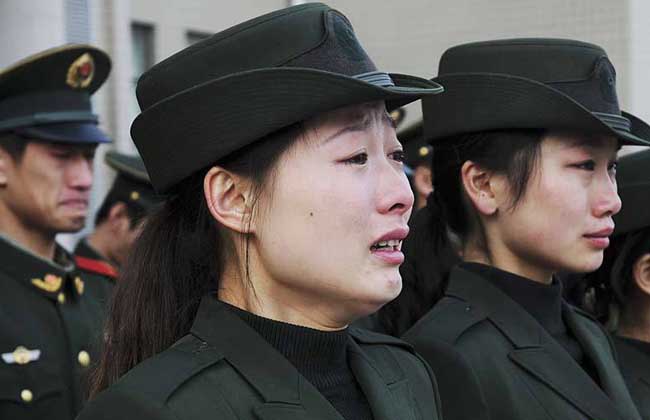
During their service, soldiers dedicated countless sweat and passion to the country. After completing their service and being discharged, the state implemented a series of policies to guarantee the basic rights and interests of veterans. According to the provisions of the Ministry of Civil Affairs and the Ministry of Finance's "Notice on Issuing Old-Age Living Subsidies to Some Rural Discharged Soldiers," starting from August 1, 2011, for some rural discharged soldiers, an old-age living subsidy of 10 yuan per person per month is issued for each year of compulsory military service (any period less than one year is counted as one year). To ensure the smooth implementation of the policy, after consultation with the Ministry of Finance, the following implementation measures are proposed.
Definition of eligible recipients
The scope of persons covered by the policy is rural discharged soldiers who enlisted after the trial implementation of the compulsory military service system on November 1, 1954 and before the implementation of the "Regulations on the Placement of Discharged Soldiers," who are aged 60 or above (including 60), and who have not enjoyed regular state pensions or subsidies. Rural discharged soldiers are defined as persons who were registered as rural household residents at the time of discharge and are still registered as rural household residents, or who were registered as rural household residents at the time of discharge and later converted to non-agricultural household registration. The above persons do not include those who already enjoy retirement pensions or urban employee pension insurance benefits.
Verification and determination of personnel identity
The verification and determination work shall be organized and implemented according to the principle of territorial management, with unified investigation, examination and approval, and reporting by the village (neighborhood) committee, township (town, street), and county (city, district) civil affairs departments at the person's place of household registration.
1. Policy publicity: Civil affairs departments at all levels shall widely adopt forms such as media broadcasts, posting notices, and door-to-door explanations to ensure that the policy content is publicized thoroughly and made known to every household, and to prevent problems of missed investigation and missed recognition due to inadequate policy publicity.
2. Individual application: Eligible persons shall bring their ID card, household register, discharge certificate, and other relevant supporting materials, submit an application to the village (neighborhood) committee at their place of household registration, complete registration procedures, and fill out the relevant registration and review forms.
3. Preliminary review and checks: The application materials of the relevant persons shall be preliminarily reviewed by the village (neighborhood) committee, rechecked by the township (town, street), and properly registered. For those who meet the conditions, after signing opinions, the relevant registration and review forms, roster of personnel, copies of personal related materials, and other materials shall be reported to the county-level civil affairs department. For those who do not meet the conditions after rechecking, the reasons shall be explained in writing and the person shall be informed.
4. Joint review and determination: The county-level civil affairs department shall organize dedicated personnel to carefully verify the identity of the materials reported by the township (town, street), and determine one by one their age, years of compulsory military service, and other conditions. For those who meet the conditions, the village (neighborhood) committee where the applicant is located shall make a public announcement by posting a list. If there are objections during or after the public announcement period, the county-level civil affairs department shall organize dedicated personnel to investigate and verify. If it is verified that the conditions are not met, the person shall be notified in writing and the reasons explained. If there are doubts during the investigation and verification process, instructions shall be requested level by level to ensure that the determination work proceeds smoothly and steadily. The basis for joint review and determination shall be valid supporting materials such as personal files, discharge certificates, household registers, and ID cards. If there is a discrepancy between the personal file and the ID card in determining age, the ID card shall prevail. If there is a discrepancy between the personal file and the discharge certificate in determining the years of service, the personal file shall prevail. For applicants who cannot provide valid supporting materials, the civil affairs assistant of the township (town, street), together with the people's armed forces department at the same level, the village (neighborhood) committee, and persons from the same township (town, street), same enlistment period, and same unit who have already been recognized, shall conduct a joint review, form joint review minutes, and report them together with relevant materials to the county-level civil affairs department for approval.
5. Establish files: The county-level civil affairs department shall establish and improve files and data materials for the information of persons who apply and register, and conscientiously do a good job in timely updating and dynamic management. Forms that relevant personnel need to fill out during the verification and determination process shall be made by the county-level civil affairs department itself according to local conditions, but the contents of the forms shall include the items in the "Information Collection Form for Rural Discharged Soldiers Aged 60 and Above" (attachment) issued by the Ministry of Civil Affairs. After the determination work is completed, the county-level civil affairs department shall fill in the information of eligible persons into the "Information Collection Form for Rural Discharged Soldiers Aged 60 and Above," uniformly enter it into the information management system for entitled groups, and, like other entitled groups enjoying regular state pensions and subsidies, form a mechanism for regular annual updating.
Statistics of information and data
After the approval work for eligible recipients is completed, the county-level civil affairs department shall promptly compile and verify the data, copy and report it to the finance department at the same level for review, and report it level by level. The provincial-level civil affairs department shall, before October 30, send the statistical results of some rural discharged soldiers in its region to the finance department at the same level for review and then report them to the Ministry of Civil Affairs and the Ministry of Finance, and strive to issue the old-age living subsidy to every recipient before December 31. When all localities report the information and data of eligible recipients, they shall also report together the number of persons who will meet the conditions for enjoying the benefits in the following year and other relevant circumstances.
Work requirements
1. Strengthen organizational leadership and reinforce the work responsibility system. Civil affairs departments at all levels must, from the height of building a socialist harmonious society, strengthening national defense and military construction, and safeguarding the overall situation of reform, development and stability, fully understand the importance of doing this work well, and effectively unify thought and action with the decisions and arrangements of the central authorities. This work must be treated as an important current political task, placed on the immediate agenda, seriously organized, carefully deployed, meticulously arranged, and steadily implemented, so that the work is done in detail and in a solid way, and good deeds are done well. The principal responsible comrades of civil affairs departments at all levels shall take overall responsibility for this work, personally handle major issues, personally resolve sensitive issues, and personally coordinate and handle thorny issues. They shall, in accordance with the requirements of the "Notice," actively coordinate with relevant departments, solve problems such as work funding and allocation of work force, provide basic guarantees for policy implementation, and the responsible comrades in charge shall take specific responsibility, command from the front, and go all out to ensure the implementation of all tasks. Specific staff members shall divide work by area, assign responsibility to each person, and implement it to each household, ensuring that policy benefits are delivered to every eligible recipient.
2. Accurately grasp the policy and ensure implementation. Civil affairs departments at all levels shall deeply understand the spirit of the central authorities, accurately grasp the spiritual essence, core content, basic requirements, and policy boundaries of the policy, effectively clarify the ideas, countermeasures, and measures for implementation, and formulate scientific and reasonable implementation plans. They shall conduct in-depth and meticulous verification and determination work, ensure no mistakes and no omissions, and strictly verify information such as the identity, years of compulsory military service, and age of these persons in accordance with the policy. Attention shall be paid to studying new situations and new problems emerging in the work, and major problems encountered in the implementation process shall be promptly reported to the local government and higher-level civil affairs departments.
3. Strengthen publicity and education and carry out supervision and inspection. All localities shall, through various forms, conscientiously do a good job in policy publicity and explanation, especially publicizing the care and love of the Party and the government for these persons, and unify their thought and action with the spirit of the central authorities. It is necessary to persist in combining the resolution of practical problems with doing ideological work well, so that the process of implementing policies and issuing subsidies becomes a process of carrying out ideological education and guidance. Supervision and inspection shall be strengthened, and problems found shall be promptly resolved.
Extension: Veterans' choices after discharge
1. Accept state placement: There are also conditional limits on the situations in which veterans can accept state placement, mainly eligible disabled soldiers and persons with urban non-agricultural household registration. The jobs arranged are also limited and generally ordinary. If the family has connections, the job may be arranged a bit better.
2. Find a job oneself: What can veterans do after stepping into society? They may feel confused and helpless. From the entry level, most veterans have a weak foundation in academic subjects, and veterans generally lack special skills and social experience. Nowadays, many people with higher education and some work experience find it not easy to find satisfactory jobs, let alone veterans without advantages, and many veterans even ultimately choose to do low-level jobs such as security guards and manual labor.
3. Learn skills and challenge oneself: For veterans, if they have no specialized skill, finding a good career is still relatively difficult. Learning a popular skill again, although this is not the only solution, has proven to be the most effective method so far. Most veterans do not want to settle for the status quo and want to find an industry with low academic requirements and relatively easy entry, but what kind of industry is suitable? The tenacity and tough qualities that veterans themselves possess are advantages in whatever occupation they engage in. Veterans being discharged, though called old, are not actually old; being around twenty is precisely the golden age for absorbing new things. Choosing the right career direction is a turning point in their lives and a guarantee of moving toward success. Veterans have strong environmental adaptability and can certainly find positions suitable for themselves in computer technology.