-

The tea fixation process evolved from steaming to pan-firing.
Compared with cake tea, the aroma of the tea leaves was better preserved in steamed loose-leaf tea. However, the steaming method still had the drawback of insufficiently rich aroma, so the pan-firing technique emerged, using dry heat to bring out the tea's aroma. In the Ming Dynasty, the pan-firing method of tea making gradually became more refined and was recorded in detail in Zhang Yuan's "Tea Record," Xu Cishu's "Tea Commentary," and Luo Lin's "Tea Explanation." Its production method was roughly: high-temperature fixation, rolling, re-firing, and baking until dry; this process is very similar to the modern method of making pan-fired green tea.
-
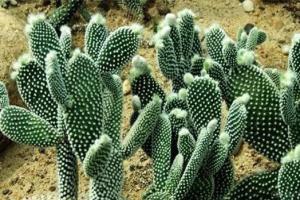
Does a cactus have leaves? Its spines evolved from leaves
Does a cactus have leaves? The spines of a cactus evolved from leaves
-
Is the platypus, this incompletely evolved Australian mammal, viviparous or oviparous?
The platypus is one of the most primitive mammals. It is an incompletely evolved mammal, with very few species; within its genus there is only one animal, the platypus, and it is also one of the lowest mammals. The platypus has a beak and feet like a duck, while its body and tail resemble those of a beaver.
-
How Do Bats Reproduce? A Detailed Explanation of Bat Reproduction
Bats are a group of mammals that have evolved true flight capability. Except for the polar regions and some islands in the oceans, they are distributed throughout the world, with the greatest numbers in the tropics and subtropics. So how do bats reproduce? 1. How Do Bats Reproduce Bats are viviparous
条件筛选