-

What animal is the natural enemy of the Philippine eagle?
The Philippine eagle, also known as the Philippine eagle (Pithecophaga jefferyi), is said to be the world's second largest bird (a disputed claim), with a body length of 91 cm, a wingspan of 200-250 cm, a weight of 6500 g, and a lifespan of up to 30 years. It is extremely ferocious when pecking at monkeys, hence the name "monkey-eating eagle." Some readers
-
How Do Mantises Reproduce? A Detailed Explanation of the Reproductive Process and Methods
The mantis is a natural enemy of agricultural pests and a beneficial insect, and many people have seen mantises. So do you know how mantises reproduce? Let's take a look together below. 1. How do mantises reproduce? The male mantis finds the female mantis and begins mating. After mating is complete
-
What are the natural enemies of stick insects? A rundown of common natural enemy species
Stick insects are medium-sized or large insects, mostly distributed in Hubei, Yunnan, Guizhou and other places. Because their body color and shape are hard to distinguish from bamboo branches, they are very difficult to spot. These insects feed on leaves and in severe cases affect yield and growth. So what are the natural enemies of stick insects?
-

Chen Xingzong: Weeds are not the enemy, they are the soil's divine teammates that help farmers increase income
Chen Xingzong / Weeds are not the enemy, but the soil's divine teammates, and they can even help farmers increase income
-
Notes on Hydrating Edible Mushrooms and the Great Enemy of Greenhouse Flowers, the Brown Soft Scale
The Great Enemy of Greenhouse Flowers - the Brown Soft Scale
-
Mycelial film is a formidable enemy of high-yielding oyster mushrooms, and growers must be vigilant
Casing soil cultivation is an important measure for obtaining high yields of oyster mushrooms. However, before fruiting or after the first flush is harvested, the casing soil surface often forms an impermeable, airtight mycelial film from vigorously growing aerial hyphae, affecting fruiting. This mycelial film consumes a large amount of nutrients, causing reduced oyster mushroom yields, and must be prevented in production. Causes of mycelial film formation: First, when bag-cultivated oyster mushroom substrate is not fully colonized before casing soil is applied, the hyphae undergo a second vegetative growth on the surface, forming a mycelial film; Second, the cultivation substrate formula is unreasonable, with excessive nitrogen content blocking
-
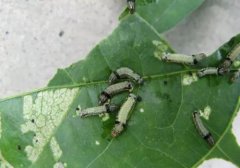
What are natural enemy insects? An introduction to common natural enemy insects such as green lacewings
What are natural enemy insects, what characteristics do they have, what do they mainly eat? Using natural enemy insects to control pests is a special control method that can reduce environmental pollution and maintain ecological balance. The mass rearing and use of natural enemy insects in China have achieved remarkable
-
-
-
条件筛选