-

What are the technical elements of artificial cultivation of Gastrodia elata (tianma)?
(1) Change from wild to domestic planting. (2) Adopt single-layer and double-layer cultivation, and further develop to three-layer cultivation. (3) Use the fungal-wood companion planting method to add covering wood to both the upper and lower layers, so that the fungal threads grow both upward and downward, and the fungal threads in the middle layer interweave into a network from top to bottom, which is more conducive to the growth of Gastrodia elata. (4) When using large tree branches and knots as fungal wood, pay attention to using small branches and knots, which not only saves wood but also makes it convenient to use local materials in plain areas, making full use of raw materials. (5) Use wooden box cultivation and brick pool cultivation
-

Functions of Crop Nutrient Elements and Symptoms of Deficiency
Functions and Symptoms of Nutrient Elements
-
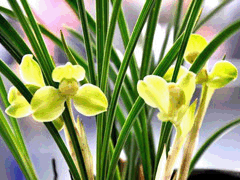
Detailed Explanation of One of the Eight Key Elements for Growing Cold Orchids at Home
One of the Eight Key Elements for Growing Cold Orchids at Home
-
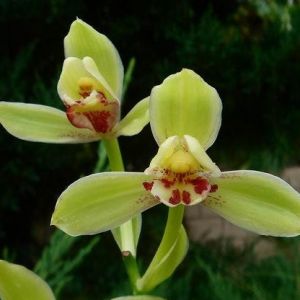
Orchid selection and breeding has its finer points; these six elements must be mastered well
A Jianlan (Cymbidium ensifolium) lotus-type narcissus from the mountains of Fujian, China. This variety blooms easily and recovers vigor easily; when the lotus-type narcissus flower opens fully it closely resembles the old Fengqiao of Huilan (Cymbidium faberi). Large flower, one bloom 5.2 cm in diameter and 1 cm in petal width. It stands well above the leaves and has a good fragrance.
-
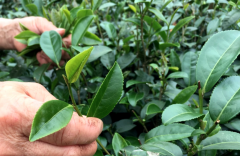
Are rare earth elements in tea harmful? And where do they come from?
A few years ago, most of the 10,000 boxes of tea MOU of Taipei Agricultural Products Marketing Corporation could not be fulfilled. Was it pesticide residue exceeding the standard? Or rare earth element content exceeding the standard? Chen Chi-chung, head of the Council of Agriculture, believes that the failure of the Taipei Agricultural Products Marketing Corporation tea MOU is related to China's unique rare earth element testing standard, not a pesticide problem.
-
Can eating spinach really supplement iron? How do you replenish the human body's trace elements such as iron, copper, zinc, chromium, molybdenum, selenium, iodine and cobalt?
In our daily life, have you also heard the saying that spinach is rich in iron and can make people strong and healthy? So does eating spinach really help supplement iron? Some experts point out that relying on spinach to meet the human body's need for iron is not reliable, because only
-
Fast-acting chemical fertilizer means good fertilizer? A full breakdown of each element's role
Many farmer friends today judge the quality of a fertilizer by whether it acts quickly. This is a very serious misconception about fertilizing; in fact, it is quite the opposite, fast-acting does not necessarily mean good fertilizer. The speed at which a fertilizer acts is related to the content of each element, the application method, the fertilizer type
-
Detailed Explanation of the Standard for Water-Soluble Secondary Element Fertilizers
Secondary element content a, g/L 100; water-insoluble matter content, g/L 50; pH (1:250 dilution) 3.0-9.0; moisture content (H2O) % 3.0; secondary element content refers to calcium content or magnesium content or the sum of calcium and magnesium content, with a content of not less than 1.0%; both calcium and magnesium elements shall be counted as secondary
-
What are the effects of macronutrient water-soluble fertilizers?
Macronutrient water-soluble fertilizers have the effects of promoting growth and activation, promoting roots and strengthening seedlings, preserving fruit and promoting swelling, detoxifying and preventing senescence, biologically resisting continuous cropping obstacles, and resisting disease while preserving fertilizer. According to the fertilizer requirements and characteristics of different crops, the corresponding fertilizers have different formulas. Those sold on the market include special water-soluble fertilizers for various crops such as vegetables, fruit trees, flowers, grain, cotton, and oil crops.
-
Three Key Elements of Scientific Feed Feeding in Macrobrachium nipponense (Freshwater Shrimp) Aquaculture
In the process of Macrobrachium nipponense aquaculture, feed is the input with the largest application amount. Selecting good feed and achieving high utilization rates plays an important role in improving shrimp immunity, preventing shrimp diseases, and optimizing shrimp quality. The following three points should be noted when feeding:
条件筛选