-
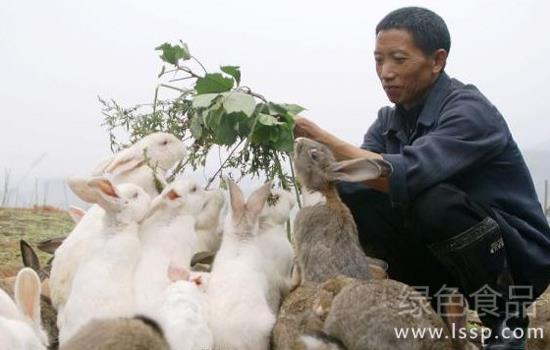
Using Herbs Instead of Drugs to Prevent Disease in Rabbits: Nutritious and Free of Side Effects
Nutritious and Free of Side Effects: Using Herbs Instead of Drugs to Prevent Disease in Rabbits
-

How effective is doramectin in treating swine parasitic diseases?
Doramectin is a new-generation macrolide antiparasitic drug. Compared with other commercially available ivermectin-class products, it has a broader antiparasitic spectrum, better efficacy, and a longer effective period for preventing parasite reinfection, making it currently the most effective and most development-worthy new veterinary antiparasitic drug in the world. Doramectin is obtained by biosynthesis from a genetically engineered mutant strain of Streptomyces avermitilis after the addition of cyclohexylcarboxylic acid, and it has a cyclohexyl group at the C25 position. Doram
-
What are the main aspects of the effects of airflow on pigs?
The movement of air molecules is called airflow, and airflow that moves horizontally is called wind. Atmospheric airflow is formed when uneven temperature distribution on the Earth's surface creates pressure differences, and air molecules flow from low-temperature high-pressure areas to high-temperature low-pressure areas. In meteorology, wind is commonly described by wind speed and wind direction. Wind speed is the distance the wind moves per unit time (m/s); wind direction is the direction from which the wind blows, expressed in 8 or 16 directions, and based on the probability of wind appearing in each direction, a wind direction frequency diagram (wind rose diagram) is drawn. Wind direction frequency diagram
-
What effect does high summer temperature have on Gastrodia elata?
In low-altitude hilly areas, under high temperatures of 32-34°C, lasting 10 days (240 hours) has little effect on Gastrodia elata and can still produce arrow tubers, while when the high temperature lasts 15 days (360 hours), the yield of Gastrodia elata will be affected. Therefore, the baseline of Gastrodia elata's tolerance to high temperature is relatively high. Summering of Gastrodia elata is not only related to the value of the absolute high temperature, but depends even more on the duration of the high temperature. Because under outdoor natural conditions there are monthly temperature differences and daily differences from day-night changes, and in addition artificial cultivation adopts shading and other regulating measures
-
Proper removal of silkworm excrement can effectively reduce the occurrence of silkworm diseases
Silkworm excrement not only harbors the pathogens of viral flacherie, but is also a breeding and transmission site for the pathogens of many silkworm diseases such as empty-head soft rot, bacterial soft rot, and muscardine. Data show that when pathogen-carrying silkworm excrement from spring-reared silkworms is left for 15 days and then comes into contact with mulberry leaves, it can cause the incidence of midgut-type viral flacherie in silkworms that eat those leaves to reach 75%; when pathogen-carrying silkworm excrement from late-autumn-reared silkworms is left for 1 day and then comes into contact with mulberry leaves, it can cause the incidence of midgut-type viral flacherie in silkworms that eat those leaves to reach 60%, and after 7 days the incidence reaches 100%. Therefore, during routine rearing,
-
Four Effects on Rice After Exposure to High Temperatures
Rice has different temperature requirements at each growth and development stage, and there is an optimal temperature for each. If the upper or lower critical temperature limit is exceeded, abnormal phenomena, namely physiological disorders, will appear in the growth and development of rice. Therefore, attention should be paid to the effects of high temperatures on rice. 1. Effects of high temperatures on each growth stage of rice. 1. Heading and flowering stage. Generally, rice prefers a temperature of 25-30°C during the heading and flowering stage. When the temperature is below 25°C or above 30°C, large numbers of empty and shriveled grains will appear in rice. At the same time, high temperatures also
-
Electric shocks to live fish can effectively extend transport time
Fisheries experts have found that giving live fish electric shocks to induce a state of suspended animation can extend storage and transport time. The method is to apply a voltage of 5000 volts to each kilogram of live fish such as sea bream for 30 seconds, then let them breathe oxygen for 5 minutes. In this way, the fish carry out the minimal breathing necessary to sustain life and enter a state of suspended animation. Fish in this state of suspended animation consume almost no oxygen and can be stored and transported at a ratio of "half fish, half water," which not only greatly saves on transport costs,
-
What are the effective control methods for the soybean root miner fly
The soybean root miner fly Ophiomyia shibatsuji (kato), also known as the bean root snake miner fly, belongs to the order Diptera, family Agromyzidae. It is commonly called the soybean root maggot, bean root snake fly, root miner fly, etc. I. Distribution and damage. The soybean root miner fly is mainly distributed in the main soybean producing areas; in China it is found in the three northeastern provinces, Inner Mongolia, Hebei, Shandong and Shanxi, among which Heilongjiang, Jilin and Inner Mongolia are the most prominent. The soybean root miner fly mainly causes damage during the soybean seedling stage; its feeding habit is monophagous, attacking only soybean and wild soybean. The larvae bore into the soybean
-
Effects of Different Sowing Dates on the Growth and Yield of Soybean
1 Tested varieties (1) Early edamame type: Dalizhuang, Zaosheng Bainiao, Ningshu 60. (2) Summer soybean type: Yudou 16, Huaidou No. 4, Nannong 242, Nannong 86-4, Nannong 88-31, Nannong 96CT-1. (3) Specialty bean type: Danbo Black, Japan 118, Haimen Green, Haixi 13, Black Skin Green Kernel, Lubaozhu. (4) Sprouting bean type: 98-29, 98-30, S-03. Among the above 18 varieties (lines), Zaosheng Bainiao and Ningshu 60 were introduced from the Jiangsu Academy of Agricultural Sciences,
-
What pathogenic effects does feed contamination have on fish?
Because some feed products currently contain bacteria at levels far exceeding the standard, mass fish deaths occur from time to time after fish eat contaminated feed. Based on the disease symptoms in fish, it can be roughly divided into two types: acute type (explosive) and chronic type. 1. Acute type (explosive type): After fish eat contaminated feed, disease onset occurs in as much as 3 to 5 days, or as little as 1 to 2 days, with symptoms appearing; severely affected fish have already died, and the number of dead fish shows a gradually increasing trend, but feeding is not affected, and most fish can eat normally. This kind of
条件筛选