-

Detailed Explanation of Disease Diagnosis by Observing Colors in Cattle and Sheep and Prevention and Treatment Techniques
In long-term livestock and veterinary production practice, we have summarized nearly thirty years of experience and relevant reports. By observing the colors of cattle and sheep, diseases can be diagnosed quite accurately, and at the same time, effective new techniques can be adopted for prevention and treatment, achieving good therapeutic results. 1 "Cylinder color" disease diagnosis 1.1 Cattle and sheep "red eye disease" The pathogen of this disease is Haemophilus or conjunctival Rickettsia, and both cattle and sheep can be infected. 1.1.1 Symptoms Both eyes are affected simultaneously, eyelids are swollen, photophobia and tearing: conjunctivitis, diffuse
-
Laminitis in pigs is a surgical disease of swine.
[Causes]In the past, clinical cases of laminitis in pigs were relatively few, but in recent years the incidence has increased. There are many factors that trigger laminitis. At present, due to the use of various additives, pig feed is formulated with comprehensive and sufficient nutrients, the feed is rich and highly palatable, pigs are greedy eaters and lethargic, and exercise little. In addition, with the increase in confinement and cage rearing, pigs become fat and fleshy in a short time and their body weight increases rapidly. Such a huge pig body increases the pressure on the narrow hoof capsule, and coupled with insufficient exercise, poor blood circulation in the hoof, and impeded and obstructed hoof mechanism, when digestive disorders occur, the feed in the gastrointestinal tract ferments and produces histamine-like toxins, causing the hoof, which is rich in
-
Review of Research Progress on Pig Disease-Resistance Breeding Technology
High-yield objectives usually lead to reduced pig resistance. At the same time, pig farm diseases, especially viral infectious diseases, severely threaten pig health. Although vaccination has played an important preventive and control role, it has not been able to completely control and eliminate the prevalence of infectious diseases. In the long run, adopting genetic methods to improve pigs' resistance to pathogens at the genetic level, and carrying out disease-resistance breeding, has a fundamental effect. In the 1930s, some scholars reported that different chicken breeds differed in susceptibility to Marek's disease, and in the subsequent
-
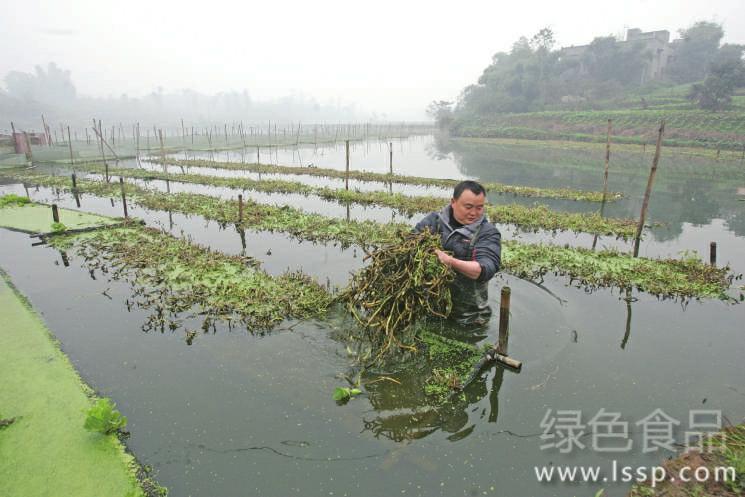
Fish Disease Prevention Is More Important Than Treatment: Detailed Explanation of Prevention Methods and Measures
Fish Disease Prevention and Control: Prevention Is More Important Than Treatment - Methods and Measures for Fish Disease Prevention
-
Occurrence Patterns and Control Methods of Cotton Seedling Diseases
Cotton seedling diseases are characterized by a concentrated onset period, generally occurring 15-30 days after sowing. The primary infection source comes mainly from the soil, with a small portion from seeds. Around April 20 this year, many provinces experienced continuous rainy and low-temperature weather, so seedling diseases are bound to be severe, and timely control measures should be taken in all areas. I. Symptom Manifestations (1) Damping-off. When cotton seedlings are affected before emergence, it causes seed and sprout rot. When disease occurs after seedling emergence, lesions initially appear as yellowish-brown and later turn black and sunken at the base of the young stem near the soil surface. The lesions gradually expand,
-
How are cotton seedling diseases diagnosed and controlled?
Diagnosis and Control of Cotton Seedling Diseases Cotton seedling diseases are numerous, but they can be grouped into two main types: root diseases and leaf diseases. Root diseases often cause seed rot and sprout rot before emergence, and root rot and stem-base rot after emergence, and are the main cause of missing plants and broken rows in cotton fields. Common ones include damping-off (Rhizoctonia), anthracnose, red rot, and Pythium damping-off. Leaf diseases damage the cotyledons, true leaves, and stems of cotton seedlings, and in severe cases the stem tips and leaves wither and drop off. Common ones include black spot, brown spot, cotton seedling blight, and stem blight. This film focuses on summarizing and introducing several
-
How to treat cotton seedling diseases after rain? Detailed explanation of seedling-stage control measures
When cotton seedlings encounter rainfall, diseases can easily break out and spread. In mild cases, pathogens infect the leaves, and the diseased spots affect leaf photosynthesis, causing delayed development of the cotton seedlings; in severe cases, they cause bud rot and root rot, resulting in diseased or dead seedlings. After cotton emerges, spray 1 to 2 applications of humic acid foliar fertilizer to improve the cotton seedlings' ability to resist low temperatures and disease. In the early stage of cotton disease at the seedling stage, spray 50% carbendazim or 70% thiophanate-methyl wettable powder at 800 times dilution + 70% mancozeb at 600 times dilution, or use hymexazol at 3000 times dilution for spraying and root drenching, every
-
How to control pests and diseases during the cotton sowing and seedling-raising period?
The cotton sowing and seedling-raising period is an important part of cotton production. According to the municipal meteorological observatory forecast, in the spring of 2008 (March to April) precipitation will be normal to slightly low, with 200-250 mm in the Dabie Mountains and 240-290 mm in other areas. The average spring temperature will be close to normal, with large temperature fluctuations and frequent cold air activity; late spring cold spells may occur. This is relatively favorable for the occurrence of cotton spider mites and cotton thrips. Because of the large temperature fluctuations, cotton seedling growth is unfavorable, seedling resistance is reduced, and this is also favorable for the occurrence of cotton seedling diseases.
-
Can Gastrodia elata prevent Alzheimer's disease? Experiments provide the answer
Experiments at the China Medical Institute of Traditional Chinese Medicine in Taiwan, China found that Gastrodia elata can improve learning and memory impairment, and besides helping to maintain health, it can also prevent or treat Alzheimer's disease. Since toxicity tests have confirmed it to be non-toxic, the institute plans to develop Gastrodia elata into products similar to pickled cucumbers or health beverages. Hsieh Ming-tsun, president of the College of Traditional Chinese Medicine in Taiwan, China, and Wu Chi-jui, a PhD at the Institute of Traditional Chinese Medicine, have recently devoted themselves to research on the effect of Gastrodia elata in improving learning and memory impairment, and found that gastrodin, the main active component in Gastrodia elata, can increase adrenal hormone secretion, increase the body's utilization of blood sugar, and thereby activate brain function.
-
Honeysuckle can prevent and treat poultry and livestock diseases, making it a valuable medicine for farming
Honeysuckle, also known as silver flower or Japanese honeysuckle flower, is the flower bud of Japanese honeysuckle (Lonicera japonica), a perennial semi-evergreen climbing vine of the Caprifoliaceae family. Honeysuckle is distributed throughout China, especially common in the south, and is now also cultivated artificially, with significant economic benefits, making it a path to wealth. It is mainly produced in Guangxi, Guangdong and Henan provinces and autonomous regions. From March to July each year, flower buds that are about to open are picked in the early morning and dried in the sun for later use. Every part of the honeysuckle is a treasure; it is a rare traditional Chinese medicine. At the same time, it is also a good medicine for preventing and treating poultry and livestock diseases. 1. Chicken diseases
条件筛选