-

What are the common diseases of geese? Goose farmers should know them in advance
1 Infectious diseases 1.1 Gosling plague is an acute septicemic infectious disease of goslings. Affected geese are depressed, have complete loss of appetite, severe diarrhea, and sometimes show neurological symptoms. This disease mainly affects goslings aged 4 to 20 days. In the early stage of illness, appetite decreases, the bird is listless, the neck is drawn in, the feathers are fluffy, it stays apart from the flock, and walking is difficult; then appetite is completely lost, severe diarrhea occurs, and thin droppings mixed with bubbles or watery yellow-white or yellow-green feces are passed; nasal secretions increase, the head is shaken, fluid is flung from the corners of the mouth, and the beak and webs become cyanotic. Prevention is mainly disinfection
-
Swine rheumatism is a type of surgical disease in pigs.
[Cause] Swine rheumatism occurs in cold and damp weather. Because the pigsty is dark and damp, with poor warmth retention and no clean bedding straw, the pig is exposed to attack by wind and cold, or stimulated by ice and snow, rain, and dampness, or triggers such as insufficient exercise and sudden feed changes cause the disease. [Symptoms] This disease often affects the muscles and joints, and usually comes on suddenly. It first appears in the hind limbs, then soon spreads to the front limbs, or the affected area often shifts, with alternating lameness. The muscles or joints of the affected area are painful. On palpation, the surface of the affected muscles is hard and not smooth. The joints
-
How to prevent respiratory disease in chickens? A full breakdown of practical measures
Measures to prevent respiratory disease in chickens: 1. Select chicks of reliable quality and carry out vaccination properly. Choose hatching eggs free of disease infection to hatch chicks, ensuring the chicks' health. At the same time, the purchased chicks should be properly vaccinated against infectious bursal disease, infectious bronchitis, infectious laryngotracheitis and infectious coryza to prevent the invasion of pathogens such as mycoplasma, which is also the key to preventing chronic respiratory disease. 2. Strengthen feeding management and reduce stress factors. In winter and spring, when the weather is cold, it is essential to greatly strengthen
-
What are the characteristics of nutritional and metabolic diseases in chickens?
1. Slow onset, high incidence, and a relatively long course; most cases remain subclinical for a long period. 2. Body temperature is generally low or within the normal range, no contact transmission occurs between chickens, and affected chickens mostly show diverse clinical signs such as arrested growth and development, anemia, and disorders of digestive and reproductive function. 3. Early diagnosis is difficult, but such diseases have characteristic changes in blood or urine biochemical indices or pathological changes in organs and tissues. The cause can be identified through testing and analysis of feed, soil, or water quality.
-
What are the prevention and treatment methods for mullet diseases?
Mullet belongs to the order Mugiliformes, genus Liza, and its external morphology is similar to that of the grey mullet, but its adipose eyelid is not well developed. It lives in coastal waters and estuaries and can also live in freshwater, being a eurythermal and euryhaline fish. Under natural conditions, it scrapes and feeds on diatoms and decaying organic matter, and also eats benthic organisms. In pond aquaculture, artificial compound feed can be used. Among cultured species, there is a saying of "grey mullet in the south, mullet in the north." In Jiangsu and areas to the north, mullet farming is mainly practiced. In recent years, the momentum of using freshwater ponds to culture mullet in coastal areas has developed rapidly, shifting from polyculture to
-
External-use medication for fish and shrimp, a lifesaver for treating diseases in aquaculture
Properties: This product consists of two compound preparations, Type A and Type B. Type A is a yellow-brown powder, and Type B is a slightly red transparent liquid. Action and uses: External-use medication, mainly for the prevention and treatment of bacterial and viral diseases in fish and shrimp, and for oxygen deficiency causing fish to gasp at the surface. Usage and dosage: (1) Whole-pond splashing: the concentration for preventing and treating bacterial and viral diseases in fish and shrimp is (1.5-3.0) ppm. (2) The concentration for rescuing fish and shrimp gasping at the surface is (2.0-3.0) ppm.
-
Prevention and Treatment Methods and Technical Key Points for Abscess Disease in Turtles
Turtles in nature are relatively disease-resistant and are also long-lived animals. Common turtles can live for decades, and some can live for one to two hundred years. When turtles are kept in captivity, factors such as deteriorating water quality or insufficient nutrition can easily lead to invasion by various pathogens and cause abscess disease. In recent years, with the promotion of artificial turtle farming, abscess disease has also become prevalent, and in some places the incidence rate has been rising year by year. In the early stage of the disease, a pus-filled swelling appears locally under the turtle's skin, and afterward the pus-filled swelling gradually hardens and forms a raised tumor-like mass. It can be moved when touched by hand, but the inside is hard.
-
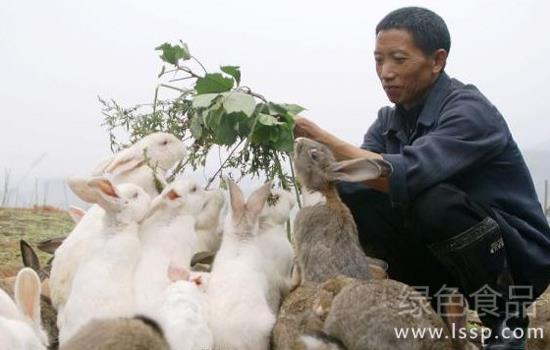
Using Herbs Instead of Drugs to Prevent Disease in Rabbits: Nutritious and Free of Side Effects
Nutritious and Free of Side Effects: Using Herbs Instead of Drugs to Prevent Disease in Rabbits
-
Disease Occurrence Patterns and Prevention Methods for Pigs at Different Rearing Stages
Disease Occurrence in Pigs at Different Rearing Stages Incidence Rates of the Three Major Infectious Diseases of Pigs Hog cholera, swine erysipelas, and swine pasteurellosis are collectively known as the three major infectious diseases of pigs. In China, the overall mortality rate of affected pigs accounts for about 8% of the total reared population, and even in areas with relatively good prevention and control, pig mortality stands at 5%. Therefore, the level of pig disease prevention and treatment should be improved. If the overall pig mortality rate could be reduced by one percentage point each year, that would be equivalent to an additional 5 million pigs sent to market - what a tremendous amount of wealth that represents. According to relevant statistics, among the causes of pig deaths, those caused by
-
What are the common diseases that cause abnormal body color in chickens?
1. Staphylococcal infection: the affected areas look like bruised and contused tissue, appearing red, green, blue-black, or black depending on the degree of hemoglobin breakdown. Chronic cases involve arthritis. A definitive diagnosis requires pathogen identification. 2. Streptococcal infection: the lesions resemble those of staphylococcal infection but occur less often, and a definitive diagnosis also requires pathogen identification. 3. Monocytosis (uremia): the muscle color is darker or more purplish than normal, and the comb and head are cyanotic. The kidneys are swollen and
条件筛选