-
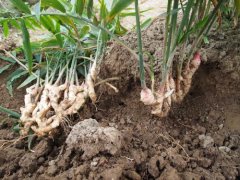
What Kind of Ginger Is Pao Jiang? Differences Between Dried Ginger and Pao Jiang and Their Effects
Pao jiang is ginger that has been turned black through extremely high heat, and it is mainly used specifically for diarrhea with cold in the abdomen. Dried ginger is made by cutting old ginger into shreds or slices and drying them. Its nature is to hold the center and warm the stomach, which is different from fresh ginger's ability to disperse wind-cold. The saying that morning is suitable for eating ginger refers to fresh ginger (even if only boiled in soup, it still counts as fresh ginger). Fresh ginger disperses wind-cold, and it is just right for dispersing any wind-cold one may have contracted during the night. Ginger can also activate yang qi; first, one works with more vigor, and second, the body's qi also becomes more vigorous and unobstructed. Once the qi is smooth, the disease focus will also disappear imperceptibly. Hence the saying, "Radish when going to bed, ginger when getting out of bed, and you need not trouble the doctor to write a prescription." Getting-out-of-bed ginger means eating ginger in the morning!
-
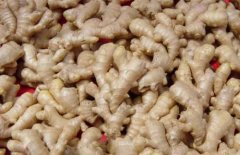
The Differences and Characteristics of Young Ginger, Old Ginger, Dried Ginger and Turmeric
Ginger cultivation areas have their conditions; in areas unsuitable for growing ginger, it is best not to plant ginger. Can you tell the difference between "young ginger, old ginger, dried ginger and turmeric"? Let's take a look together! Ginger has many health benefits: it speeds up circulation and boosts metabolism! Especially in winter
-

Where are the main producing areas of dried ginger, and how does it differ from fresh ginger?
Dried ginger is a traditional Chinese medicine with effects such as reducing swelling and stopping sweating. So, where are the main producing areas of dried ginger? What is the difference between fresh ginger and dried ginger? 1. Where are the main producing areas of dried ginger? It is mainly produced in Qianwei, Sichuan; Changshun and Xingren, Guizhou; Laifeng, Hubei; Xinhui, Guangdong; as well as Zhejiang, Shandong, Hunan, Guangxi, Jiangxi, Fujian and other places, and is sold throughout the country.
-

Detailed Guide to Dried Ginger Cultivation Techniques: Planting Methods and Management Points
Cultivation Techniques for Dried Ginger
-
Key Processing Techniques and Detailed Production Methods for Dried Ginger Slices
Fresh tender ginger can be processed into a dried product - dried ginger. Since ginger can be further processed into other products, its processing techniques are as follows: 1. Raw material: Select tender ginger, remove rotten ginger, and wash clean. 2. Peeling: Use a mechanical abrasion peeling method to remove the relatively thin skin layer. Several rubber heads can be installed inside a grinding wheel with a diameter of 1 m. Pour the clean ginger pieces into the grinding wheel. When the grinding wheel rotates, the skin of the ginger pieces will be abraded off. Then rinse off the ginger skin with clean water. 3. Slicing: Use manual labor or a slicing machine to cut the ginger pieces to a certain thick
-
Detailed explanation of how to make dried ginger slices, with simple and easy-to-learn steps
After harvesting fresh ginger, rinse it clean with water, peel it by hand or with a peeling machine, and cut it with a knife or slicing machine into evenly sized slices about 1 cm thick. Set up bamboo racks in a sealed room, place the ginger slices on the bamboo racks, and dry the ginger slices directly in the sun to obtain dried ginger slices. Where conditions permit, baking can be carried out: put the sliced ginger into a drying room, and strictly control the temperature in sequence with high, medium, and low heat. Start with high heat to gradually evaporate the moisture on the surface of the ginger slices, then lower it to medium heat and low heat, so that the ginger slices shrink and cool, becoming hard and crisp, with a moisture content of 12%
条件筛选