-

For Phalaenopsis grown in bark, is thick or thin bark better, and does it need to be soaked in advance?
Phalaenopsis is an epiphytic plant that likes a loose, breathable growing medium, and bark is a common choice. Some growers ask: for growing Phalaenopsis, is thick bark better or thin bark better? Does the bark really need to be soaked in advance before use? When it comes to choosing bark thickness, each has pros and cons, and the decision should be based on actual needs; pre-treatment before use also affects the plant's growth condition.
-

How to handle a Phalaenopsis right after removing it from its pot? Does it need to be sun-dried for a few days?
Friends who grow Phalaenopsis have surely encountered the time when they need to remove it from its pot. How to handle it after repotting, whether it needs sun-drying, and how long to dry it, these questions are all too common! After a Phalaenopsis is removed from its pot, never put it directly in the sun! Its roots are not as tough as those of other plants. They are that kind of white, tender, translucent aerial root. If placed directly in the sun, the water
-

How many years of care does a Phalaenopsis seedling need before it blooms?
Many flower lovers buy Phalaenopsis seedlings on a whim, full of hope for blooms, but have no idea how long they will have to wait. Today let's talk about the time it takes for Phalaenopsis seedlings to bloom, and share some practical care tips! Generally speaking, from a Phalaenopsis seedling to the point where it can bloom, it takes about 1 - 2 years. If you bought a rather small
-

What does it mean when a Phalaenopsis orchid has a flower spike? What is the difference from one without a flower spike?
During the care of Phalaenopsis orchids, the appearance of a flower spike often fills people with anticipation and surprise. So what exactly does a Phalaenopsis orchid with a flower spike mean? And how does it differ from a Phalaenopsis orchid without a flower spike? The flower spike of a Phalaenopsis orchid is not an ordinary leaf, but a slender stem growing from the center of the plant or from a leaf axil.
-

What Happens If You Don't Use a Root-Control Pot for Phalaenopsis, and Does a Root-Control Pot Really Work?
Fellow plant lovers all know that Phalaenopsis (moth orchid) is beautiful but also a bit delicate. Some people ask, is it OK to grow Phalaenopsis without root control? Is a root-control pot just a waste of money? Today let's talk about these questions! Phalaenopsis is different from the common green plants we usually see. It is an aerial-root plant, and its roots not only absorb water and nutrients but also need to "breathe."
-

Does bark hold water well for Phalaenopsis, and how do you tell when the bark is dry?
When it comes to Phalaenopsis, many growers love using bark as a potting medium, since it is airy and low-maintenance, but what everyone cares about most is whether it holds enough water. Actually, the water retention of bark for Phalaenopsis depends on what kind of bark you choose. If it is the coarse, hard pine bark, it looks wet after a good soak, but within half a day the surface is
-

What does "orchid seedling" mean, and what is the difference between commercial orchids and species orchids?
Phalaenopsis orchids have a unique flower form and have become very popular in recent years. After buying one and bringing it home for routine care, how can you avoid unnecessary diseases? In fact, to prevent them you have to start from the source, because choosing a healthy orchid means avoiding many unnecessary problems and thus reducing disease issues. In the flower
-

How to tell the age of a Phalaenopsis orchid seedling, and after how many years does it stop growing?
Growers of Phalaenopsis orchids have probably all wondered: how old is this plant, exactly? How do you tell? And after how many years does it stop growing? Actually, it's not hard — just look at its "figure" and you'll have a good idea. The age of a Phalaenopsis seedling is mainly judged by its pseudobulb, the plump little "belly" beneath the leaves. A one-year seedling is the thinnest and smallest, usually
-
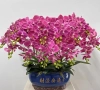
When does a Phalaenopsis need repotting? Repotting time and method
When growing Phalaenopsis, repotting is a key step that affects their growth and flowering. To judge whether repotting is needed, you can observe three aspects comprehensively: the root system, the potting medium, and the growth performance. At the same time, managing the details before and after repotting is what keeps the plant in a vigorous state at all times. 1. Root system condition - root explosion phenomenon: when the roots are densely tangled inside the pot
-
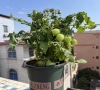
Why does a tomato stem grow bumps, is it a disease?
Don't ignore bumps appearing on tomato stems; timely treatment is the only way to ensure a good harvest! Today I've put together the common causes and solutions, so even beginners can easily get the hang of it. Aerial root type bumps (a physiological response) Appearance: white/light green soft bumps on the stem, like "little aerial roots", mostly near the potting soil. Causes: overwatering, soil poorly
条件筛选