-
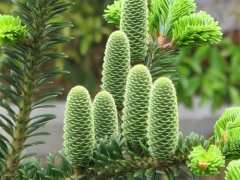
How many Baishanzu fir trees still exist, and where are they distributed? With pictures
The Baishanzu fir is a fir tree species and an endangered species. It is very precious. In its natural distribution area, only five trees remain, but one of them has weakened and one is growing poorly. It is endemic to the area above 1700 m above sea level on the south slope of Baishanzu in southern Zhejiang. Bai
-
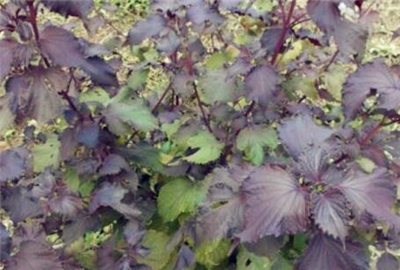
How much is wild perilla per jin, how is it grown, and where is it mainly distributed?
Wild perilla is produced in China's Shanxi, Hebei, Hunan, Hubei, Jiangxi, Zhejiang, Jiangsu, Fujian, Taiwan, Guangdong, Guangxi, Yunnan, Guizhou and Sichuan, among other places, and can be used for both medicine and food. So how much is wild perilla per jin? How is it grown? Where is it mainly distributed? Perilla price: it is understood that
-

How are potato roots distributed? Understand it in one article
The roots of potatoes grown from tubers are fibrous roots, with no taproot; potatoes grown from seed have a primary root and lateral roots, and here we mainly discuss the fibrous root system. Potatoes are a shallow-rooted crop, with most of the root system distributed within 40 cm below the soil surface, generally not exceeding 70 cm, and in sandy soil the roots can reach more than 1 m deep. The root system of early-maturing varieties is generally less developed than that of late-maturing varieties, and early-maturing varieties have a shallower root distribution, while late-maturing varieties have a wide and deep distribution.
-
What are the local aliases of the red banded snake, and where is it mainly distributed?
The red banded snake is also known as red snake, mulberry root snake, red flower snake, red long worm, fire red lotus, red four seasons eight joints, blood third watch, chain snake, red spotted snake, red flower seed, dry land fire chain, red hundred joints snake, soy sauce spot, etc. It is a rear-fanged venomous snake, and its venom contains a mixed toxin mainly composed of hemotoxic venom. Because its fangs are not well developed and not exposed, symptoms after a bite are relatively mild, and so far there have been no specific reports of human casualties. During the 9 years my snake farm has kept this snake, although several people were bitten, there has never been any case of injury. The red banded snake has a relatively wide distribution,
-
In which regions are Korean pine (Pinus koraiensis) tree species mainly distributed?
The distribution area of the Korean pine (Pinus koraiensis) tree species is: Korean pine is produced in the mountainous areas of Heilongjiang, Jilin and Liaoning in China at altitudes of 300 to 1800 m. Its natural distribution roughly coincides with the range extending from the Changbai Mountains and the Greater Khingan Mountains. It has been introduced and cultivated in Beijing and in such places in Shandong as Mount Tai, Mount Lao and Mount Kunlun. Korean pine has a fairly wide tolerance for light conditions, and as the tree age increases, its light requirement gradually rises. It most prefers deep, fertile mountain dark brown forest soil with good permeability. Korean pine is a shallow-rooted tree species, its taproot is not well developed, and its lateral roots spread very widely horizontally, which helps it absorb soil nutrients.
-

Which regions are banana-growing areas mainly distributed in?
The distribution of banana-growing areas
-

In which regions are buckwheat producing areas mainly distributed?
Where are buckwheat producing areas?
-

Where are abalone producing areas distributed? Detailed introduction to the main producing areas
What are the distribution areas of abalone production?
-

What regions are the main production areas of clams distributed in?
The production area distribution of clams
-

Where are squid distributed? A list of the main producing areas
The distribution of squid producing areas
条件筛选