-

A Complete Guide to Watermelon Varieties and the Advantages of Each
Summer is here, and it is watermelon season again. There are many watermelon varieties, and different varieties differ in growth, appearance and flesh. So do you know which watermelon varieties there are? What characteristics does each variety have? Let's find out below. 1. Shuangxing watermelon
-
A Detailed Guide to the Pruning Characteristics of Walnut Trees at Different Ages
1. Pruning timing. The pruning timing for walnuts differs from that of other fruit trees. Because pruning walnut during the dormant period after leaf fall causes "bleeding" (sap flow) from the wounds, leading to nutrient loss, weakened tree vigor, and even dead branches, it should not be done in winter. Walnut bleeding period
-
Pruning Methods for Different Types of Branches on Walnut Trees
1. Pruning of skeletal branches: Promptly retract crossing skeletal branches. For overly weak skeletal branches, retract them to well-grown lateral branches growing obliquely upward, so as to raise the angle of the extension branch. For trees reaching a height of about 3.5 m, promptly drop the head. 2. Training and renewal of bearing branch groups: Walnut
-
A Detailed Explanation of the External Structure and Morphological Characteristics of Cacti
The vastly different external features of different plants are almost always closely related to their specific ways of growing. Although sometimes people can only guess at what significance a plant's morphology has for its growth, these guesses are often the beginning of new discoveries.
-
What ecological conditions are needed for the growth and development of walnut trees?
Different walnut species and cultivars vary greatly in their ability to adapt to rainfall. In the distribution area of Yangbi walnut, the annual rainfall is 800-1,200 mm, while introducing early-bearing walnuts to areas with rainfall above 6,00 mm makes them prone to disease. Walnut tolerates dry air, but is relatively sensitive to soil moisture conditions; soil that is too dry or too wet is unfavorable for the growth and fruiting of walnut.
-
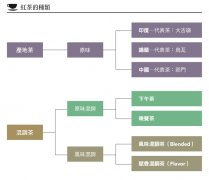
Black tea comes in diverse flavors, blended with ingredients from different origins to create a ever-changing range of tastes
Black tea originated in Fujian, and in just one or two hundred years, amid the commercial currents around the world, black tea broke through national boundaries and became an important part of tea drinking everywhere. Looking back on this one or two hundred years of history is truly fascinating.
-
Growth performance of different orchids under high temperatures
Jingbo's Chengmei grows slowly, and Lüyun sprouts late; this is probably common consensus. But Lao Shen's Chengmei has grown especially fast this year. This reminds me of what a master said a few years ago: when the temperature reaches above 33 degrees, Chengmei does not grow slower than other Huilan orchids. To explain the issue, let me introduce a new term here, called...
-
How do the fragrances of Cymbidium goeringii (spring orchid) from different regions differ?
There are indeed some small differences among Cymbidium goeringii varieties from different regions. Jiangsu and Zhejiang spring orchids generally have paler petal colors, with more of them having purple veins on the bud sheaths; spring orchids from Hubei, Henan, Shaanxi and Anhui are the same, mainly with deeper petal colors and more white bud sheaths; spring orchids from Sichuan, Guizhou and Yunnan come in two types: one with thinner petals and even thinner bud sheaths, and the other with thick petals known as douban. Among these four types of spring orchids, the thin-petaled spring orchids from Yunnan, Guizhou and Sichuan are the most fragrant and the most mellow; next come the Jiangsu and Zhejiang spring orchids; among the spring orchids from Hubei, Henan, Shaanxi and Anhui, those with noticeably strong fragrance are the Anhui spring orchids and the more southerly Hubei spring orchids, whose fragrance differs little from that of Jiangsu and Zhejiang spring orchids, and some are also very fragrant, but on the whole their fragrance is a little lighter than that of Jiangsu and Zhejiang spring orchids. Whether Anhui and Hubei spring orchids are fragrant also depends on temperature and moisture during the flowering period; here the temperature during the flowering period of spring orchids is lower, which is not conducive to the volatilization of the aromatic oils, so it is not entirely a matter of the spring orchid itself. Douban spring orchids are generally not fragrant. The spring orchids of southwestern Hubei, namely the Enshi region, belong to the same strain as those of Yunnan, Guizhou and Sichuan, and are very fragrant and mellow. This also reflects the geographical complexity of Hubei and the diversity of orchids.
-
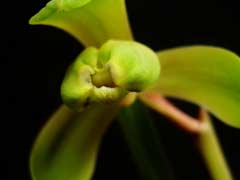
When Do Orchids Bloom? A Detailed Guide to Blooming Times of Different Varieties
If a gardening enthusiast wants to know when orchids bloom, they first need to confirm the variety of orchid they are growing, because different orchids have different blooming times. In addition, because our care environments differ, even orchids of the same variety may have different blooming times...
-
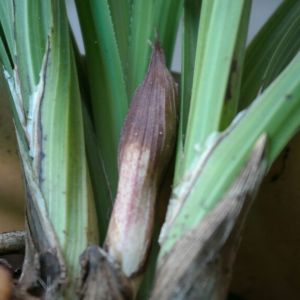
What are the fragrance characteristics of Cymbidium goeringii? A detailed explanation of the fragrances of Cymbidium goeringii from different regions
Bud abortion means the flower buds wither before they bloom. This phenomenon may be caused by deficiencies in bud-stage management techniques or inadequate care for the flower buds; the buds wither or rot before reaching bloom time. The main causes of bud abortion are dry air and excessively high temperatures. Both Cymbidium goeringii and Cymbidium faberi require 1 to 2 months at around 5°C of low...
条件筛选