-

How to prune asparagus fern? Different pruning methods produce very different results
How to prune asparagus fern: different pruning methods, different results
-
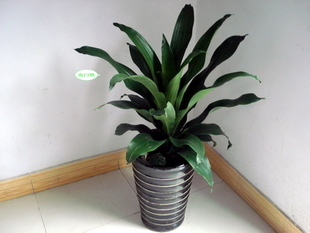
Differences Between Dracaena arborea and Dracaena fragrans Massangeana and How to Grow Dracaena arborea and Precautions
Planting a few green plants indoors is a pleasure to look at. Dracaena arborea, whose Latin name is Draceanaarborea, belongs to the Liliaceae family and the genus Dracaena. This plant should be grown in fertile loam or humus soil with good drainage. For light, 50-60% shade is best
-

Differences Between London Plane, Chinese Parasol Tree and Paulownia - A Quick Guide to Telling Them Apart
In the vigorous development of urban greening and landscaping, identifying and selecting tree species is an important task. The London plane, paulownia and Chinese parasol tree may look like three sisters in urban landscaping, but in fact they belong to different families and genera, and differ greatly in morphology. The London plane is a large deciduous tree of the genus Platanus in the family Platanaceae. Its name comes from its leaves resembling those of the Chinese parasol tree; it was introduced from abroad in old China and was first planted in the French concession of Shanghai, hence the name "fa tong" (French plane). The London plane is actually a collective name for Platanus orientalis and Platanus acerifolia of the genus Platanus. Platanus orientalis reaches 30 m tall, with dark gray bark that peels off in thin flakes, revealing a greenish-white inner bark. Young branches are covered with yellow-brown stellate hairs. Leaves are 8 to 16 cm long and 9 to 18 cm wide, with 5 to 7 deep lobes reaching to or below the middle, the lobes narrow and long, covered with gray-yellow stellate hairs when young and later shedding. The common stalk bears spherical fruit heads 2 to 2.5 cm in diameter, with spiny styles 3 to 4 mm long; flowering in May, fruiting in September to October. Platanus acerifolia is a hybrid of Platanus orientalis and Platanus occidentalis, bred in London, England. It reaches 35 m tall, with bark peeling off in thin flakes and a pale greenish-white inner bark. Young branches and leaves are densely covered with pale brownish-yellow stellate hairs. Leaves are 10 to 24 cm long and 12 to 25 cm wide, with a flat or slightly heart-shaped base, 3 to 5 deep lobes, the middle lobe nearly equal in length and width, with entire or sparsely coarse-toothed margins. Fruit heads are about 2.5 cm in diameter, with spiny styles 2 to 3 mm long. Flowering in April to May, fruiting in September to October.
-
Money tree losing leaves and turning yellow? Different causes produce different symptoms
I. Drought yellow: The yellow caused by lack of water is different from the yellow caused by too much water. The yellow from lack of water shows as dried, withered leaf tips or edges, with old leaves turning yellow and dropping from the bottom up, but new leaf growth remains fairly normal. Targeted treatment: Just make sure to water thoroughly and generously. Because if you do not water thoroughly and only wet the top while the bottom stays dry, it will affect nutrient absorption
-
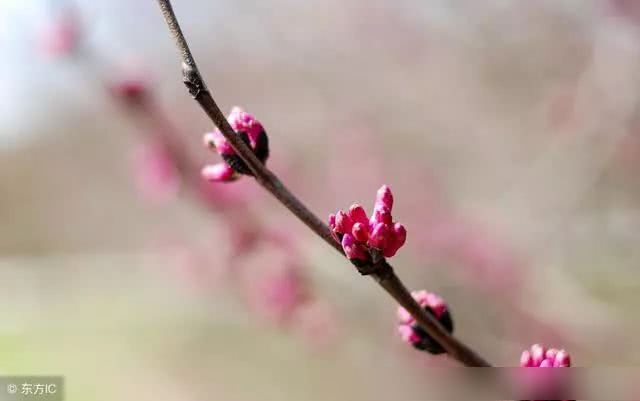
Good flower bud differentiation quality in fruit trees guarantees a bountiful orchard harvest next year
The number, plumpness, and flowering quality of flower buds directly determine the yield level of the orchard the following year, and even more directly affect the orchard planting income of the broad community of fruit growers. To achieve good flower bud differentiation and high flowering quality, one must comprehensively understand...
-
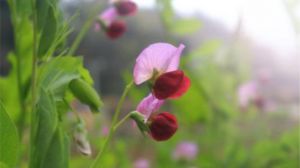
What is the difference between sugar snap peas and snow peas? A quick guide to telling them apart
Leaf difference: Sugar snap pea leaves are oblong or ovate-round; snow pea leaves are ovate, with small teeth along the lower edge. Flower difference: Sugar snap pea flowers are solitary or arranged in racemes, white or purplish-red; snow pea flowers are white or purplish-red, arranged in racemes. Fruit difference: Sugar snap pea pods are long oval, while snow pea pods are long oval or flat-round.
-
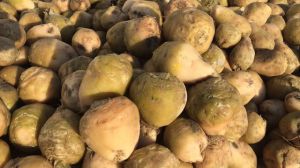
What is the difference between mustard tuber and kohlrabi?
Appearance differences: The former grows 60-150 cm tall, with white outer skin and a fleshy root. The latter is relatively shorter, about 30-60 cm, with pale green outer skin, and there are also purple and green types. Leaf differences: The former has smaller leaves, with different shapes for basal and stem leaves, while the latter has broader, larger leaves covered with a white powdery layer.
-
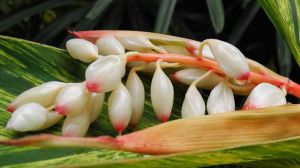
What is the difference between shell ginger and Amomum villosum? A quick guide to tell them apart
Leaves: the former has lanceolate leaves with a petiole about 1-1.5 cm long. The latter has lanceolate leaves in the middle and linear leaves at the top, with nearly no petiole. Flowers: the former has a panicle, white at the bottom and pink at the tip. The latter has a spike, with white petals and a yellow pointed tip in the center. Fruit: the former is ovoid, while the latter is elliptical.
-

What is the difference between the happiness tree and the money tree? A quick guide to tell them apart
What is the difference between the happiness tree and the money tree
-
What conditions are needed for lychee flower bud differentiation?
The fruiting mother branches of lychee are robust, the maturation period is suitable, and the tree vigor is moderate, making it easy to control winter shoots, accumulate nutrients, and favor flower bud differentiation. The more organic nutrients accumulated, the better the flower bud differentiation. If the tree vigor is excessively strong and vegetative growth is vigorous, it is unfavorable for flower bud differentiation, and flower-bearing leaves are easily produced, causing reduced yield or crop failure; or...
条件筛选