Good flower bud differentiation quality in fruit trees guarantees a bountiful orchard harvest next year
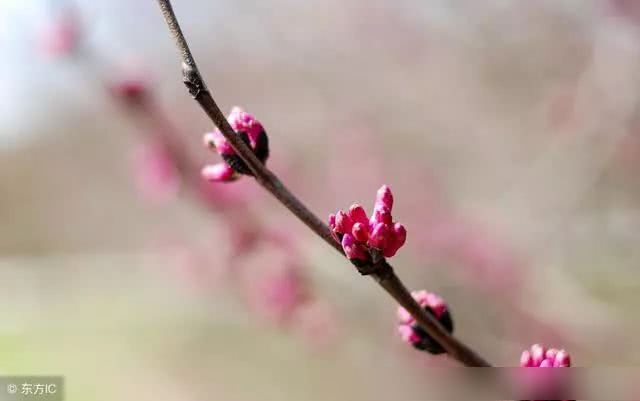
The number, plumpness, and flowering quality of flower buds directly determine the yield level of the orchard the following year, and even more directly affect the orchard planting income of the broad community of fruit growers. To achieve good flower bud differentiation and high flowering quality, one must comprehensively understand which factors affect flower bud differentiation, and then make targeted improvements in management level, so as to achieve a great orchard harvest the following year!
The main factors determining the number and plumpness of flower bud differentiation: from the perspective of external factors, the main factors affecting flower bud differentiation are light, temperature, humidity, and nutrition; from the perspective of internal factors, the main factors affecting flower bud differentiation are bud position, branch and leaf growth vigor, root system condition, fruit load size, balance of various hormones within the tree body, and so on.
Below we introduce them one by one: the seven major factors affecting fruit tree flower bud differentiation, and seven orchard management methods for improving the quantity and quality of flower bud differentiation.For everyone's reference.
I. Good light
As the saying goes, "No light, no fruit." Light is the foundation for fruit trees to carry out photosynthesis and produce nutrients. Sufficient light can enhance the photosynthesis of fruit trees, produce more nutrients, and provide solid nutritional support for flower bud differentiation. For example, the formation and accumulation of organic matter and the balance of endogenous hormones are all directly related to light.
During the flower bud differentiation period, if the weather remains sunny, the orchard has good ventilation, and light conditions are sufficient, fruit trees accumulate more nutrients and promote better and plumper flower bud differentiation. If during the flower bud differentiation period there is continuous cloudy and rainy weather with little sunshine, or the orchard is shaded and not ventilated, on the one hand it will stimulate new shoots to continue growing vigorously and consume large amounts of nutrients, and on the other hand the flower buds cannot complete morphological differentiation well, making it easy for flower buds that appear plump in the current year to become false flowers that cannot continue to develop and bear fruit the following year.
In fruit tree management, there is an experiential saying: "Good sunshine in July and August, strong flower buds next year," which describes the close relationship between light and flower bud differentiation.
On this point, fruit grower friends should pay attention to combining various pruning methods for fruit trees (scientific pruning of fruit trees is the most direct and effective way to improve the light environment of fruit trees) to actively eliminate the shading and closure of fruit trees in the orchard, maximize the ventilation and light transmittance conditions of fruit trees in the orchard, and at least maintain more than 30% light intensity for fruit trees in the orchard.
II. Suitable temperature
Temperature not only directly affects the photosynthesis quality of fruit trees, the absorption function of the root system, and transpiration, but also has a great correlation with the hormone levels in the tree body, and more directly determines the number of flower buds and the quality of flowering.
Generally speaking, an environment of 20-30 degrees is most favorable for the differentiation and formation of fruit tree flower buds. Too high or too low temperatures will affect the quality of flower bud differentiation. For example, high temperatures above 35 degrees or low temperatures below 15 degrees will cause difficulty in flower bud differentiation, difficulty in flowering, and low quality (high temperatures inhibit flower bud differentiation, low temperatures freeze and damage flower buds). In particular, protection against low-temperature freeze damage must be prevented, otherwise it is very easy to cause flower buds to be frozen and damaged or killed, leading to a major yield reduction in the whole orchard the following year. On this point, I believe the broad community of fruit growers all have deep personal experience of that severe late spring cold spell this spring!
Temperature environments required for flower bud differentiation of several common fruit trees: banana 25-30 degrees, grape and pineapple 20-30 degrees, persimmon 20-25 degrees, hawthorn 15-25 degrees, apple 18-28 degrees, citrus 10-20 degrees.
III. Reasonable water control
During the flower bud differentiation period, fruit trees are very sensitive to water. During this period, water should be moderately controlled to keep the soil appropriately dry. However, excessive drought will also inhibit the flowering effect. But if the soil moisture in the orchard is too high, it will not only cause new shoots to grow vigorously and consume large amounts of tree nutrients, but also cause new shoots to remain immature for a long time. If it is excessively dry, it will also cause fruit trees to consume excessive water. All of these will lead to no flower bud differentiation or poor differentiation.
Flower bud differentiation is a process of transformation from vegetative growth to reproductive growth. Scientific and reasonable water control can inhibit the growth of shoots and leaves, promote the maturity of new shoots, and at the same time enhance photosynthesis to produce more nutrients, transferring more of the nutrients accumulated in the tree body to the flower buds, prompting fruit trees to differentiate and flower better.
For fruit trees such as apple, peach, plum, and pear that differentiate flower buds from May to October, after fruit harvest, fertilizer can be applied with water 2 times in succession, once every week, and then water should be moderately controlled for about 20-30 days (newly fruiting trees and vigorous trees with a small amount of fruit can appropriately extend the water control time), until the fruit tree leaves slightly curl or the orchard surface soil slightly cracks or the leaf color becomes lighter.
For orchards prone to water accumulation or with heavy clay soil, in the early stage of flower bud differentiation, the soil around the shallow roots can be dug open, and root cutting or root exposure treatment can be carried out for 20-30 days. In the evening, attention should be paid to covering with soil and grass for insulation, which can also effectively promote flower bud differentiation.
IV. Sufficient nutrients
The quality of flower bud differentiation is closely related to the two major elements phosphorus and potassium, as well as various medium and trace elements such as calcium, boron, zinc, copper, boron, molybdenum, and cobalt. In particular, sufficient calcium and boron fertilizer has a very good promoting effect on flower bud differentiation and improving flower bud quality.
On the one hand, after fruit harvest is completed, reasonable and sufficient base fertilizer should be applied in time to supplement nutrients for the depleted tree body and promote the rapid recovery of tree vigor, so that fruit trees can produce and accumulate more nutrients. On the other hand, attention should be paid to foliar topdressing of medium and trace fertilizers such as calcium and boron during the flower bud differentiation period. A 0.3% potassium dihydrogen phosphate solution or a 0.3% calcium superphosphate solution + 0.3% urea solution can be sprayed 2-3 times, once every 7-10 days (fertilizer can also be applied with water), providing nutritional support for fruit trees to form full and plump flower buds.
For young trees and old weak trees, fruit harvest should be appropriately advanced or carried out in batches, which can reduce the nutritional pressure on the tree body, promote the fruit tree to recover tree vigor as soon as possible, and allow flower buds to complete differentiation in greater numbers and better quality.
V. Scientific pruning
For fruit trees, during the flower bud differentiation period, the more vigorously the branches and shoots sprout and the more vigorous the growth, the worse the quality of flower bud differentiation and formation, and the lower the flowering and fruit-setting rate the following year.
Therefore, on the one hand, during summer pruning, the vigorous shoots within the tree canopy and the competitive buds below the pruning cuts can be removed by bud rubbing and pinching. At the same time, when new shoots grow to about 40 cm in length, pinching should be carried out. Vigorous upright branches can also be treated by branch bending and twisting. On the other hand, during the vigorous growth period of autumn shoots, those dense weak branches, old and weak fruiting branches, as well as strong vigorous water sprouts, umbrella branches, and cap branches on fruit trees should be promptly thinned out or pruned leaving stubs, so as to promote better flower bud differentiation.
VI. Reasonable fruit harvesting
On this point, fruit harvesting can be carried out flexibly according to the stage and condition of the fruit tree. Vigorous trees and high-yield trees can adopt staged harvesting, while trees with weaker growth and young fruiting trees can be harvested appropriately earlier. This can better reduce the nutritional burden on the tree body, better promote the fruit tree to recover tree vigor as soon as possible and accumulate more nutrients, and has a very good promoting effect on flower bud differentiation.
VII. Balancing hormones
In addition, everyone also needs to understand one point: flower bud differentiation is the result of the interaction of multiple endogenous hormones. Among them, ethylene, abscisic acid, and cytokinin have a promoting effect on flower bud differentiation and formation, while auxin and gibberellin have an inhibitory effect on flower bud differentiation and formation. Before new shoot growth stops, paclobutrazol can be sprayed on fruit trees 1-2 times, which can effectively promote terminal buds to differentiate into flower buds. For young trees that have not yet borne fruit, ethephon can be sprayed in autumn, which can not only control vigorous growth, but also enable young trees to produce more medium and short branches, and can also promote flower bud formation.
In addition, the position of the flower bud also affects the flowering ability and flowering quality of the flower bud, and the broad community of fruit grower friends should also pay attention to this.
This article comes from the internet. If there is any infringement, please contact us for deletion.