-
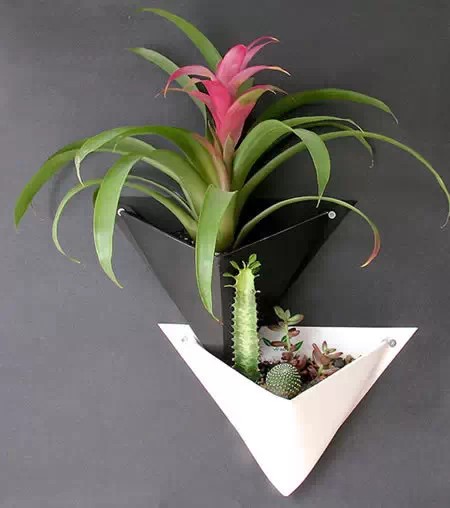
Origami Wall-Mounted Planter Creative Design, DIY Bonsai Making Illustrated Tutorial
Great fun is right by your side! This wall-mounted planter takes inspiration from origami and is made from biodegradable plastic. With a simple fold, a flat sheet transforms into a 3D flower pot that hangs on the wall, simple and unique, bringing a touch of greenery. This wall-mounted planter takes inspiration from origami
-
Illustrated Guide to the Creative Design and DIY Method for an Origami Wall-Mounted Planter
Wonderful fun is right around us! Inspired by origami, this wall-mounted planter is made from biodegradable plastic. With a simple fold, a flat panel turns into a 3D flower pot that hangs on the wall, simple and unique, bringing a touch of life. This wall-mounted planter draws inspiration from origami
-

What are the characteristics of Chinese floral art and how is floral design classified?
Traditional Chinese floral art is represented by literati flower arranging and has four major characteristics. (1) Line characteristics: Chinese floral art is mainly based on naturalistic lines. "Line" is the bone of Chinese floral composition. Lines have extremely rich expressive power; different lines express different forms and spirits: some are soft, some are vigorous; some are delicate, some are bold and rugged; some are elegant; some are aged. Floral art makes use of the myriad forms of plant flowers, branches and leaves, and through the length and thickness, curves and straightness, pauses and turns, strength and softness, and the balance of solid and empty of lines, it sketches out different forms that are simple, graceful, lean and strong, or bold and rugged, creating floral artworks of countless varied forms.
-
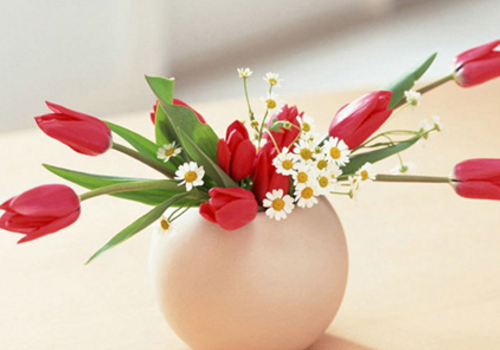
What Are the Categories of Flower Arrangement Art? A Full Analysis of Floral Designers' Salaries and Beautiful Arrangement Methods
Floral designer - this profession is loved by a huge number of people and is extremely artistic, but the demands it places on your own aesthetic sense are extraordinarily high. So how much does a floral designer earn? How do you arrange flowers beautifully: How much does a floral designer earn: In Guangzhou, an apprentice earns about 2000,
-
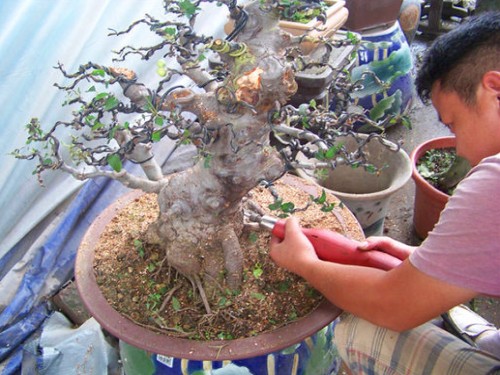
Detailed Guide to Styling and Designing Winter Red Fruit Bonsai
Winter red fruit is generally styled in the formal upright natural form, with the trunk straight and upright or slightly curved, branching at a certain height; it suits varieties with an upright tree habit and small, fine leaves, such as winter red fruit and Rose Autumn. An informal upright (slanting trunk) style is also used, planting the tree at one end of the pot with the trunk leaning toward the other end, the leaning trunk accounting for no less than half of the total trunk length
-
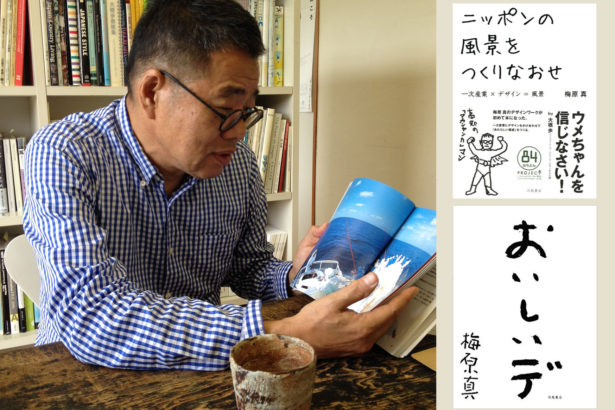
The Originator of Japanese Local Design, Shin Umehara: Using Design to Convey the Scenery of Production Areas
The Originator of Japanese Local Design | Shin Umehara: Designing for Local Places, Conveying the Scenery of Production Areas Through Design
-
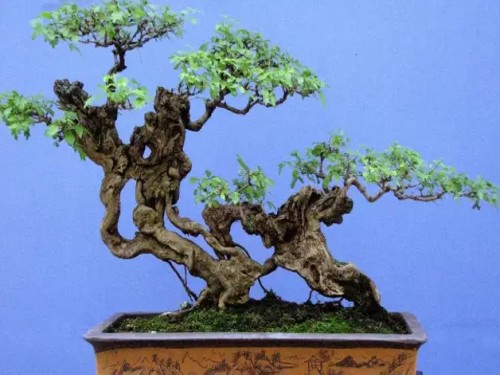
A Detailed Explanation of the Methods for Designing and Conceiving Tree Bonsai Shapes
Tree bonsai takes trees as its main subject. Because the materials used differ, it is usually further divided into two major categories: tree scenery and stump scenery. Tree scenery is made by using young trees as material and carrying out artistic processing, so it is often called "cultivated from youth." In the creation of tree bonsai, for a bonsai to deserve to be called an excellent work, all its parts must be seamlessly integrated and unified in harmony
-
Counter-Designing the City: Taiwan's Atypical Urban Planning Brings New Prospects for the Ecological Environment
Why You Should Read This Book "Counter-Designing the City" attempts to propose a more inclusive and more thoroughly considered atypical urban planning approach. Protest is often only the initial response of residents in some cases; what is more worthy of our reference are the concrete actions and communication techniques that followed; professional workers
-
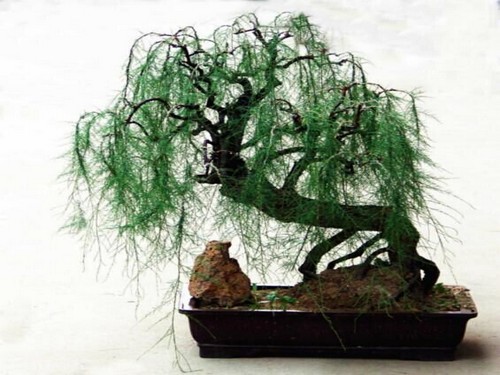
How to create a pine-style bonsai design with tamarisk
It is known that tamarisk is an excellent material for creating "weeping willow style" bonsai, and the soft, graceful charm it expresses is especially beloved. I had originally intended to learn from Master Wang Xuanmin and also create a weeping willow style bonsai with tamarisk, but the tamarisk material now in hand is of the tall-trunk, upright type, particularly stiff and strong. How could it express the graceful, lithe softness! What to do?
-
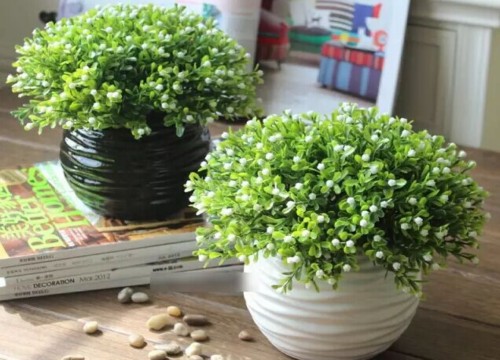
What principles should be followed in bonsai design?
Some say that the aesthetic characteristics of Chinese bonsai art lie in "seeking elegance and rising above the conventional," with an emphasis on subtlety and artistic conception, on using the solid to set off the void and combining the solid with the void, and on layers and depth of scene, so as to achieve "turning the finite into the infinite" and "turning the bounded into the unbounded," captivating the viewer, stirring the imagination, and leaving an endless aftertaste, and so on. But to sum it up more concisely
条件筛选